99.7 Pediatric and Adolescent Cases per 100,000 in 4 Weeks, 76.0 Adults
Unvaccinated 0-17 Age Group Infection Rate 27.4, Higher than Adults (19.8)
Experts Say "Pediatric and Adolescent Incidence Inevitably Increases"
10,000 Cases Expected Early Next Year... "Early Vaccination Brings Greater Benefits"
Pediatric and Adolescent Vaccine Booking and Vaccination Period Extended to January Next Year
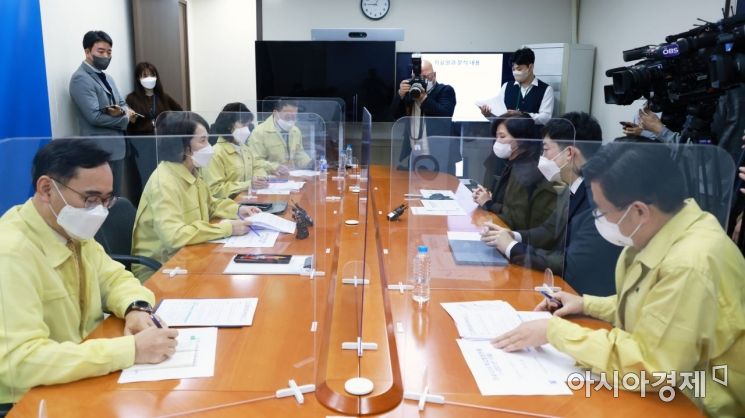
[Asia Economy Reporter Han Jinju] Over the past four weeks, the incidence rate of COVID-19 among children and adolescents has surpassed that of adults, prompting the government to shift its policy from voluntary vaccination to active recommendation.
On the 25th, Yoo Eun-hye, Deputy Prime Minister and Minister of Education, stated at an emergency advisory meeting with infectious disease experts held at the Government Seoul Office, "There are inherent limitations to completely blocking the virus from entering schools through efforts at the school level alone. We urge students and parents to participate in vaccination, an effective preventive measure." She added, "We hope for cooperation in vaccination participation to recover learning gaps and return to normal daily life."
In the past 4 weeks, confirmed cases per 100,000 children and adolescents exceed those of adults
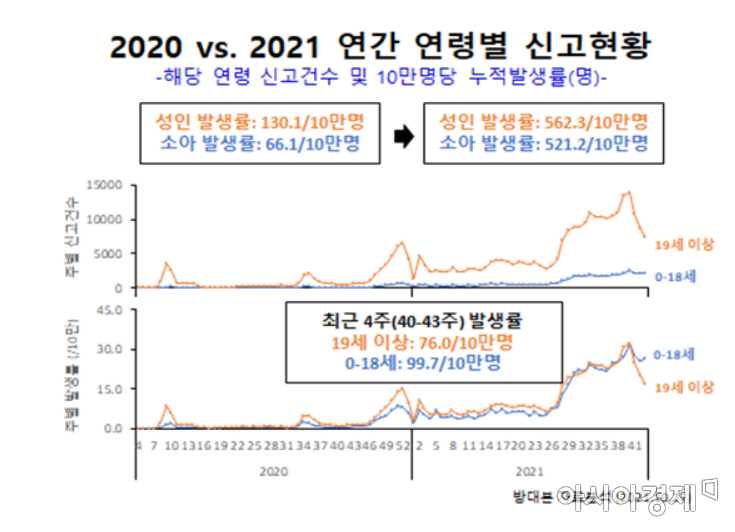
According to analysis by Professor Choi Eun-hwa of Seoul National University, chair of the Vaccination Expert Committee, the COVID-19 incidence rate among students has increased compared to last year as of November. Over the recent four weeks, confirmed cases per 100,000 children and adolescents reached 99.7, surpassing adults at 76.0. The incidence rate in the past week was also higher among children and adolescents (26.6 per 100,000) than adults (17.0 per 100,000). Although the annual incidence rate this year is lower in children and adolescents (521.2) than adults (562.3), this is influenced by the lower vaccination rate among children and adolescents compared to adults.
The proportion of COVID-19 infections among children and adolescents in the total population has significantly increased from 8.5% in June last year to 14.5% as of October this year. In particular, the incidence rate among unvaccinated individuals aged 0-17 is on the rise. As of October, the incidence rate for ages 0-17 was 27.4 per 100,000, surpassing the 19-49 age group at 19.8 per 100,000. This is double the rate of 18-year-olds who have been vaccinated (13.9 per 100,000).
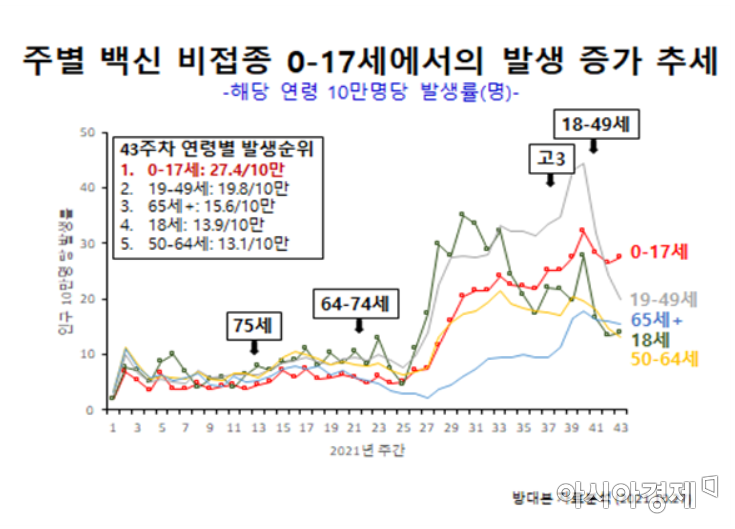
Looking only at high school students, the incidence rate for 3rd-year high school students (Godeunghaksaeng 3rd grade) is 1.4 per 100,000, which is about 20% of the rates for 2nd-year (7.1) and 1st-year (6.9) students. Incidence rates by school level are as follows: middle school 7.02, elementary school 4.54, high school 4.51, and kindergarten 3.15 per 100,000. While rates are decreasing in high schools, incidence rates have increased in middle schools. As of the 24th, vaccination completion rates are 46.0% for ages 16-17 and 1.3% for ages 12-15.
This information was shared by Deputy Prime Minister and Minister of Education Yoo Eun-hye at an emergency advisory meeting with infectious disease experts at the Government Seoul Office. With full in-person schooling nationwide starting on the 22nd, COVID-19 cases among students have increased, prompting discussions on the infection trends among children and adolescents, vaccination status, and differences in infection severity depending on vaccination.
According to the Ministry of Education, among confirmed cases aged 12-17 in the past two weeks (3,001 cases), 98.7% (2,961 cases) were unvaccinated. Among 15 individuals who experienced myocarditis or pericarditis as adverse reactions after vaccination in 3rd-year high school students, all have recovered. Currently, there are 24 suspected anaphylaxis cases and 3 suspected myocarditis or pericarditis cases among 12-17-year-olds.
The government has also decided to extend the vaccination reservation and administration schedule for ages 12-17. As of midnight on the 24th, the first-dose vaccination rate for ages 12-17 is 41.5%, with a completion rate of 16%. For ages 16-17, the completion rate is 46%, while for ages 12-15, it remains at 1.3%. Vaccinations for ages 12-17 were originally scheduled to continue until the 27th of this month, but reservations have been extended until the end of the year and vaccinations until January 22 of next year.
Experts predict 'major outbreak'... "Increase in incidence among children and adolescents inevitable"
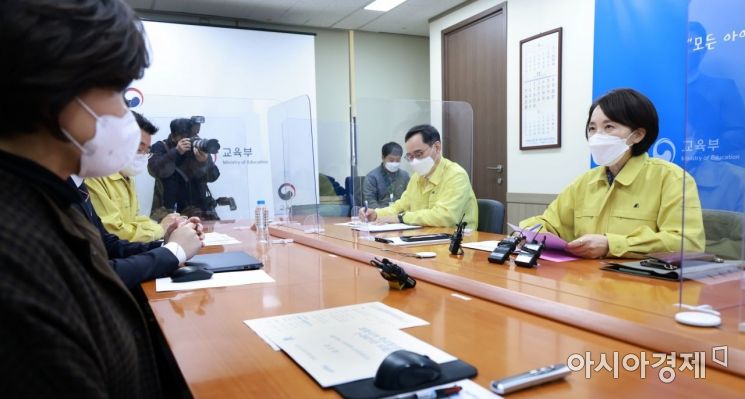
At the meeting, experts forecast a major outbreak with confirmed cases reaching 10,000 in early next year and 25,000 by next summer.
Professor Jung Jae-hoon of Gachon University College of Medicine's Department of Preventive Medicine stated, "Confirmed cases will reach 10,000 early next year, and if no policies are implemented, this trend will continue. Vaccine effectiveness is waning among the elderly, and the critical patient situation is not good. In the long term, the incidence rate among children and adolescents will inevitably increase."
Despite parents' concerns, experts emphasized the need to expedite vaccinations due to the steep rise in student cases.
Professor Choi said, "The incidence rate among children and adolescents is 0.8%, but the rate of increase is steep. Next year, in-person classes must resume, and relying solely on school quarantine measures is difficult; multiple layers must work together. Vaccination is very important among these. Without vaccination, it will be very difficult to continue classes without interruption."
Professor Jung explained, "It must be clearly communicated that vaccination is thoroughly beneficial for children and adolescents. The epidemic is worsening, so getting vaccinated earlier increases benefits. The situation will worsen, and there may be problems with quarantine, but since children must attend school, we must accept vaccination as part of the path we have chosen."
He added, "The increase in confirmed cases is due to phased daily recovery, not because of school reopening. School reopening (full in-person classes) is a secondary factor; other causes are responsible. In the worst-case scenario, 30-40% of children will inevitably be infected, and for COVID-19 to end, 8 to 9 million people must be infected. If parents are informed about the expected extent of harm to children, it will help them make vaccination decisions."
© The Asia Business Daily(www.asiae.co.kr). All rights reserved.
![Clutching a Stolen Dior Bag, Saying "I Hate Being Poor but Real"... The Grotesque Con of a "Human Knockoff" [Slate]](https://cwcontent.asiae.co.kr/asiaresize/183/2026021902243444107_1771435474.jpg)


















