Fine Dust Surge on 20-21st
China's Coal Production Increased by 55 Million Tons Compared to Last Year
Westerly Winds Could Bring Fine Dust to Korea
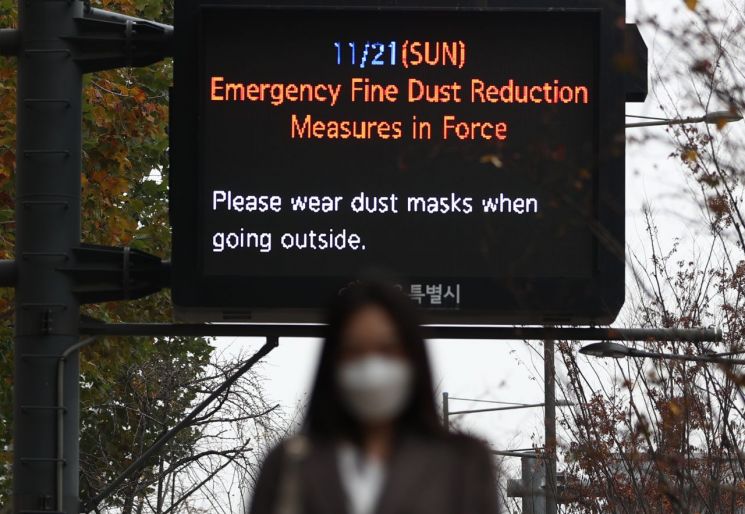 On the afternoon of the 21st, when the emergency fine dust reduction measures were issued in the Seoul area, an electronic display near City Hall Station showed the implementation notice. [Image source=Yonhap News]
[Asia Economy Reporter Lim Juhyung] Office worker Lee Mo (27), who usually enjoys cycling at Hangang Park, had to spend the entire weekend indoors. This was because the fine dust and ultrafine dust concentrations in the metropolitan area reached the worst levels over the two days from the 20th to the 21st. Lee said, "Just as COVID-19 seems to be ending, now the fine dust is causing chaos," adding, "I can't enjoy leisure time with peace of mind because I never know when the weather will worsen again," expressing frustration.
As the cold wave officially begins in Korea, fine dust has started to surge again. This appears to be due to an increase in dust coming from China along with domestic pollution sources. China, which relies on coal power for heating and electricity production, plans to burn much more coal than last year. Citizens are responding with feelings of suffocation. Unlike domestic factors, it is difficult to reduce China-originated fine dust through Korea's own efforts.
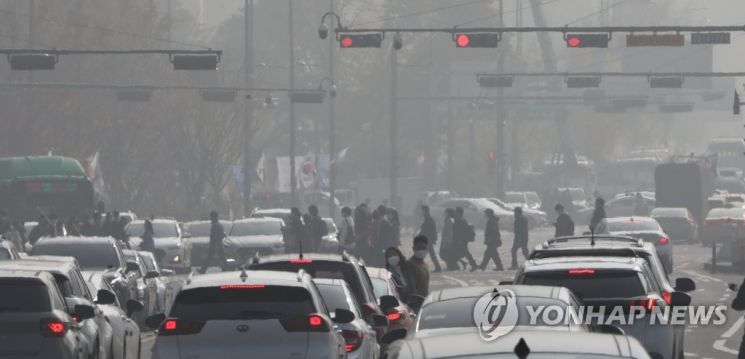 The cityscape of Seoul on the 20th, when the concentration of ultrafine dust recorded a 'very bad' level. Earlier, Seoul and Gyeonggi Province issued an ultrafine dust (PM 2.5) advisory for the first time in six months. / Photo by Yonhap News
◆Signs of 'Fine Dust Nightmare' Returning... About 32% Impact from China-Origin Dust
During the weekend of the 20th and 21st, the entire country was covered in thick fog. On these days, air quality, including fine dust and ultrafine dust that penetrates masks, reached the worst levels. According to the Korea Meteorological Administration, ultrafine dust levels during the weekend rose to 96 micrograms (㎍) in Seoul and Incheon, and 76㎍ in Daegu and Chungnam Province, indicating a 'very bad' level. The government also issued emergency fine dust reduction measures, restricting the use of some facilities that emit air pollutants.
Since the cold air from the north began to flow in on the 22nd, fine dust concentrations have stabilized. However, because air quality changes depending on wind direction and atmospheric flow, fine dust can return at any time.
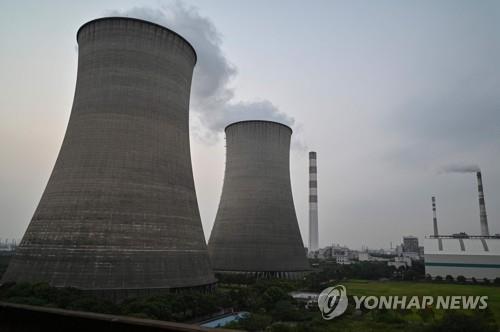
Korea's fine dust concentration results from a combination of domestic sources and dust inflow from overseas. According to the 'Northeast Asia Long-Range Transport Air Pollutants International Joint Research' report published in 2019 by the National Institute of Environmental Research under the Ministry of Environment, China's pollutants account for about 32% of domestic fine dust concentrations.
Whether China-origin dust crosses into Korea depends on wind direction. Typically, pollutants emitted from coal-fired power plants concentrated on the Chinese mainland ride the westerly winds and may cover Korea. Conversely, cold northwesterly winds block this fine dust flow and improve air quality. In other words, if the wind direction changes, fine dust can worsen again at any time.
◆China to Increase Coal Production by 55 Million Tons This Year... Concerns Over Increased Pollutants
This year, China's pollutant emissions are expected to increase significantly compared to before. After the COVID-19 pandemic subsided and the economy revived, China experienced an unprecedented power shortage, and authorities are responding by greatly increasing coal production.
According to data from the National Bureau of Statistics of China, coal production last month reached 357.09 million tons, about 7% higher than the previous month (334.10 million tons). This is the highest since March 2015.
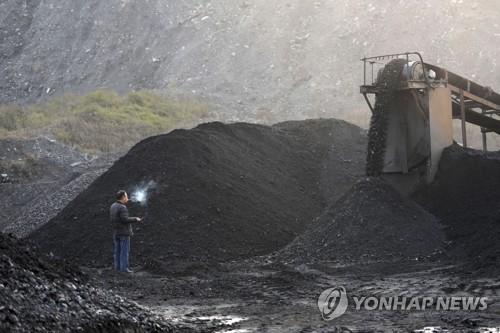
The National Development and Reform Commission of China has allowed over 154 large coal mines to expand production since July this year to overcome power shortages and ensure smooth home heating. Coal production in the fourth quarter (October to December) is expected to increase by a total of 55 million tons compared to the same period last year.
Given that China relies on coal-fired power for about 70% of total electricity production, an increase in coal production is expected to lead to a significant rise in pollutant emissions.
◆"Do We Have to Suffer Too?" Citizens Express Frustration
Given this situation, citizens are expressing frustration. There are complaints that it is hard to accept Koreans suffering due to dust coming from China.
A man in his 20s, office worker A, who stayed indoors all weekend, said, "I felt suffocated all day and thought I might die. Even if COVID-19 ends, we might have to wear masks forever because of fine dust," adding, "I can't understand why we have to suffer because of China's environmental destruction."
Another office worker B (33) said, "There was a time when bus operations were reduced and people were told not to grill mackerel to reduce fine dust. If environmental pollution continues like this, such measures will have to be taken again, but since China won't reduce coal power generation, it's pointless," and pointed out, "This concerns citizens' environmental rights, so I think the government should actively protest."
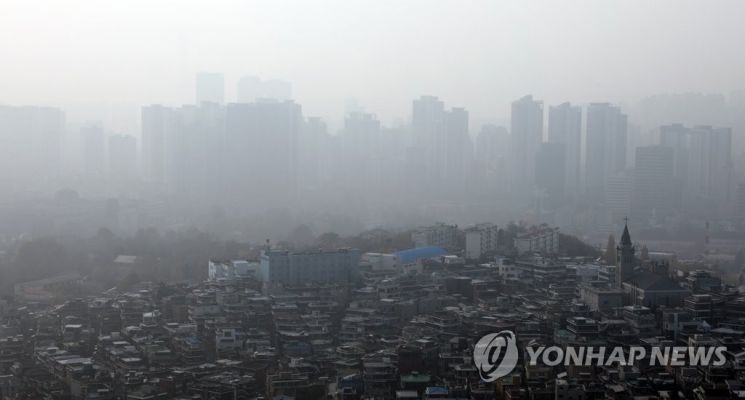 The city view from near Namsan, Seoul, on the 20th when fine dust was severe. / Photo by Yonhap News
Meanwhile, since 2019, the government has introduced the 'Seasonal Fine Dust Management System' and is implementing strong pollutant reduction policies during winter (December to March of the following year), when fine dust worsens due to westerly winds.
The third seasonal management system, starting this year, includes measures such as restricting the operation of old vehicles rated as grade 5 that emit a lot of exhaust gas, expanding the distribution of eco-friendly boilers to households, providing special points when energy consumption is reduced by more than 20% compared to the previous year, and inspecting heating temperatures in energy-intensive buildings.
Additionally, the government is conducting joint cooperation with China to reduce long-range transported fine dust. Earlier, Korean and Chinese environmental authorities jointly announced their fine dust response status in February.
While Korea is intensively managing pollutant emissions during periods of severe fine dust through the seasonal management system, China is promoting eco-friendly industrial development, optimizing industrial structure, closing small-scale coal facilities, saving energy, and implementing ultra-low emission modifications for pollutants in some industries.
© The Asia Business Daily(www.asiae.co.kr). All rights reserved.
![Clutching a Stolen Dior Bag, Saying "I Hate Being Poor but Real"... The Grotesque Con of a "Human Knockoff" [Slate]](https://cwcontent.asiae.co.kr/asiaresize/183/2026021902243444107_1771435474.jpg)

















