Financial Disadvantages Including Credit Card Issuance and New Loan Restrictions
From This Year, Those with Combined City-District Delinquent Amounts Over 5 Million KRW Are Subject... 458 New Delinquents Registered
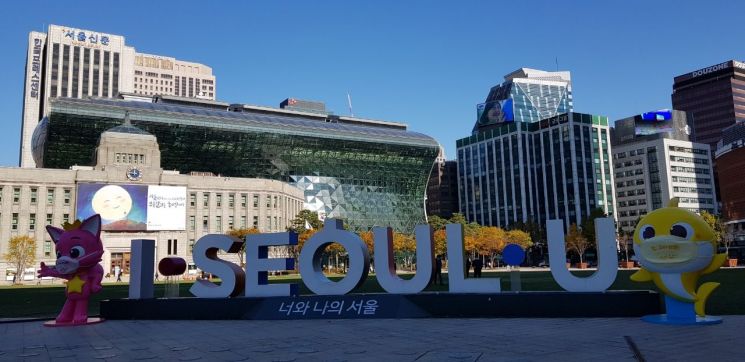
[Asia Economy Reporter Lim Cheol-young] On the 23rd, the Seoul Metropolitan Government announced that it has completed the registration of the names, resident registration numbers, number of delinquencies, and delinquent amounts of 992 local tax delinquents with the Korea Credit Information Services. The registration targets are those who have been delinquent in local taxes of 5 million KRW or more for over a year, or those who have been delinquent in 5 million KRW or more for three or more cases within a year.
According to Seoul City on the 23rd, among the 992 delinquents registered this time, 687 are individuals and 305 are corporations, an increase of 400 compared to the same period last year. The number of delinquent cases amounts to 11,612, with a total delinquent amount reaching 43.2 billion KRW.
The individual with the largest delinquent amount is Mr. A (58), who has delinquent local income tax of 500 million KRW imposed in April 2020, among a total of 20 cases, amounting to 1.657 billion KRW. The corporation with the largest delinquent amount is Corporation B, engaged in real estate leasing, which is delinquent in 15 cases including local income tax imposed in 2020, totaling 7.94 billion KRW.
The individual with the highest number of delinquent cases is Mr. C (41), who has no delinquent taxes with the Seoul City 38 Tax Collection Division but is delinquent in 1,574 cases across three districts, with a delinquent amount of 353 million KRW. The company with the highest number of delinquent cases is D Transport, which is delinquent in 154 cases including automobile tax in two autonomous districts, with a delinquent amount of 9.5 million KRW.
Once registered as a delinquent with Korea Credit Information Services, individuals are classified as financial debt defaulters, restricting credit card issuance and usage, as well as new loans or extensions in the financial sector. While delinquency information remains, financial disadvantages such as higher loan interest rates also apply.
From this year, Seoul City plans to implement strong administrative sanctions through credit information provision when the total delinquent amount is 5 million KRW or more by summing delinquent taxes between the city and autonomous districts or between autonomous districts. Previously, if delinquent amounts were distributed below 5 million KRW each in Seoul City or autonomous districts, sanctions could be avoided, but now the total amount is summed and included in the credit information registration target. Accordingly, 458 delinquents who were previously managed as small-amount delinquents by each autonomous district and whose credit information was not provided were newly registered as delinquents in the second half of this year. The total number of delinquent cases for these 458 individuals is 2,856, with a delinquent amount of 4 billion KRW.
Seoul City aims to raise awareness and induce the fulfillment of tax payment obligations by strengthening financial disadvantages even for small-amount delinquents who intentionally do not pay taxes.
Meanwhile, Seoul City is also conducting strong administrative sanctions such as public disclosure of the list and provision of credit information targeting high-amount delinquents. Mobile tax notices are sent along with postal mail to raise awareness of delinquent taxes and encourage payment.
Seoul City's registration of delinquent credit information is conducted twice a year, once in the first half and once in the second half. In October, Seoul City sent advance notice letters on credit information provision simultaneously to 1,113 registration targets to encourage payment of delinquent taxes and requested explanations if there were reasons for exclusion. During this process, 752 delinquent cases (totaling 1.22 billion KRW) were voluntarily paid. In addition, credit information registration was prioritized for exclusion for livelihood-type delinquents, basic livelihood security recipients, and those who have received personal rehabilitation or bankruptcy declarations. Those with litigation related to delinquent taxes or objections, as well as applicants for installment payments, were also excluded from credit information provision targets.
Lee Byung-wook, head of the Seoul City 38 Tax Collection Division, said, “Even in a situation where the entire nation is suffering from the livelihood cliff caused by COVID-19, we will realize tax justice by persistently tracking and collecting from intentional and malicious delinquents so that citizens who have faithfully paid taxes do not feel relative deprivation.” He added, “Through close cooperation with 25 autonomous districts, we will continuously identify livelihood-type delinquents and monitor them more closely to help them escape welfare blind spots.”
© The Asia Business Daily(www.asiae.co.kr). All rights reserved.
![Clutching a Stolen Dior Bag, Saying "I Hate Being Poor but Real"... The Grotesque Con of a "Human Knockoff" [Slate]](https://cwcontent.asiae.co.kr/asiaresize/183/2026021902243444107_1771435474.jpg)















