World Heritage Site 'Namgye Seowon', Filming Location of Mr. Sunshine 'Gaepyeong Hanok Village',
Korea's First Artificial Forest 'Sangnim', The Hwaeom World Unfolded in Jirisan 'Seoam Jeongsa'
[Asia Economy Yeongnam Reporting Headquarters Reporter Choi Soon-kyung] As we transition to a phased recovery of daily life, is there a travel destination that can provide healing for our tired body and mind?
Let’s embark on a journey to Hamyang, a city of health and healing where pristine nature and culture come alive within the vast embrace of Jirisan and Deogyusan, the best healing tourist spots where history, culture, and nature breathe.
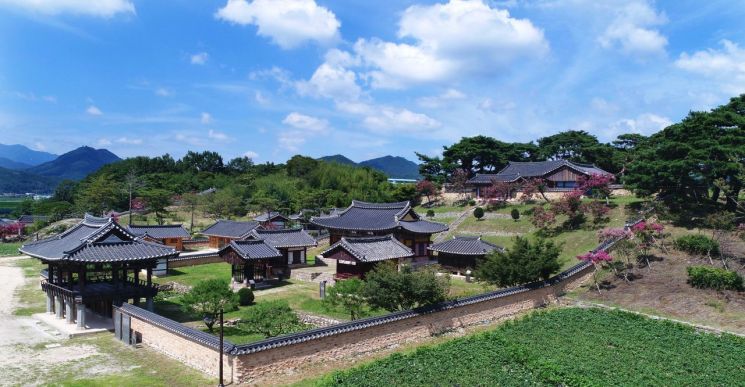
▶ Namgye Seowon, a World Heritage Site
Hamyang’s Namgye Seowon, registered as a UNESCO World Cultural Heritage site, is the second royal-licensed seowon in Korea following Sosu Seowon. It is one of the seowons that survived Heungseon Daewongun’s seowon abolition order and is the only remaining seowon in Gyeongnam Province.
In July 2019, at the 43rd session of the UNESCO World Heritage Committee, nine seowons including Namgye Seowon, Sosu Seowon, Oksan Seowon, Dosan Seowon, Pilam Seowon, Dodong Seowon, Byeongsan Seowon, Museong Seowon, and Donam Seowon were inscribed on the World Heritage list under the name “Seowon, Korean Neo-Confucian Academies.”
Seowons were private higher education institutions established by the Sarim faction in local areas as Neo-Confucianism took root in Joseon society. They consisted of a learning space with a lecture hall for studying Neo-Confucianism and educating talents, a ritual space with a shrine enshrining the spirit tablets of respected teachers for memorial rites, and a cultural space where students composed poetry, held discussions, rested, and socialized.
They emphasized character education in harmony with the surrounding natural scenery.
Designated as Historic Site No. 499, Namgye Seowon was founded in 1552 (7th year of King Myeongjong’s reign) by scholar Gang Ik of Gaeam to honor Munheon-gong Jeong Yeo-chang, and received royal recognition in 1566 (21st year of King Myeongjong’s reign). Namgye Seowon is a precious heritage that exemplifies the architectural style of Korean seowons.
It features a front-low-back-high (jeonjeohu-go, 前低後高) layout and a front-learning-back-shrine (jeonhak-humyo, 前學後廟) style, with the shrine located at the highest point and the lecture hall and entrance aligned in a straight line below.
Namgye Seowon consists of the entrance gate Pungyeongnu, the lecture hall, east and west dormitories, a woodblock storage, and the shrine.
Passing through the Hongsalmun gate and ascending to the second-floor pavilion of Pungyeongnu, one can see a wide field ahead and Namgye Seowon behind. Beyond Pungyeongnu are the Myojeongbi stele, which records the seowon’s history and the achievements of the three enshrined scholars, and the east and west dormitories where students lived.
In the learning space, Myeongseongdang displays the “Namgye Seowon” signboard prominently. Behind Myeongseongdang, passing through the inner gate, is the shrine housing the spirit tablets.
Though not grand or lavish compared to other seowons, Namgye Seowon breathes the spirit of ancestors and is a must-visit healing tourist spot. Additionally, walking through the large pine tree grove behind Namgye Seowon offers a unique healing experience found only here.
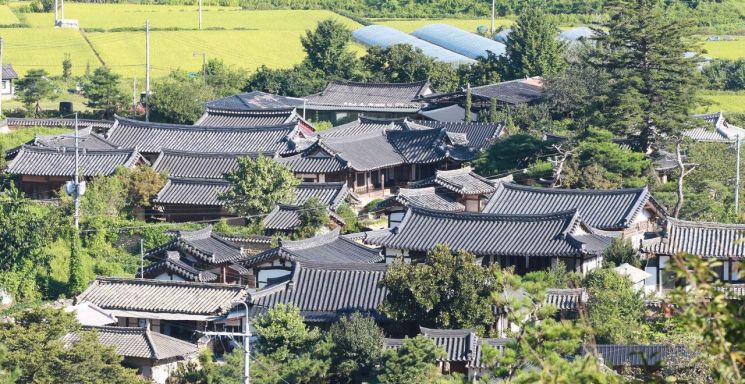
▶ Gaepyeong Hanok Village
If you want to escape bustling tourist spots and feel the tranquil charm of traditional hanok houses, Gaepyeong Hanok Village in Jigok-myeon is the perfect place.
With a history of over 500 years, about 60 traditional hanok houses built over 100 years ago are preserved here. It is a filming location for the famous drama “Mr. Sunshine,” attracting many tourists, but it is not crowded, making it ideal for a quiet stroll to enjoy the beauty of old houses.
Located about 8 km from Hamyang-eup in Jigok-myeon, the name Gaepyeong derives from the village’s location where two streams merge, resembling the shape of the Korean character ‘介’ (gae). The village is also called “Gaedeul” because of the wide fields in front. The village was formed when the Gyeongju Kim and Hadong Jeong clans migrated here in the 14th century.
In the 15th century, the Pungcheon No clan settled here, and today most residents belong to the Pungcheon No and Hadong Jeong clans. Hamyang, along with Andong, was renowned as a hometown of scholars and literati representing the Yeongnam region.
Gaepyeong Village is the birthplace of Jeong Yeo-chang (鄭汝昌), a Neo-Confucian scholar known as a representative Sarim of Yeongnam. Jeong Yeo-chang was posthumously disgraced during the Gapjisa Hwa (literati purges) but is praised as one of the “Five Sages of the East” alongside Kim Gong-pil, Jo Gwang-jo, Yi Eon-jeok, and Yi Hwang in Neo-Confucian history.
The village preserves several cultural heritage old houses. Ildu Old House (일두고택, Important Folklore Material No. 186) was built in 1570 on the birthplace of Jeong Yeo-chang and has been rebuilt several times by descendants. It is also called “Jeong Yeo-chang’s Old House” or “Jeong Byeong-ok House,” the name registered when designated as cultural heritage. It is a typical Gyeongsang-do yangban (aristocratic) house consisting of 12 buildings including the sarangchae (men’s quarters), anchae (main quarters), and shrine.
Also, the Pungcheon No clan’s ancestral home (Pungcheon No Clan Daejongga, Cultural Heritage Material No. 343), built by the clan’s founder No Suk-dong in the 1820s, is highly valuable as a record of late Joseon architectural styles and techniques.
Other major buildings in Gaepyeong Village include Hamyang Odam Old House (Cultural Heritage Material No. 407) and the Hadong Jeong clan’s old house in Gaepyeong-ri, Hamyang (Cultural Heritage Material No. 361), estimated to have been built in 1644.
A traditional local specialty passed down to this day is Jirisan Solsongju, a 500-year-old pine needle liquor. Solsongju is made in spring using pine shoots, glutinous rice, and pine needles.
Known for its rich pine aroma, Solsongju was a home-brewed liquor, syrup, and sweet rice drink served to visitors by Jeong Yeo-chang’s family and was a traditional fine liquor presented to King Seongjong. Descendants of Jeong Yeo-chang’s clan continue the tradition of brewing Solsongju.
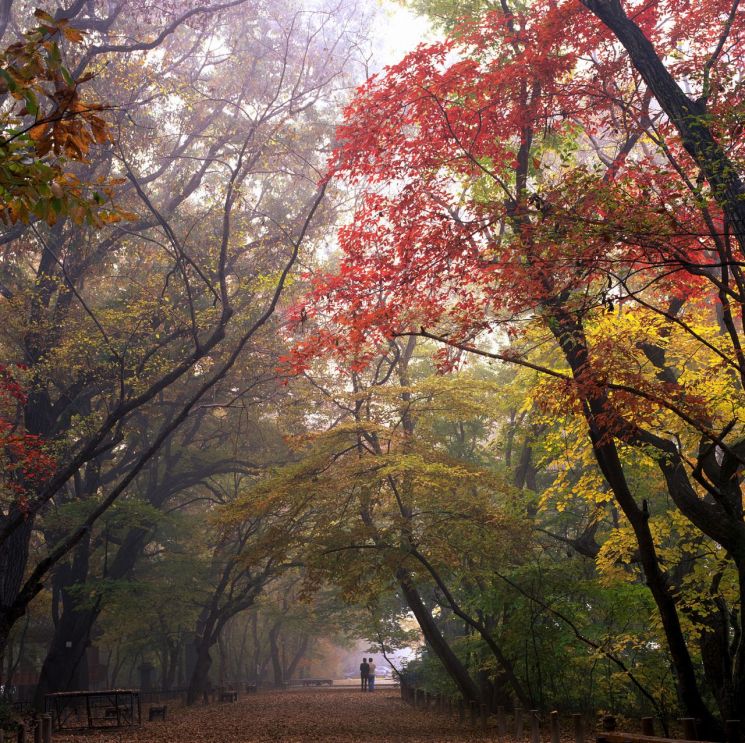
▶ Korea’s First Artificial Forest “Sangnim”
Next is Sangnim Park, Korea’s first artificial forest and a representative tourist spot lovingly cultivated and preserved by all Hamyang residents. Sangnim is the first of the eight scenic spots of Hamyang and offers beauty in every season.
Designated as Natural Monument No. 154, Sangnim Forest was created during the reign of Queen Jinseong of Silla (887?897) by the county magistrate Choi Chi-won, who diverted the river and built embankments to prevent flooding caused by the Wicheon River overflow, planting trees alongside the embankments as an act of benevolence.
Originally named Daegwanrim, the forest was well preserved as a protective forest against various disasters, for landscape, and scenic beauty. However, over time, a major flood eroded the middle part, dividing it into Sangnim (upper forest) and Harim (lower forest).
While Harim has been heavily damaged, Sangnim has maintained its original forest condition.
The forest currently covers about 21 hectares and is home to approximately 20,000 trees of over 120 species. It is a typical temperate southern deciduous broadleaf forest, well preserved and recognized for its historical and academic value as an artificial forest, holding great importance as a forest genetic resource protection forest.
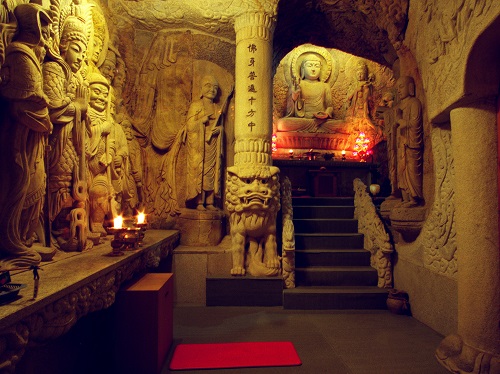
▶ The World of Hwaeom Unfolded in Jirisan, “Seoam Jeongsa”
Seoam Jeongsa is located on the northern hillside of Chilseon Valley, the most beautiful valley of Jirisan National Park, Korea’s first national park. Along with Seoraksan’s Cheonbul-dong Valley and Hallasan’s Tamna Valley, Chilseon Valley is known as one of Korea’s three great valleys. Seoam Jeongsa, a branch temple of Byeoksongsa, has long been famous for its caves where eminent monks practiced asceticism, with a small hermitage and stupas, though records of its founding and closure are not preserved. Around 1975, Monk Wonang, the head monk of Byeoksongsa, built a cave and restored the hermitage while practicing meditation.
The stone cave hall of Seoam Jeongsa was constructed by Monk Wonang starting in 1989 to soothe the countless souls who perished around Jirisan during wartime. It was completed after 10 years and sculpted by Hong Deok-hee, a Buddhist statue artist from Chungcheong Province. The cave hall features numerous Buddha statues including Amitabha Buddha at the center, Manjusri Bodhisattva, Samantabhadra Bodhisattva, Avalokitesvara Bodhisattva, Mahasthamaprapta Bodhisattva, Vajrapani Bodhisattva, the Eight Great Bodhisattvas including Maitreya and Ksitigarbha, and the ten principal disciples.
Seoam’s distinctive feature is its proximity to Cheonwangbong Peak, which seems within reach, and the panoramic view of Chilseon Valley from its high pavilion. The main hall was extensively renovated in 2012 by the current head monk Wonang and is adorned with a splendid golden altar.
About a 10-minute walk from Seoam Jeongsa up the mountain trail leads to the millennium-old temple Byeoksongsa. Known as a place where many ascetics have emerged, it is said that “grasping the door handle of the Seonbang (meditation hall) leads to enlightenment.” Let’s also experience the energy of the ascetic pine and beauty pine trees above Byeoksongsa.
© The Asia Business Daily(www.asiae.co.kr). All rights reserved.
![Clutching a Stolen Dior Bag, Saying "I Hate Being Poor but Real"... The Grotesque Con of a "Human Knockoff" [Slate]](https://cwcontent.asiae.co.kr/asiaresize/183/2026021902243444107_1771435474.jpg)

















