Launch of Culture, Sports, and Tourism Technology Promotion Center... Integrated R&D Planning, Management, and Evaluation by Field
Enhancing Creative Competitiveness and Content New Deal Based on Big Data, Network, and AI
Focusing on Convergence of Completed Technologies like Virtual Performances "Will Pioneer New Business"
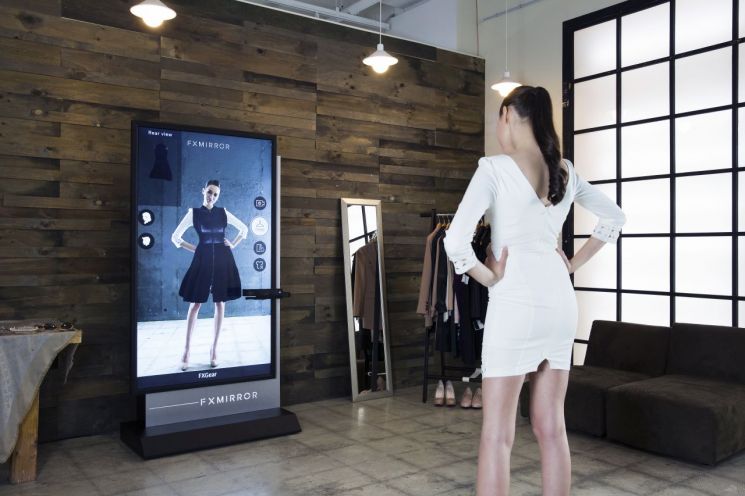 Development of Light-Field Video Generation, Encoding, and Rendering Technology for Enhancing the Image Quality of Volumetric Video Content_FXGear Co., Ltd.
The government's role in innovation in culture, sports, and tourism is significant. It must clearly set research and development (R&D) goals to lead a new future. Simply focusing on technology development alone is problematic. It should present visions that are difficult for companies to overlook and induce private development and investment to secure international status.
The Culture, Sports and Tourism Technology Promotion Center, launched on the 9th in Daejeon by the Ministry of Culture, Sports and Tourism and the Korea Creative Content Agency, is a catalyst for change. It integrates R&D planning, management, and evaluation conducted separately by the Korea Creative Content Agency (content), the Korea Copyright Commission (copyright), the Korea Sports Promotion Foundation (sports), and the Korea Culture and Tourism Institute (tourism). This integration enhances expertise while preemptively blocking similar and overlapping projects. It also aims to discover convergence and fusion tasks across the culture, sports, and tourism sectors to achieve synergistic effects. Cho Hyun-rae, president of the Korea Creative Content Agency, stated, "We will strengthen the competitiveness of the creation and production environment based on advanced technologies such as big data, networks, and artificial intelligence (AI), and lead 'convergent cultural R&D' to realize the content New Deal."
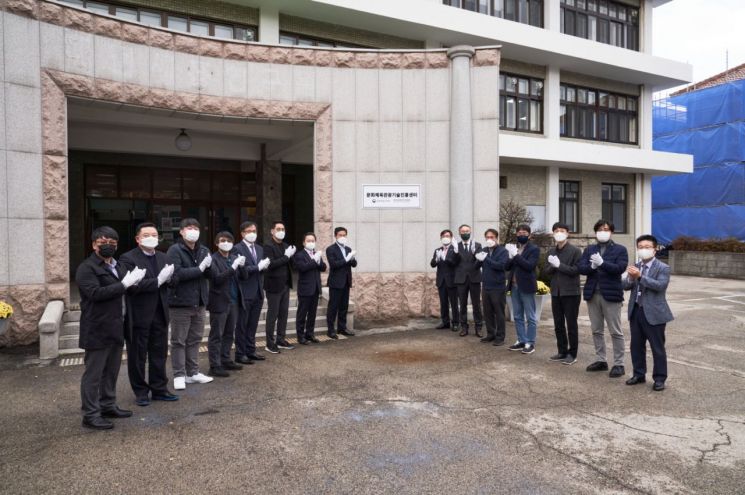
As an integrated research management institution, the budget is relatively ample. The government will invest 132.8 billion won in R&D for culture, sports, and tourism next year, which is 16.5% more than this year's 113.9 billion won. Cho Ki-young, the inaugural director of the center, said, "The budget has increased by an average of 11.7% annually over the past five years," adding, "We will continue to expand the scale to induce innovative growth in technology and industry."
Even before integration, there were several meaningful achievements. Animation studio Odoltogi developed 3D visual techniques for 2D original art expression while producing the theatrical feature film "Underdog" (2018). Dexter Film laid the foundation for special visual effects (VFX) technology development by producing Korea's first full 3D stereoscopic film "Mr. Go" (2013). They accelerated research to produce the film series "Along with the Gods" (2017).
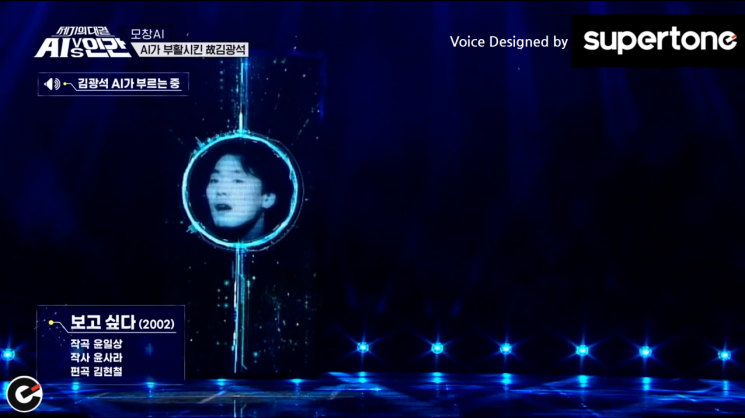 Development of AI Singing Synthesis System for User-Participatory Secondary Music Creation Platform_Superton Co., Ltd.
Beneficiary companies in the performing arts sector include Vinyl Eye, Distrix Holdings, and the Korea Institute of Industrial Technology. They developed stage directing incorporating advanced technology (Turandot), hologram video content production technology (Clone Concert), and a complex smart stage linking multiple entities, respectively. The electronic book service platform for accessibility for the disabled, built by the Electronics and Telecommunications Research Institute, and the virtual reality (VR)-based action simulation sensor linkage technology (Quantum 4D Treadmill System) developed by Numix Mediaworks are also highly valued for their utility.
Over the past three years, 250 content R&D papers have been published with government support. Overseas registered R&D patents increased from five in 2019 to sixteen the following year. The number of projects conducted also rose from 220 to 257. A Korea Creative Content Agency official explained, "Related sales increased from 41 billion won to 51.2 billion won," and "The number of directly employed R&D personnel expanded from 143 to 262." They added, "The employment retention rate also rose significantly from 75.3% in 2018 to 91.1% last year."
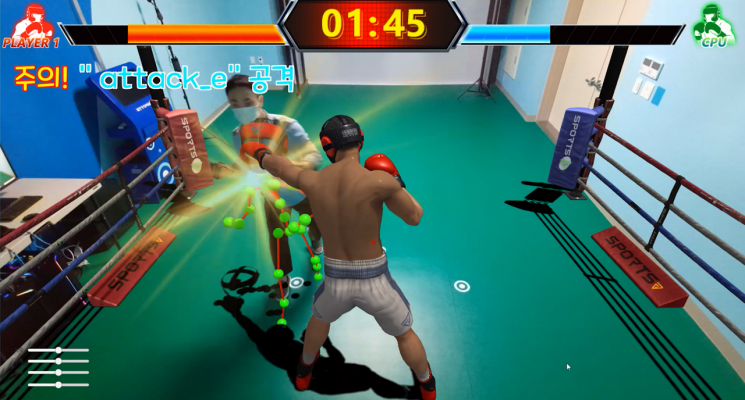 Development of Indirect Sensing-Based Real-Time Linked AR Indoor Sports Platform_Korea Electronics and Telecommunications Research Institute (ETRI)
With the launch of the Culture, Sports and Tourism Technology Promotion Center and the addition of convergence and fusion tasks, the upward trend is expected to continue. Cho Hyun-hoon, head of R&D at the center, said, "The specific blueprint can only be revealed once next year's government budget is finalized," but added, "The focus is on the convergence of completed technologies rather than new technologies." Current projects under discussion include core technologies for global virtual performances and core copyright technologies for next-generation immersive content. Cho emphasized, "Unlike the Institute for Information & Communications Technology Planning & Evaluation (IITP) under the Ministry of Science and ICT, which develops fundamental technologies, the Culture, Sports and Tourism Technology Promotion Center prioritizes application and utilization," adding, "We will pioneer new businesses through the convergence of technology, services, and industries."
The mid- to long-term strategy will be established through the fourth basic plan next year. Major projects are expected to include immersive game content based on VR and augmented reality (AR), remote lecture programs utilizing telepresence technology, standardization of special filming techniques related to immersive video, immersive recording technology for intangible cultural heritage, restoration programs of artisan techniques using 3D technology, and real-time streaming of 3D 360 VR videos for theaters and exhibitions. Support is also likely for entertainment content during travel activated by autonomous driving, transparent screens for performances and exhibitions, and virtual experience programs for disaster safety response. Cho noted, "With the recent expansion of non-face-to-face online service demand and changes in cultural consumption types, the importance of related technologies has increased," and said, "We are closely watching companies developing content suitable for the expanded virtual world (metaverse) and non-fungible token (NFT) environments."
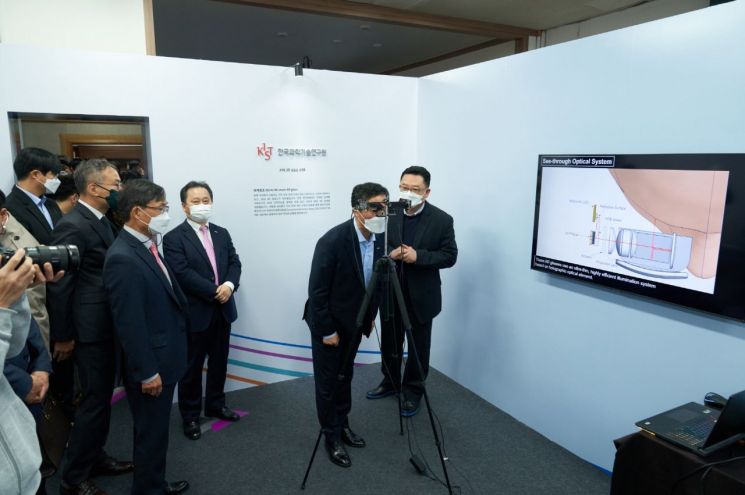
To present a concrete blueprint, it is necessary to gather opinions from numerous experts. Advisory committees, usually established as alternatives, effectively have no authority or responsibility and only provide information to public officials. Advisory members who want to make good proposals often become disappointed with government departments that do not accept their opinions. Busy public officials tend to regard advisory opinions as unrealistic. Without responsible parties, mission-oriented policy formulation and execution become impossible.
The Culture, Sports and Tourism Technology Promotion Center addresses this problem by establishing a learning organization. Armed with expertise, it actively communicates with the private sector and fosters a free discussion atmosphere to lay the foundation for innovation. It also ensures policy continuity to confirm long-term outcomes. Cho said, "There are limits to theoretical education. All answers lie in the field," adding, "We have established processes such as task management and progress checks where individuals can enhance expertise by reviewing the R&D development process on-site." He confidently stated, "If individuals can set and execute agendas themselves, a proper roadmap can be established and maintained."
© The Asia Business Daily(www.asiae.co.kr). All rights reserved.
![Clutching a Stolen Dior Bag, Saying "I Hate Being Poor but Real"... The Grotesque Con of a "Human Knockoff" [Slate]](https://cwcontent.asiae.co.kr/asiaresize/183/2026021902243444107_1771435474.jpg)


















