Subway Sexual Crime Reports Reach 834 Cases by September This Year... "64% Increase Compared to Last Year"
Insufficient CCTV Installation to Catch Crimes
Experts: "Difficult to Prove Sexual Crimes in Subway... Victims Must Handle Directly"
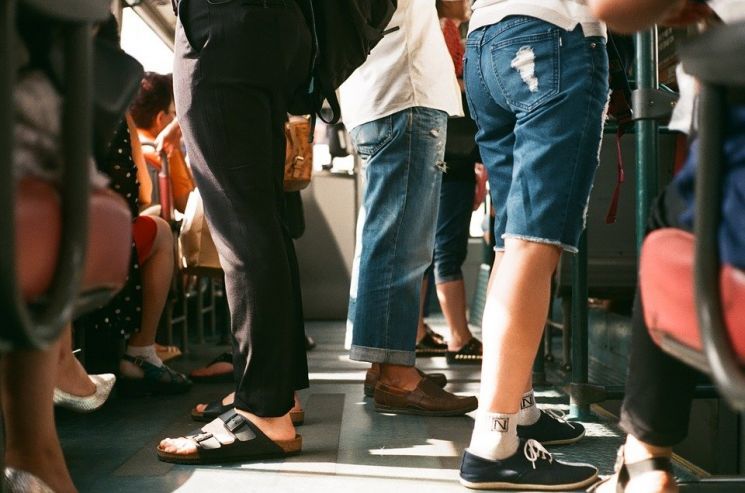 Concerns are growing as sexual crimes in the subway have been occurring repeatedly. The photo is not related to any specific content in the article. [Image source=Pixabay]
[Asia Economy Reporter Kim Seohyun] Recently, a woman reported to the police that she was sexually harassed by a man sitting next to her on the subway, sparking public outrage. The number of sexual crime reports filed on subways this year has increased by 64% compared to last year as of September, raising further concerns.
According to a post on the anonymous office worker community 'Blind,' the victim, Ms. A, who used the Suin-Bundang Line that morning, was sexually harassed by a man sitting beside her. Ms. A claimed, "I took the first train today, and the man next to me covered my leg with his clothes, then put his hand underneath and groped my thigh."
The man who sexually harassed the victim covered her leg with his clothing and inserted his hand underneath to commit the act. When the victim pointed this out and tried to call the police, he reportedly apologized, saying "I'm sorry."
Sexual crimes on subways continue unabated. On the 14th of last month, a man in his 30s was arrested by the police on charges of sexual harassment for putting his arm on the shoulder of a woman he had never met and winking at her on the subway. Earlier, in September, a man with ten prior sexual offense convictions was detained for sexually harassing a woman again on the subway just three months after his release.
According to Article 11 of the amended "Special Act on the Punishment of Sexual Violence Crimes" enacted last year, perpetrators of sexual crimes on subways face imprisonment of up to three years or fines up to 30 million won. However, it is expected that many obstacles remain to achieve effective crime prevention.
Data on "Annual Reports of Sexual Harassment and Sexual Crimes on Subways," submitted by the Subway Police to Rep. Kang Deuk-gu of the Democratic Party, shows that as of September this year, 834 sexual crimes (332 illegal filming cases, 502 sexual harassment cases) were reported. This is a 64% increase compared to the total of 507 reports (172 illegal filming, 335 sexual harassment) over the past year.
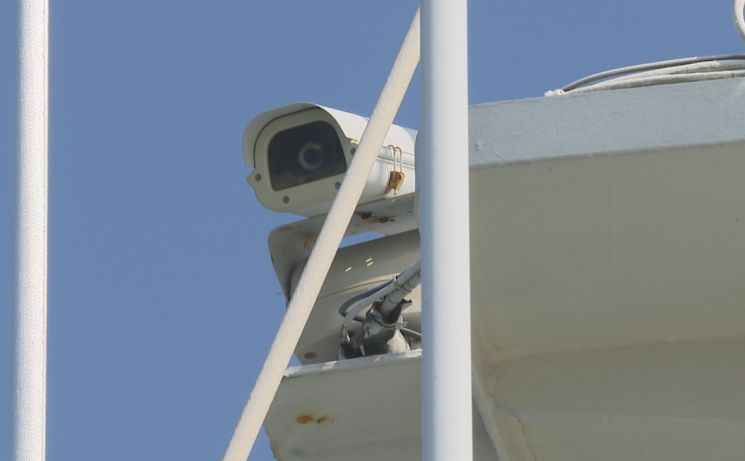 The installation rate of CCTVs capable of capturing sexual crime scenes inside subways was revealed to be only about 16%.
 [Image source=Yonhap News]
The installation of closed-circuit television (CCTV) for crime prevention was also found to be insufficient. Although the installation of CCTV inside trains was mandated by the amendment of Article 41 of the Urban Railway Act in 2014, according to the National Assembly Legislative Research Office, the installation rate of CCTV in urban railways is 36.8%, and the installation rate on Korea Railroad Corporation lines is only 16.7%.
In particular, Lines 1, 3, and 4 were found to have no CCTV installed at all. In this regard, Seoul City established a plan last September through the "Subway User Safety Assurance Measures" to gradually expand CCTV inside trains by 2026, but no action has been taken regarding the related budget.
Experts emphasize that although sexual harassment on subways is a very frequent crime, it is difficult to prove, so victims must actively respond.
Attorney Hwang Eutteum explained on "YTN Yang Soyoung Lawyer's Counseling Center," "When handling cases of clients reported for sexual harassment in crowded public places, we often find dozens of other harassment incidents during investigations. In Seoul, there is a subway investigation unit in major subway stations. Because there are so many harassment cases on subways, police officers patrol certain subway sections to arrest offenders."
He added, "There is no CCTV inside the subway, and even if there is, it is hard to capture incidents clearly because of the crowd. Also, even though there are many people on the subway, most are looking at their phones or sleeping, so there are usually no witnesses."
He continued, "Therefore, victims must actively respond when incidents occur. If you are certain that the act was intentional harassment, you should secure evidence through recordings or photographs," he added.
© The Asia Business Daily(www.asiae.co.kr). All rights reserved.
![Clutching a Stolen Dior Bag, Saying "I Hate Being Poor but Real"... The Grotesque Con of a "Human Knockoff" [Slate]](https://cwcontent.asiae.co.kr/asiaresize/183/2026021902243444107_1771435474.jpg)

















