Discussion Scheduled on Proposals by Lawmakers Yoon Gwan-seok and Kim Byung-wook
[Asia Economy Reporter Kiho Sung] The amendment to the Electronic Financial Transactions Act (EFT Act) is set to resume discussions next week. With a new amendment recently proposed, there is optimism that the legislation, which has been stalled for a year, will gain momentum. However, concerns have also been raised that the bill may not pass within the year as the positions of the various stakeholders remain at odds.
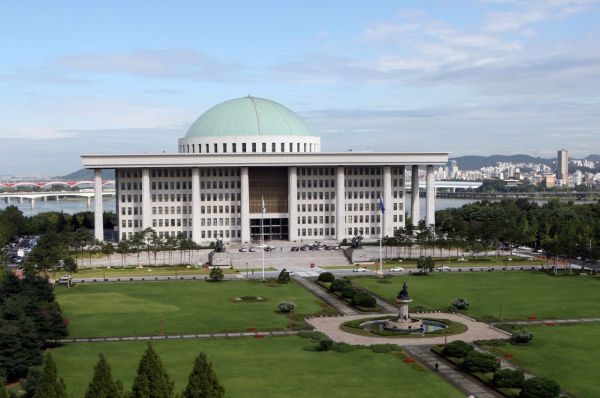
According to the National Assembly and political circles on the 13th, the Political Affairs Committee plans to hold a subcommittee meeting on the 17th to place the EFT Act amendment on the agenda. The amendments to be discussed are expected to include the bill proposed by Democratic Party lawmaker Yoon Kwan-seok in November last year and the bill proposed earlier this month by Democratic Party lawmaker Kim Byung-wook. However, since the bill has been submitted several times before without any discussion, it is pointed out that the outcome of this submission remains to be seen.
Attention is focused on Lawmaker Kim’s bill. It incorporates all the issues recently raised across various sectors, based on Yoon’s bill, which introduces new licenses such as MyPayment and comprehensive payment services and allows postpaid payments for simple payment service providers. Key provisions include strengthening criminal penalties for unregistered companies to prevent a recurrence of the ‘Merge Point incident,’ requiring post-reporting of concurrent and ancillary businesses by comprehensive payment service providers, and review by the Digital Finance Council when implementing the comprehensive payment service system.
In particular, the industry is reacting sensitively to the clause regarding the Digital Finance Council’s review. This clause was introduced to appease existing financial companies opposing the amendment, calling it the ‘Naver Special Law,’ by requiring big tech companies to undergo review by the Digital Finance Council when the comprehensive payment service system is implemented. Although the participating entities have not yet been finalized, the Digital Finance Council is expected to include the Financial Services Commission, financial companies, and big tech firms.
However, the National Financial Industry Labor Union, which opposes the introduction of the EFT Act amendment, maintains a strong stance. A union official stated, "The union continuously opposes the introduction of comprehensive payment services and insists on the principle of ‘same work, same regulation.’ The bill does not reflect the union’s position, and the introduction of the Digital Finance Council may rather diffuse responsibility," they pointed out.
The fintech industry also expresses concerns. They fear that even if the bill passes, the Digital Finance Council could delay its implementation. There is also a view that the enforcement decree might be shaped through council discussions to favor existing financial institutions. A fintech industry official said, "Ultimately, the problem lies in the composition of the council that holds decision-making power. So far, it appears to be led by existing financial institutions," adding, "If the council is strongly influenced by existing financial interests, the comprehensive payment service itself will become meaningless."
© The Asia Business Daily(www.asiae.co.kr). All rights reserved.
![Clutching a Stolen Dior Bag, Saying "I Hate Being Poor but Real"... The Grotesque Con of a "Human Knockoff" [Slate]](https://cwcontent.asiae.co.kr/asiaresize/183/2026021902243444107_1771435474.jpg)















