Korea Shipbuilding & Offshore 3Q Earnings Conference Call
"Environmental Regulations to Boost Eco-friendly Ship Orders"
3Q Operating Profit 141.7 Billion KRW... Up 248% YoY
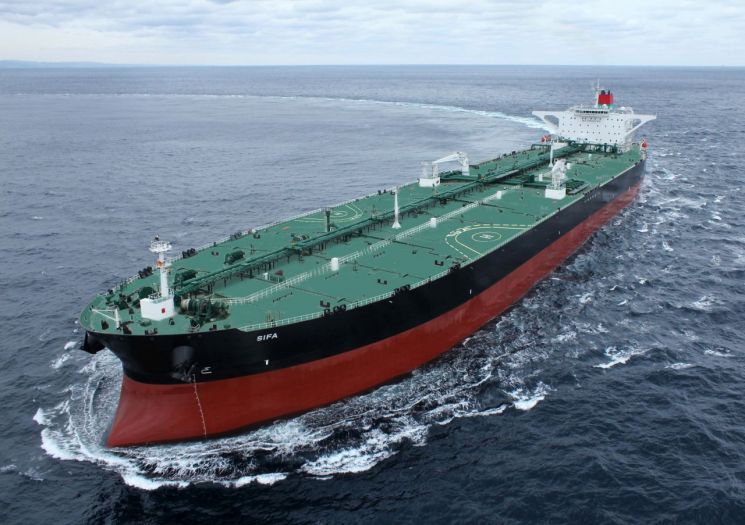
[Asia Economy Reporter Choi Dae-yeol] Korea Shipbuilding & Offshore Engineering, a mid-tier shipbuilding holding company of Hyundai Heavy Industries Group, announced on the 28th that out of the total 113 vessels ordered this year, 74 are equipped with dual-fuel (DF) engines.
DF vessels use liquefied natural gas (LNG) and other fuels simultaneously, making them more environmentally friendly compared to traditional vessels that mainly used bunker C oil, as they emit less carbon. Although DF vessels are more expensive than conventional ships, the shipbuilding industry expects orders to increase as global shipping companies must comply with environmental regulations such as those set by the International Maritime Organization (IMO).
During the Q3 earnings conference call, Korea Shipbuilding & Offshore Engineering stated, "About 50% of the general commercial vessels ordered this year and 65% of all vessels ordered are DF vessels," adding, "Requests for (Hyundai Heavy Industries’) DF engines have also increased from other shipyards in China and elsewhere."
The company anticipates rapid growth in demand for eco-friendly vessels in line with global environmental regulations. Typically, it takes about 2 to 3 years from shipbuilding contract to delivery, and with the increase in orders this year, shipyards with a certain level of technology have accumulated a backlog of work. Positive signals are also coming from cargo owners such as Amazon and IKEA, who have declared their intention to use zero-carbon emission vessels by 2040, benefiting the shipbuilding industry.
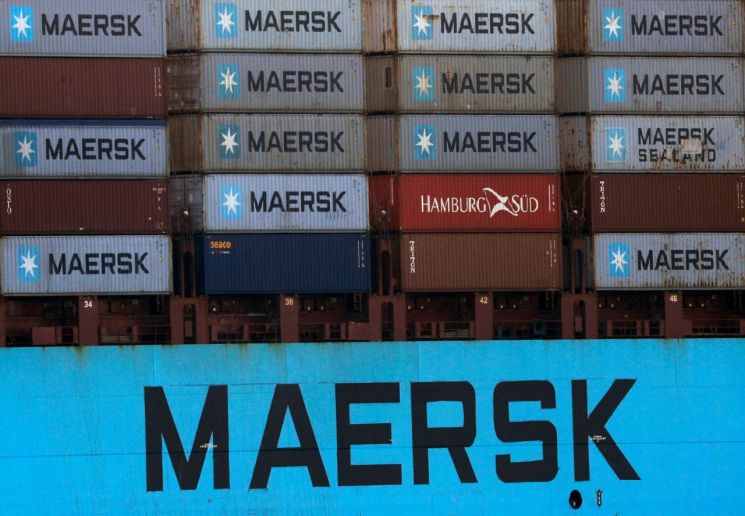
Korea Shipbuilding & Offshore Engineering said, "Container shipping companies' revenues have increased recently, and we expect they will use this to replace aging vessels in line with strengthened environmental regulations," adding, "We believe shipping companies will move quickly according to the (environmental regulation) timeline."
After several years of downturn in the shipping industry, new ship prices had fallen significantly but have gradually recovered this year with the market recovery. In this context, the rising demand for expensive eco-friendly vessels is also pushing new ship prices upward. Although the company did not disclose specific profit margins, it stated during the conference call that the recently ordered vessels are sufficiently profitable even considering the consecutive increases in steel plate prices. With a backlog of more than two and a half years based on orders, the company emphasized that it will focus on raising ship prices by selecting and contracting orders that can fetch the right price.
Looking at the company’s Q3 earnings announced on the same day, consolidated operating profit was 141.7 billion KRW, up 248% compared to the same period last year. The company had recorded a large loss in the previous quarter due to pre-reflecting steel price increases, but this time turned to profit. The decline in steel prices in Q3 compared to the time of negotiation with steelmakers resulted in about 60 billion KRW being reversed, which also positively impacted earnings. Q3 sales were 3.5579 trillion KRW, up 2.8% year-on-year but down about 6.3% compared to the previous quarter.
By business segment, operating profit in the shipbuilding sector more than doubled to 190 billion KRW compared to Q3 last year. The offshore and plant sectors recorded losses of 22.1 billion KRW and 19.7 billion KRW, respectively. The engine machinery division’s operating profit was 44.2 billion KRW, up 20.4% from the same period last year.
© The Asia Business Daily(www.asiae.co.kr). All rights reserved.
![Clutching a Stolen Dior Bag, Saying "I Hate Being Poor but Real"... The Grotesque Con of a "Human Knockoff" [Slate]](https://cwcontent.asiae.co.kr/asiaresize/183/2026021902243444107_1771435474.jpg)
















