Seoul Apartment Prices Average 1.2 Billion Won · Ultra-Strict Loan Regulations
Surge in Demand for Alternative Officetels Due to Apartment Purchase Restrictions
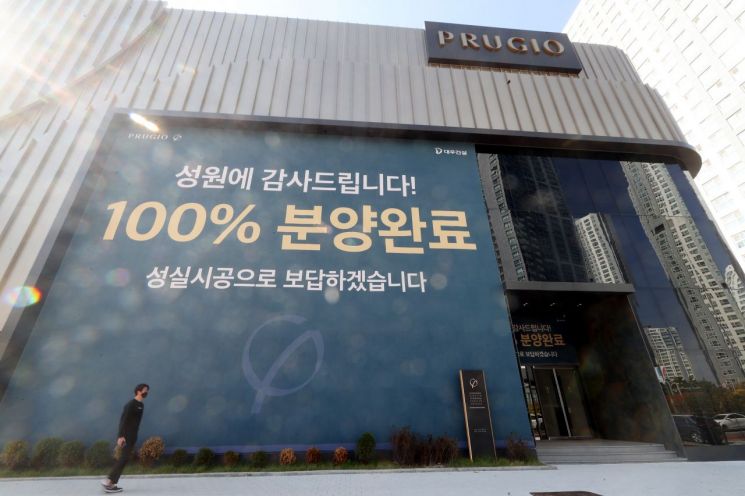 On the afternoon of the 25th, a promotional banner indicating full sales was displayed on the exterior wall of the model house for 'Bukcheongra Prugio Tresiel Officetel' in Seo-gu, Incheon. This officetel, located in the Gyeongseo 3 Urban Development District, is a large complex with a total of 1,522 units. During the subscription period, 43,229 applications were received, resulting in an average competition rate exceeding 28 to 1.
 "Now, even using all my financial resources, it's becoming difficult to buy an apartment. Should I buy an officetel before it's too late?" (A, a worker in his 30s)
With apartment prices soaring and stringent loan regulations added, the 'panic buying' phenomenon is showing signs of shifting toward officetels and residential-type lodging facilities. Unlike apartments, which have reached a transaction freeze, officetel transaction volumes are steadily increasing, and their sale prices continue to soar as well.
According to the real estate industry on the 28th, as the average apartment sale price in Seoul surpasses 1.2 billion KRW, housing instability is growing, leading to an overheated market for apartment substitutes such as officetels. The industry views the recently announced government loan regulation strengthening measures as fueling this situation. These measures aim to establish a loan practice centered on repayment ability by advancing the implementation of the Debt Service Ratio (DSR)?the ratio of principal and interest payments to income?and expanding it to the secondary financial sector. Experts point out that with the possibility of a base interest rate hike next month and the financial sector beginning to reduce loan limits, apartment purchases by 2030 households with insufficient initial capital will become virtually impossible.
Therefore, 2030 real demand buyers who need immediate housing stability seem to be turning their attention to officetels instead of apartments. Officetels face lower regulatory hurdles, and under the current regulations, mid-term loans for officetels are effectively exempt from DSR application. Anxiety over missing the 'last train' amid soaring apartment prices is also stimulating officetel purchases. Kim Byung-gi, head of the RealToday Research Team, said, "As it becomes difficult to enter the apartment and other pre-sale markets, more consumers are choosing residential-type officetels, which are subject to much lighter regulations."
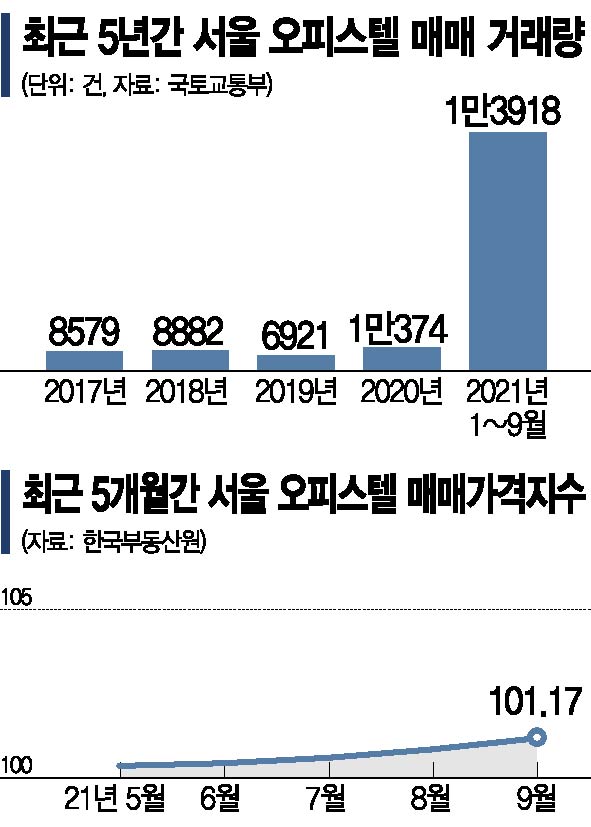
According to the Ministry of Land, Infrastructure and Transport, the number of officetel sales in Seoul reached 13,918 by the end of September this year, a 34.2% increase compared to the same period last year. Prices are also on the rise. According to data from the Korea Real Estate Board, the average sale price of officetels larger than 85㎡ in Seoul in September rose by 12.46 million KRW from the previous month to 1.10301 billion KRW, surpassing 1.1 billion KRW for the first time ever. The sale price index increased for five consecutive months, from 100.35 in May to 101.17 in September. There are even officetels with pre-sale prices exceeding 1.5 billion KRW. The ‘Hillstate Gwacheoncheongsayeok’ officetel, scheduled for pre-sale this month, has prices ranging from 1.555 billion to 1.618 billion KRW for 84㎡ units. The 84㎡ terrace units are priced at 1.766 billion KRW, and the 84㎡ penthouses range from 2.18 billion to 2.2 billion KRW.
However, experts advise caution against reckless chasing purchases of non-residential products like officetels. Although the apartment price record-breaking rally continues, signals such as a sharp drop in transaction volume suggest a market peak, so prudence is necessary. Ko Jun-seok, adjunct professor at Dongguk University Law School, said, "Due to recent loan regulations, real demand buyers are effectively blocked from purchasing apartments, but they should refrain from 'all-in' investments in non-residential products. When a downturn hits, apartment substitute products like officetels and residential-type lodging facilities will be the first to be severely impacted."
© The Asia Business Daily(www.asiae.co.kr). All rights reserved.
![Clutching a Stolen Dior Bag, Saying "I Hate Being Poor but Real"... The Grotesque Con of a "Human Knockoff" [Slate]](https://cwcontent.asiae.co.kr/asiaresize/183/2026021902243444107_1771435474.jpg)
















