[Seoul Gwangjin-gu News] LED Lamps Illuminate to Detect Vehicles Approaching Intersections for Safe Driving... Free Local Small Group Spaces and One-Day Class Programs Offered Until December to Support Youth Community Activities... Building Energy Efficiency (BRP) Promoted for Private Buildings and Houses Over 10 Years Old... Seoul Disabled Dart Federation Hosts 'Green Market' Every Saturday Until November 13
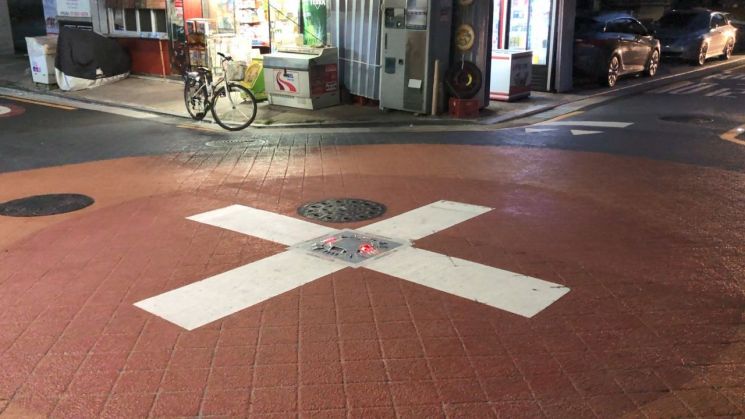 At night, the headlights of the first approaching vehicle are detected, and a yellow light flashes toward the vehicle, while red lights flash to the left and right directions, sending a warning signal to both drivers and pedestrians.
[Asia Economy Reporter Park Jong-il] Gwangjin-gu (Mayor Kim Seon-gap) has installed ‘Intersection Alert’ devices at 25 intersections around elementary schools in the district to eliminate traffic accident blind spots.
Many side streets around elementary schools lack traffic lights, and intersections in particular have a high risk of traffic accidents. To prevent accidents involving vehicle drivers and pedestrians, the ‘Intersection Alert’ system was installed.
The ‘Intersection Alert’ system is designed to prevent traffic accidents by notifying pedestrians and drivers of approaching vehicles with lights at side street intersections.
During the day, yellow LED lamps flash continuously to increase intersection visibility for drivers and encourage slow driving.
At night, the system detects the headlights of the first approaching vehicle and flashes yellow towards the vehicle and red towards the left and right directions, sending a danger signal to both drivers and pedestrians. This encourages safe driving and helps prevent traffic accidents.
The district plans to install additional ‘Intersection Alert’ devices at 24 more intersections around elementary schools by the end of this year.
Kim Seon-gap, Mayor of Gwangjin-gu, said, “By installing ‘Intersection Alert’ devices on side streets near elementary schools, we expect to encourage slower driving, prevent traffic accidents, and create a safer walking environment for pedestrians. We will continue to work to eliminate traffic blind spots and establish a safe traffic environment.”
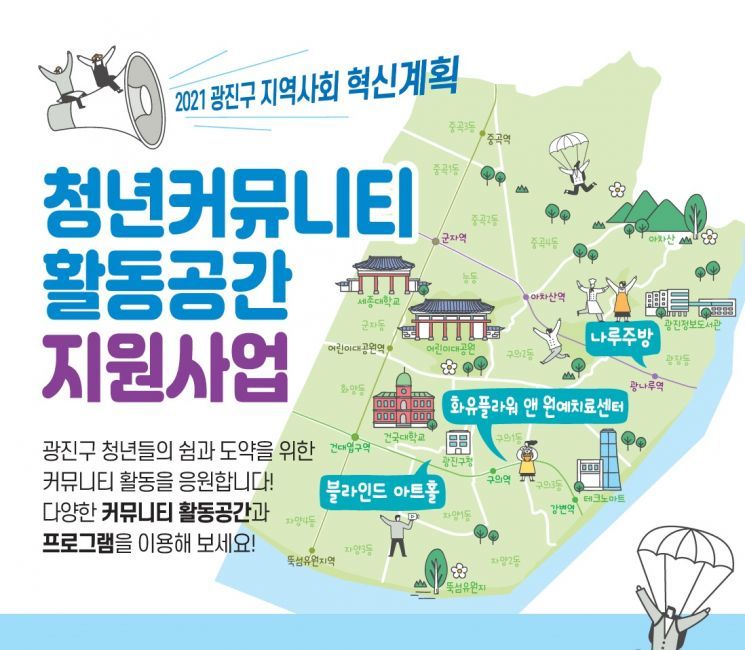
Gwangjin-gu (Mayor Kim Seon-gap) will provide free small group spaces and one-day class programs within the district until December to support young people’s free community activities.
This project was proposed through the ‘Gwangjin-gu Community Innovation Plan’ cooperative public forum, where residents and administration jointly identify and solve local issues. It reflects residents’ voices by discovering private spaces as venues for youth community activities, allowing young people to interact within the district without economic burden.
There are three youth community activity spaces: a shared kitchen, a horticulture education center, and a small performance hall. These spaces offer ▲shared kitchen-based interaction support ▲space support for building a network of prospective entrepreneurs ▲social economy startup mentoring ▲healing horticulture one-day classes ▲short film production one-day classes, among others.
Participants are young people aged 19 to 39 who live or are active in Gwangjin-gu. Teams of up to four people or individuals can apply for each program.
Youth wishing to use the activity spaces or educational programs can check reservation status on the Gwangjin-gu website and submit an application via email (mjj12@citizen.seoul.kr). For more details, contact the Child and Youth Division.
Kim Seon-gap, Mayor of Gwangjin-gu, said, “We have created a space for activities for young people who may have faced restrictions on places for growth and rest due to the prolonged COVID-19 pandemic. We hope this project will provide healing and vitality to young people, and we will continue to prepare various projects for a better life for youth.”
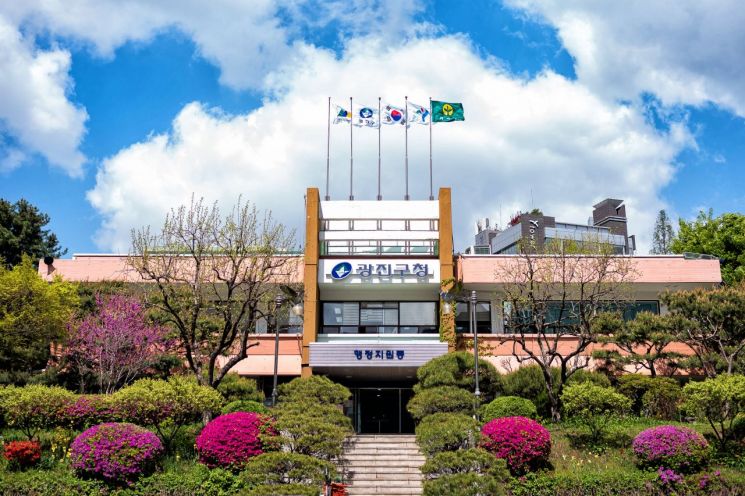
Gwangjin-gu (Mayor Kim Seon-gap) is promoting and providing guidance on Seoul City’s Building Energy Efficiency Improvement (Building Retrofit Project, BRP) loan and subsidy support program aimed at improving energy efficiency in buildings, which account for the largest share of greenhouse gas emissions.
Since 2008, Seoul City has been implementing the building energy efficiency project, supporting the replacement of high-efficiency materials to improve inefficient energy consumption factors in buildings and thereby encourage energy savings.
The support targets owners or tenants of private buildings over 10 years old as of the approval date, and homeowners. When installing ▲insulated windows ▲interior/exterior wall insulation ▲boilers ▲waste heat recovery equipment ▲LED lighting, 80-100% of the required funds are provided as interest-free loans.
For houses, support is up to 15 million KRW, and for buildings, up to 2 billion KRW, with repayment in equal installments over 8 years. Approval from Seoul City’s loan review and the relevant financial institution’s loan screening is required.
Subsidies of up to 60 million KRW plus certification fees are provided only if the building achieves the highest energy efficiency grade (Grade 1). However, for buildings with a total floor area of 3,000㎡ or more, only certification fees up to 13.2 million KRW are supported.
Those wishing to participate can apply directly through the online loan and subsidy application site for the building energy efficiency project by December 17. For more information, refer to the Gwangjin-gu website or contact the Environmental Division of Gwangjin-gu Office or the Climate Change Response Division of Seoul City.
Kim Seon-gap, Mayor of Gwangjin-gu, said, “Improving energy efficiency is not optional but essential to respond to the worsening climate crisis. We hope many will take interest and participate in the Building Energy Efficiency Improvement (BRP) project, which increases energy efficiency and reduces heating and cooling costs.”
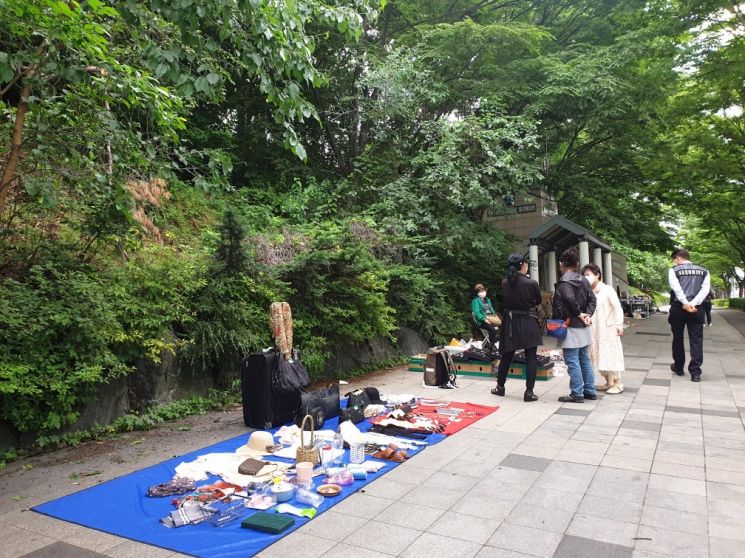
Gwangjin-gu (Mayor Kim Seon-gap) is hosting a green market for secondhand goods exchange, organized by the Seoul Metropolitan Disabled Dart Federation, open to all residents.
This market was established to spread a culture of recycling at the community level and promote exchange and harmony among residents.
The market runs every Saturday from October 23 to November 13, from 10 a.m. to 5 p.m., at the Children’s Grand Park Exit 1 (216 Neungdong-ro) in front of the elevator.
Each market features 15 sellers or teams who engage in ▲secondhand goods exchange ▲recycling product sales ▲promotion of resource recycling.
To prevent the spread of COVID-19, sellers maintain distance, and thermometers, soap, hand sanitizers, and extra masks are provided. The surrounding environment is thoroughly disinfected, and events with infection risks such as food sales are not held.
Kim Seon-gap, Mayor of Gwangjin-gu, said, “The green market is a meaningful place where resource circulation, sharing culture, and communication among residents come together. We hope the culture of participating in small acts of sharing to create a warm community will continue to spread.”
© The Asia Business Daily(www.asiae.co.kr). All rights reserved.
![Clutching a Stolen Dior Bag, Saying "I Hate Being Poor but Real"... The Grotesque Con of a "Human Knockoff" [Slate]](https://cwcontent.asiae.co.kr/asiaresize/183/2026021902243444107_1771435474.jpg)













