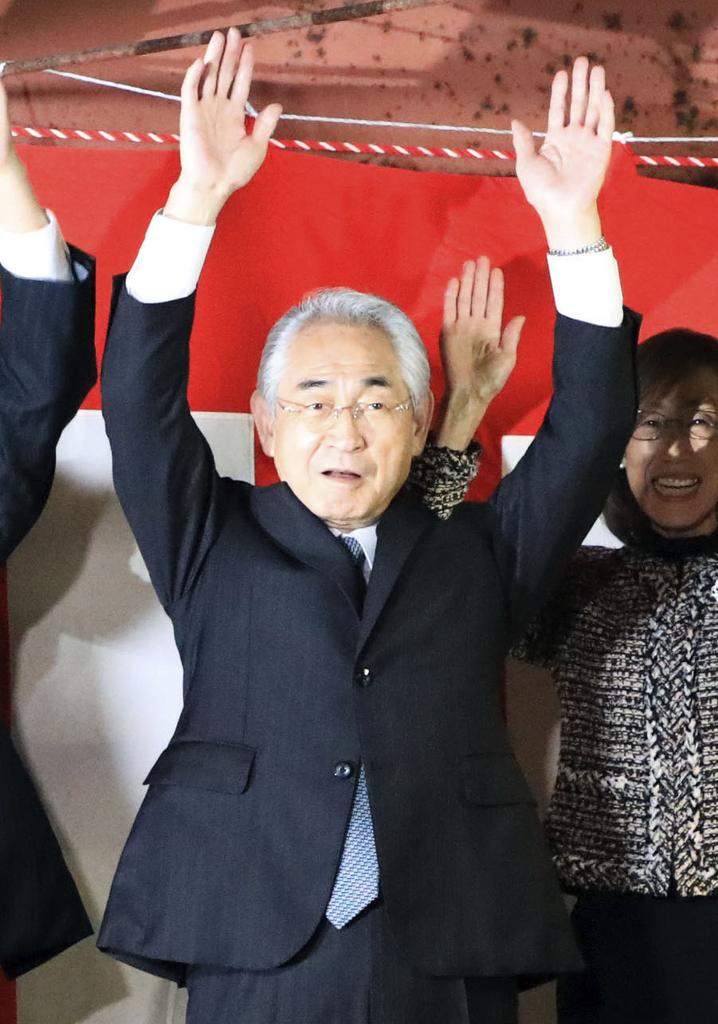
[Asia Economy Reporter Kwon Jae-hee] In a local election in Hokkaido, Japan, which borders the East Sea of Korea, a candidate advocating for the hosting of a final disposal site for high-level radioactive waste from nuclear power plants was elected.
On the 26th, an election was held in Suttsu Village, Suttsu District, Hokkaido, Japan, due to the expiration of the term of Haruo Kataoka (72), the village head. The village head is a local leader roughly equivalent to a town mayor in Korea.
This village, with a total area of 95 km² and a population of about 2,800, attracted attention because the incumbent Kataoka, who was running for a sixth term, declared his intention to promote the hosting of a national issue in Japan: the final disposal site for high-level radioactive waste.
Opposing him was Yoshiki Echizenya (70), a former village council member, who pledged to halt the hosting promotion that was causing division among residents.
The residents of Suttsu, who have enjoyed a quiet rural life, were sharply divided into supporters and opponents during this election process.
However, when the results were revealed, it turned out that the majority of residents voted for Kataoka, who advocated for the hosting promotion.
With a voter turnout of 84.07%, Kataoka received 1,135 votes, while Echizenya received 900 votes, meaning 235 more residents supported the hosting promotion.
As a result, the literature survey, which began in November last year as the first step in selecting the final disposal site in Suttsu Village, can continue.
In October last year, despite some residents' opposition, Suttsu Village applied for the literature survey under the leadership of Village Head Kataoka.
The Japanese government’s selection of the final disposal site, a 20-year national project, involves a two-year literature survey to examine existing data and papers for site suitability, a four-year preliminary survey involving actual surface excavation, and a 14-year detailed survey to build underground facilities and assess seismic risks.
During this process, the central government provides substantial grants to the local governments involved.
Applying for the literature survey can yield up to 2 billion yen (approximately 20 billion KRW), and the preliminary survey up to 7 billion yen (approximately 70 billion KRW) in grants.
Japanese media analyzed that the supporters backed Village Head Kataoka’s argument to revitalize the declining village suffering from population decrease through the hosting promotion.
For the same reason, Kamoenai Village, about 40 km north of Suttsu, also applied for the literature survey and is currently under investigation.
The literature survey in Suttsu Village is expected to conclude as early as next year.
To proceed to the second stage, the preliminary survey, another referendum will be required, and it is anticipated that the debate over the national project promoted by the Japanese government as a long-term task will be rekindled.
According to Kyodo News, Kataoka, who achieved six terms on the platform of promoting the hosting of the final disposal site, said, "The margin of votes was very narrow, so I feel a heavy responsibility. I will engage in dialogue with residents and study nuclear waste anew."
He added that winning this election does not mean he believes he has gained residents’ understanding of the literature survey.
© The Asia Business Daily(www.asiae.co.kr). All rights reserved.
![Clutching a Stolen Dior Bag, Saying "I Hate Being Poor but Real"... The Grotesque Con of a "Human Knockoff" [Slate]](https://cwcontent.asiae.co.kr/asiaresize/183/2026021902243444107_1771435474.jpg)















