Achievements in Post-Cold War Diplomacy and Inter-Korean Relations
12·12 Coup, 5·18 Military Suppression, Secret Funds
[Asia Economy Reporter Naju-seok] Former President Roh Tae-woo, who served as the 13th President of the Republic of Korea, passed away on the 26th at the age of 89. Roh, a key figure in the December 12 military coup, was also the first directly elected president of the Sixth Republic. He established diplomatic relations with the former Soviet Union, adopted the Basic Agreement between North and South Korea, and promoted a plan to build 2 million houses.
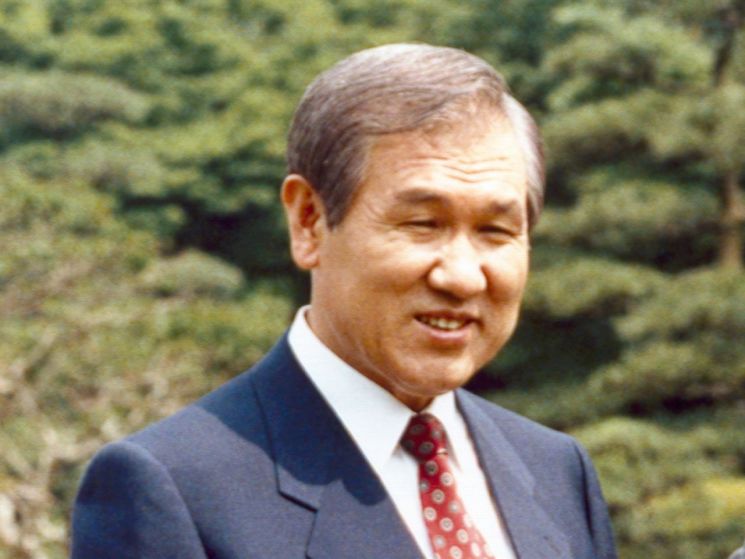
After graduating from the Korea Military Academy and serving as an officer in the army, Roh Tae-woo staged a military rebellion with former President Chun Doo-hwan on December 12, 1979. Following the launch of the Fifth Republic under Chun, Roh became the second-in-command of the regime, serving as the Capital Security Command and Security Command commander before retiring as an army general in 1981. He also served as Minister of the Interior, Chairman of the Seoul Olympic Organizing Committee, and was elected leader of the Democratic Justice Party, leading a political career.
During the June Struggle in 1987, which demanded direct presidential elections, Roh declared the 6.29 Declaration endorsing direct presidential elections. In his later autobiography, Roh stated, "Amid the tide of democratization, I pondered how to maintain security and growth, and concluded that the only way was to lead the democratization movement at the forefront myself," adding, "That was the spirit of the 6.29 Declaration and a consistent national policy philosophy during my presidency." There remains debate over whether Roh or Chun was the main force behind the 6.29 Declaration.
In that year's presidential election, Roh, who positioned himself as an 'ordinary person,' won amid the split between the two Kims, Kim Dae-jung and Kim Young-sam. After taking office, he formed the Democratic Liberal Party through the merger of three parties, laying the foundation for today's conservative opposition party, the People Power Party.
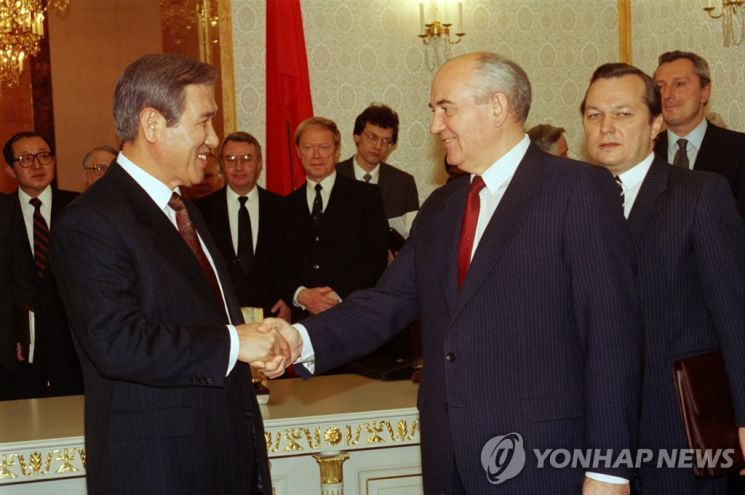
During the post-Cold War era, he achieved diplomatic breakthroughs by establishing relations not only with the Soviet Union and other former Eastern Bloc countries but also with China. In inter-Korean relations, he announced the "Presidential Special Declaration for National Dignity and Unification Prosperity (7.7 Declaration)," followed by high-level inter-Korean talks, the Joint Declaration on the Denuclearization of the Korean Peninsula, and simultaneous admission of both Koreas to the United Nations, establishing a framework for North-South relations.
Amid growing democratization demands such as the large-scale labor struggles following the June Struggle, policies were implemented including debt relief for farmers and fishermen, introduction of the public concept of land ownership, sale of non-operational land owned by large corporations, and the construction of 2 million houses.
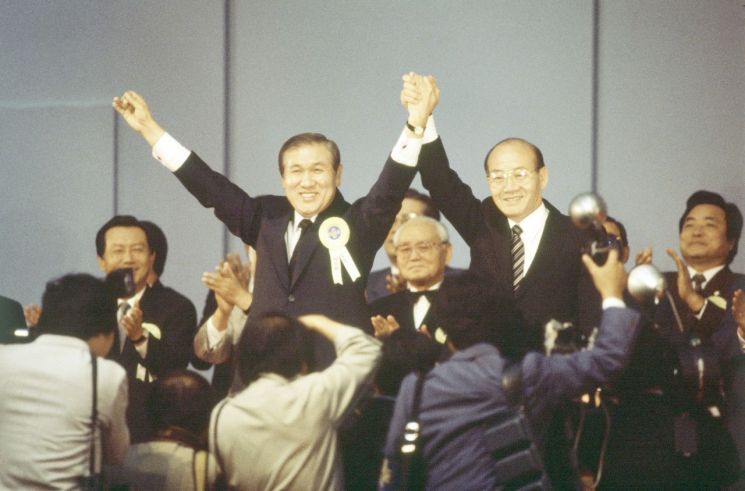
Despite being elected president through direct elections, Roh's inherent limitation was his rise to power through a coup. After leaving office, he was indicted and imprisoned along with Chun Doo-hwan during the administration of his successor, President Kim Young-sam, on charges related to the December 12 military rebellion and the May 17 insurrection. During his tenure, he also sent Chun to Baekdamsa Temple. Regarding the May 18 Gwangju Democratization Movement, his son, Roh Jae-heon, visited Gwangju and paid respects at the May 18 Democratic Cemetery, expressing apologies.
He was also imprisoned for slush funds. In 1997, Roh was convicted of bribery related to slush funds amounting to 450 billion won. In his autobiography, Roh defended himself by saying, "I am well aware that the public's anger is immense and that it is difficult to excuse it as a mere customary practice at the time," and added, "I want to emphasize that the money I kept after leaving office was never for personal enrichment."
© The Asia Business Daily(www.asiae.co.kr). All rights reserved.
![Clutching a Stolen Dior Bag, Saying "I Hate Being Poor but Real"... The Grotesque Con of a "Human Knockoff" [Slate]](https://cwcontent.asiae.co.kr/asiaresize/183/2026021902243444107_1771435474.jpg)

















