Kyodo News Poll... Swing Voters 40.3% → 34.3%
[Asia Economy Reporter Kim Suhwan] It has been revealed that the number of voters who believe it is desirable for the ruling and opposition parties to achieve a certain balance in the upcoming Japanese House of Representatives general election on the 31st is increasing.
This indicates a growing sentiment that the long-standing dominance of the Liberal Democratic Party (LDP) since the launch of Shinzo Abe’s second administration in 2012 should be checked, drawing attention to how this will be reflected in the election results.
According to a telephone opinion poll conducted by Kyodo News from the 23rd to 24th among 1,257 voters nationwide (valid respondents), 49.4%?the majority?selected "a close race between the ruling and opposition parties" as the desirable election outcome. This figure rose by 4.2 percentage points compared to the survey conducted a week earlier.
On the other hand, the response that the ruling party should secure more seats than the opposition dropped by 1.7 percentage points to 34.6%, and those hoping for the opposition to win more seats and achieve a regime change also fell by 2.5 percentage points to 11.4%.
This suggests that most Japanese voters desire an election result where the coalition government of the LDP and Komeito is maintained, but with a certain degree of balance between the ruling and opposition parties.
Based on votes for constituency candidates, the LDP’s support rate rose slightly by 0.4% from the previous week to 33.3%, maintaining its top position.
However, the support rate for the main opposition party, the Constitutional Democratic Party (CDP), surged by 3.9 percentage points from 9.2% to 13.1%, indicating growing voter checks on the LDP.
In proportional representation candidate support rates, the order was LDP (29.9%), CDP (11.6%), Komeito (5.2%), Communist Party (4.8%), and Nippon Ishin no Kai (Japan Innovation Party) (4.6%).
The undecided voters who have not yet chosen a candidate decreased from 40.3% to 34.3%.
Regarding the opposition’s five-party unification of candidates in 210 out of 289 constituencies to create a direct ruling-opposition contest, negative evaluations (48.5%) slightly exceeded positive evaluations (44.7%).
In this Kyodo News survey, simple party support rates were 44.7% for the LDP and 12.4% for the CDP. Compared to the survey a week earlier, the LDP dropped 4.4 percentage points while the CDP rose 2 percentage points.
The most important issues when voting were economic policy (34.7%), COVID-19 measures (16.1%), pension, medical, and care service policies (15.7%), and childcare and low birthrate countermeasures (8.6%).
The proportion citing economic policy increased by 2 percentage points in one week, while those citing COVID-19 measures decreased by 3.3 percentage points.
The decline in voter interest in COVID-19 measures appears to be influenced by the recent sharp drop in new infections in Japan.
Other issues considered important when voting included political corruption (5.5%), diplomacy and security (5.0%), regional revitalization (3.7%), and constitutional revision (2.6%), which received relatively fewer responses.
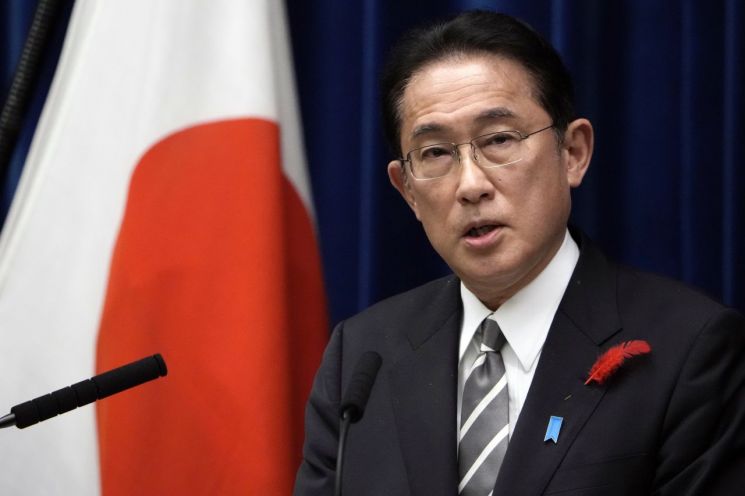
Regarding Prime Minister Fumio Kishida’s economic policies, more respondents answered "have no expectations" (48.2%) than "have expectations" (44.6%).
The Kishida Cabinet’s approval rating remained at 55.9%, the same as the previous survey.
The proportion of respondents who do not support the cabinet increased by 3.1 percentage points to 35.9%, as the number of non-responses decreased.
© The Asia Business Daily(www.asiae.co.kr). All rights reserved.
![Clutching a Stolen Dior Bag, Saying "I Hate Being Poor but Real"... The Grotesque Con of a "Human Knockoff" [Slate]](https://cwcontent.asiae.co.kr/asiaresize/183/2026021902243444107_1771435474.jpg)
















