"Consideration Needed for Increase in Demolished Houses and Number of Households"
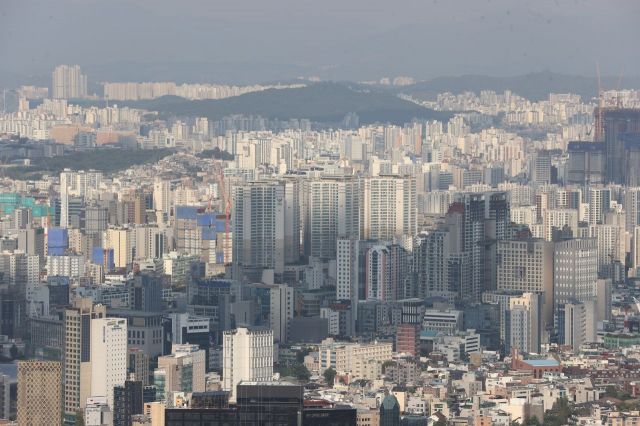
As housing prices have soared to the maximum, causing severe residential instability among the working class, statistics showing that the actual housing supply volume is at an all-time high have raised questions. Experts point out that to resolve this paradox, variables such as ‘demolished houses’ and ‘number of households’ must be taken into account.
According to the real estate industry on the 22nd, the Ministry of Land, Infrastructure and Transport recently submitted to the National Assembly the ‘Annual Housing Supply Volume Data,’ revealing that during the four years of the Moon Jae-in administration (2017?2020), the average annual housing supply volume in Seoul was 74,834 units based on permits, 77,854 units based on construction starts, and 76,279 units based on completions.
This level is higher than during the Roh Moo-hyun administration (permits 65,642 units, construction starts 43,685 units, completions 52,343 units) and the Lee Myung-bak administration (permits 65,576 units, construction starts 50,066 units, completions 56,202 units). Compared to the Park Geun-hye administration (permits 79,711 units, construction starts 76,513 units, completions 73,604 units), the number of permits was lower, but the construction starts and completions were higher. On the surface, the housing supply volume appears to be greater than that of previous administrations.
Considering that supply shortage is cited as a major cause of the skyrocketing housing prices in Seoul, these figures seem somewhat contradictory. Experts say this is an optical illusion caused by not factoring in key variables such as demolished houses and the increase in the number of households.
The average annual number of demolished houses in Seoul was 18,241 units during the Lee Myung-bak administration, 27,632 units during the Park Geun-hye administration, and 37,788 units during the Moon Jae-in administration. Subtracting the demolished houses from the completion figures, the actual housing supply volumes were 37,961 units, 45,972 units, and 38,491 units respectively, meaning the Park Geun-hye administration supplied about 7,500 more units annually than the Moon Jae-in administration. The sharp increase in the number of households also drove housing demand. According to the Statistics Korea population census, the number of households in Seoul steadily increased from approximately 3.98 million in 2018 to 4.04 million in 2019 and 4.12 million in 2020.
Seo Jin-hyung, president of the Korea Real Estate Society and professor at Gyeongin Women’s University, said, "It is desirable to pursue a policy direction that increases the absolute volume of housing supply under the current circumstances," but added, "there is a need to align a long-term demand-supply roadmap that considers demolished houses and the increase in the number of households."
Meanwhile, at the parliamentary audit the day before, Land Minister Noh Hyung-wook stated, "The government is focusing its supply policy direction on expanding housing supply especially in urban areas through measures such as the ‘8.4 Plan’ last year and the ‘2.4 Plan’ this year."
© The Asia Business Daily(www.asiae.co.kr). All rights reserved.
![Clutching a Stolen Dior Bag, Saying "I Hate Being Poor but Real"... The Grotesque Con of a "Human Knockoff" [Slate]](https://cwcontent.asiae.co.kr/asiaresize/183/2026021902243444107_1771435474.jpg)















