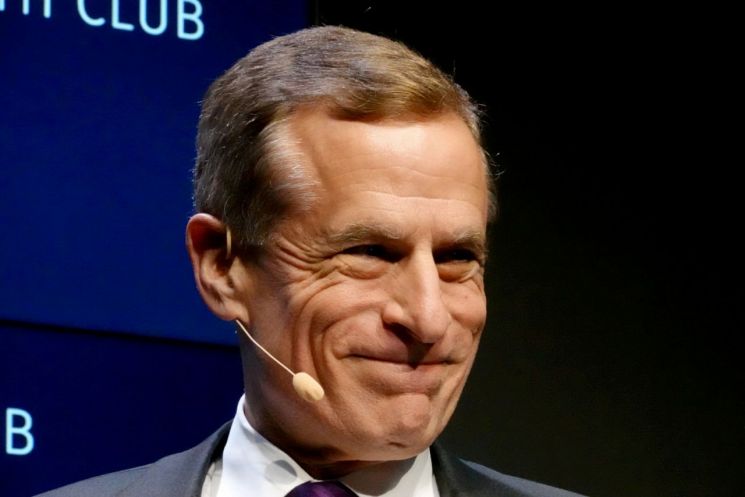
[Asia Economy Reporter Park Byung-hee] Controversy surrounding stock trading by senior officials of the U.S. central bank, the Federal Reserve (Fed), is showing signs of spreading. There are mounting demands to disclose the stock trading records of the regional Fed presidents involved in the issue, but the respective regional Feds are showing a stance of not disclosing the information.
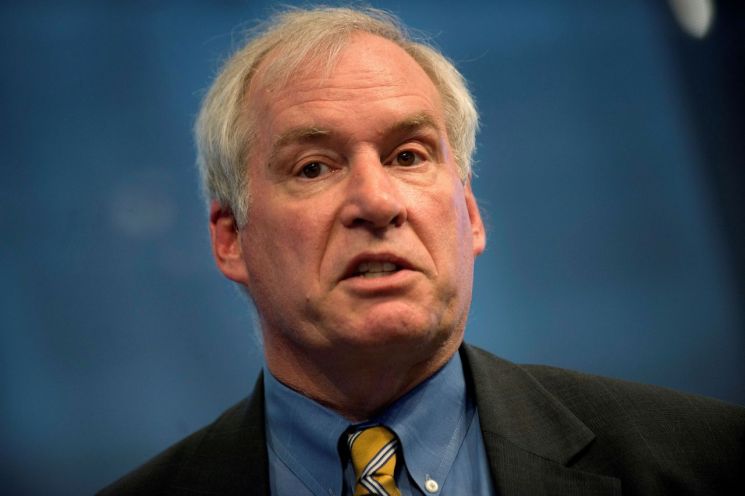
According to major foreign media on the 20th (local time), the Boston Fed announced that it will not disclose documents related to the stock trading records of former President Eric Rosengren.
President Rosengren, along with former Dallas Fed President Robert Kaplan, sparked controversy after it was revealed that they had engaged in stock trading. Both presidents resigned following the controversy. Although they resigned, both claimed that they complied with regulations and that their stock trading was not illegal. However, since the Fed's monetary policy decisions have a huge impact on financial markets, concerns were raised that stock trading by senior Fed officials is a matter related to moral hazard. Fed Chair Jerome Powell ordered a review of the Fed's ethics rules after the controversy emerged.
Foreign media reported that both the Boston and Dallas Feds refused requests to disclose the results of the regulatory review discussions and the stock trading information of the two presidents involved in the issue. It has been confirmed that the regional Feds involved are not responding to the central Fed's requests for information disclosure.
A Boston Fed spokesperson stated in an email that they could not provide details of internal discussions. The spokesperson said that the Fed Chair requested a review of the ethics rules, and the Boston Fed welcomes and plans to fully cooperate with this, but will not disclose related details. The reason for refusing to disclose information is to review the relevant regulations without bias. This is interpreted as a stance not to be swayed by negative external views. The Boston Fed also said that the overall schedule for the Fed ethics rules review, as directed by Chair Powell, has been postponed.
The Dallas Fed stated that it has forwarded the request for disclosure to the Dallas Fed Board of Directors. However, the board has not yet responded to the request. The central Fed also requested information disclosure from the Dallas Fed, but the Dallas Fed Board has not yet complied, citing the Federal Freedom of Information Act.
The Federal Freedom of Information Act requires public institutions to disclose information upon public demand.
However, regional Feds are not public institutions. Although they are under the control of the central Fed, their shareholders are private regional commercial banks, making them de facto private institutions. The board that nominates the president consists of nine members, of which only three are appointed by the central Fed. The remaining six are selected by regional Fed shareholders (three members) and regional Fed member banks (three members).
Since they are not public institutions, the obligation to disclose information under the Freedom of Information Act does not apply, and the decision to disclose information lies with the regional Fed board, according to the Dallas Fed's position.
Republican Senator Steve Daines recently raised this issue during a Senate hearing on Fed Chair Powell. Democratic Senator Sherrod Brown, chairman of the Senate Banking Committee, is preparing legislation to limit the private ownership ratio of regional Feds. Democratic Senator Elizabeth Warren is demanding an investigation by securities authorities into stock trading by regional Feds.
© The Asia Business Daily(www.asiae.co.kr). All rights reserved.
![Clutching a Stolen Dior Bag, Saying "I Hate Being Poor but Real"... The Grotesque Con of a "Human Knockoff" [Slate]](https://cwcontent.asiae.co.kr/asiaresize/183/2026021902243444107_1771435474.jpg)
















