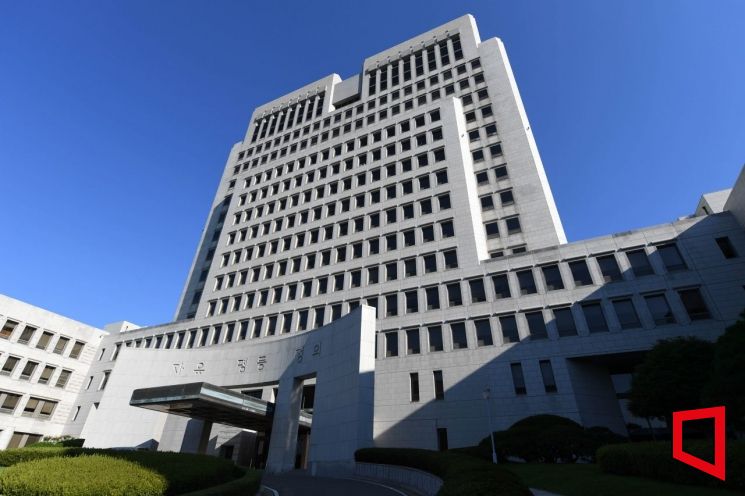
 Supreme Court, Seocho-gu, Seoul. Photo by Mun Ho-nam munonam@
[Asia Economy Reporter Kim Daehyun] The Supreme Court has ruled that victims of the "Emergency Measure No. 1" who received compensation under the Democratization Compensation Act can file separate claims for damages against the state.
On the 21st, the Supreme Court's 3rd Division (Presiding Justice Ahn Cheolsang) announced that in the retrial appeal of the damages claim lawsuit filed by Emergency Measure No. 1 victim Oh Jongsang (81) against the state, it overturned the previous Supreme Court ruling that dismissed the plaintiff's claim and confirmed the lower court's decision ordering the state to pay Oh approximately 115 million won.
Previously, in May 1974, Oh was taken by the Central Intelligence Agency on suspicion of criticizing the Yushin regime to a fellow passenger while on a bus heading to Pyeongtaek, Gyeonggi Province. After being beaten and subjected to harsh treatment, he made a false confession and was sentenced to three years in prison by the Supreme Court the following year. Oh was acquitted through a retrial in 2010 and filed a damages lawsuit against the state a year later.
The first trial ruled against Oh, stating that since he had already received compensation from the government under the Democratization Compensation Act, a judicial settlement had been established. Oh had received approximately 42 million won in detention-related living support funds from the Committee for the Restoration of Honor and Compensation for Democratization Movement Participants in 2005, and about 184 million won in criminal compensation, so he could not claim additional damages.
The second trial ruled in favor of Oh, recognizing the state's responsibility to pay approximately 115 million won in damages. It held that the judicial settlement under the Democratization Compensation Act should be interpreted as applying to compensation claims under that Act, not to civil claims for damages under the Civil Act. However, in May 2016, the Supreme Court dismissed Oh's claim, agreeing with the first trial's judgment.
Subsequently, Oh filed a constitutional complaint, and in 2018, the Constitutional Court ruled that even if one has received compensation for democratization movements, they can still file claims for damages. Based on this, Oh requested a retrial at the Supreme Court. In the retrial, the Supreme Court agreed with the second trial's judgment and accepted Oh's claim.
© The Asia Business Daily(www.asiae.co.kr). All rights reserved.
















