LG, GM Followed by Stellantis Joint Factory Confirmed
SK to Build Mega Battery Plant with Ford
LG and SK to Operate 300GWh Battery Plants Annually in 5-6 Years
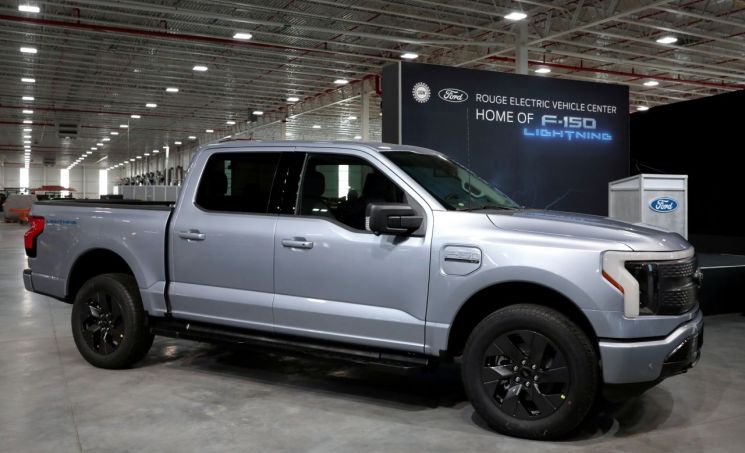
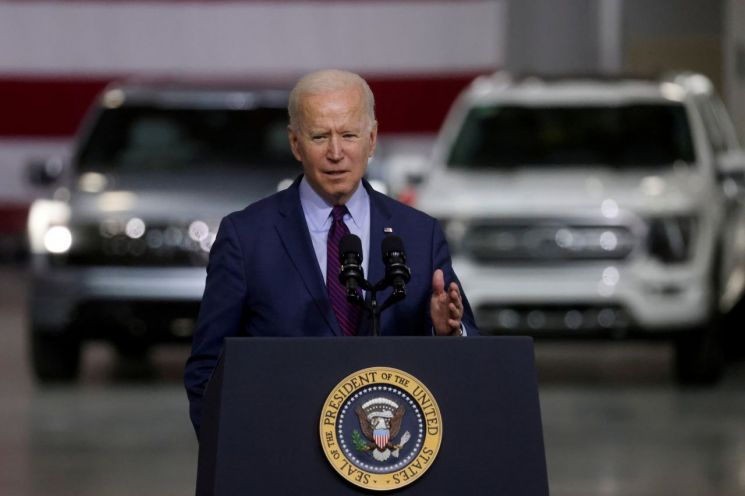 In May, U.S. President Joe Biden spoke at the Ford Dearborn Plant's Rouge Electric Vehicle Center in Michigan.
 [Asia Economy Reporter Choi Dae-yeol] As LG Energy Solution plans to establish a battery joint venture with Stellantis in the North American region, all three major local automakers have now partnered with Korean battery companies. Earlier, General Motors (GM), the number one automaker in the U.S., had already maintained a long-standing cooperative relationship with LG, and SK Innovation recently announced plans to invest in a joint factory with Ford.
Chrysler, along with GM and Ford, is one of the Big Three automakers in the U.S., and Stellantis, which includes brands such as Ram, Dodge, and Jeep, is considered the third or fourth largest automaker in the U.S. Compared to other major automakers, Stellantis has been somewhat slower in pushing for electrification, so it is expected to accelerate large-scale investments.
The new battery cell and module factory that LG and Stellantis plan to build will have an annual production capacity of 40GWh. Previously, LG’s first factory in the U.S., located in Holland, Michigan, had a capacity of 5GWh, and the joint factory currently under construction with GM (in Ohio and Tennessee) will have 70GWh. Additionally, LG is considering a standalone factory with a capacity of 40GWh. Including both standalone and joint factories, LG will have an annual capacity of 150GWh by 2025.
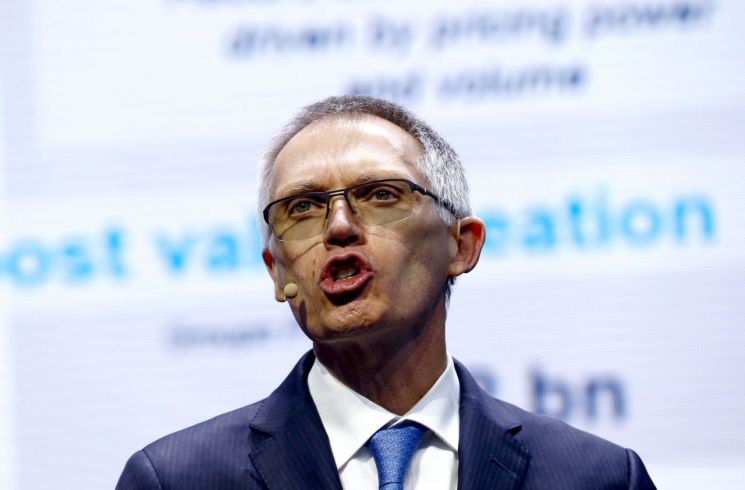
SK Innovation’s battery subsidiary, SK On, has also significantly increased its local production capacity through a joint venture with Ford. Its own Georgia plants 1 and 2 have a combined capacity of 21.5GWh, and the joint factory with Ford (in Tennessee and Kentucky) reaches 129GWh. In the next five to six years, production capacity in the U.S. is expected to reach 150GWh.
With LG and SK’s local battery factories combined, an annual production capacity of 300GWh will be achieved. Considering the characteristics of large vehicle models, where each vehicle requires about 100 kWh of battery capacity, this will be sufficient to meet the demand for approximately 3 million electric vehicles. Currently, Tesla is the top electric vehicle seller not only in the U.S. but worldwide, and Panasonic, which produces batteries for Tesla, is the largest battery manufacturer in the U.S.
Proximity to automaker factories is considered a crucial factor for electric vehicle battery sites. Due to the heavy weight and large volume of batteries, and with the U.S. government strategically aiming to foster the battery industry, Korean battery companies have recently announced a series of investment plans in the U.S. The prevalence of joint ventures is interpreted as a result of rapidly increasing electric vehicle adoption and aligned interests regarding battery supply. Battery companies can secure stable customers, while automakers can ensure a reliable supply channel for batteries amid concerns about future shortages.
Initially, Stellantis was expected to establish a joint venture with Samsung SDI, one of Korea’s Big Three battery companies. Samsung SDI does not have a battery cell factory in North America and had officially announced plans for a local factory. Moreover, for new factories involving large-scale capital investment, it was widely anticipated that joint ventures would be favored over standalone factories.
© The Asia Business Daily(www.asiae.co.kr). All rights reserved.
![Clutching a Stolen Dior Bag, Saying "I Hate Being Poor but Real"... The Grotesque Con of a "Human Knockoff" [Slate]](https://cwcontent.asiae.co.kr/asiaresize/183/2026021902243444107_1771435474.jpg)

















