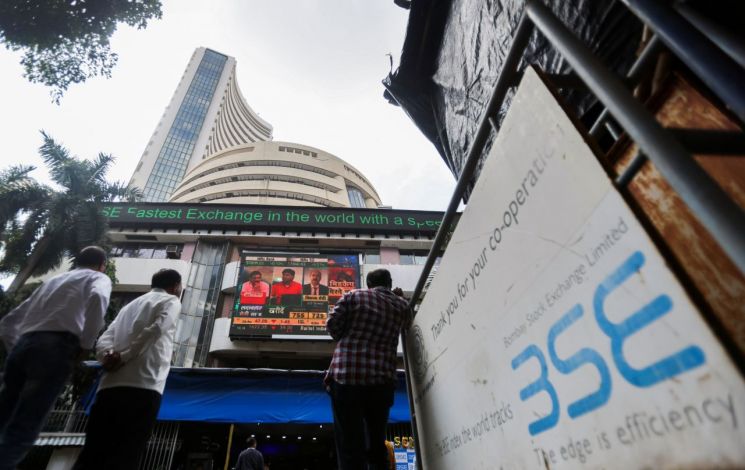
[Asia Economy Reporter Kim Suhwan] Amid China's implementation of ultra-strict regulations on its domestic tech companies, there is an analysis that India is gaining a windfall benefit.
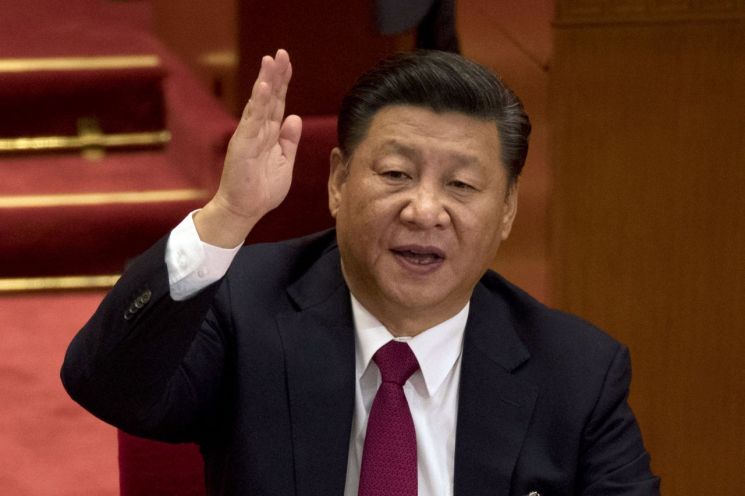
Previously, China abruptly banned the listing of Ant Group, Alibaba's fintech company, ahead of its planned IPO in November last year, and imposed a complete ban on cryptocurrency trading and mining, prohibited internet gaming for minors on weekdays, and ordered private education companies to convert into non-profit organizations.
China also imposed an antitrust fine of up to $1 billion on Meituan, the country's largest food delivery platform, and ordered Didi Chuxing, the largest ride-sharing service in China, to stop recruiting new users.
Due to such regulatory pressure, it is reported that the market capitalization of Chinese tech companies has evaporated by $1.5 trillion from its peak.
India's Venture Investment Inflow Surpasses China for the First Time Since 2013
As a result, capital that had been concentrated in Chinese companies is seeking new investment destinations, and India has emerged as the target.
Foreign Policy stated, "Investors who had gone to China now have to find other investment destinations," adding, "India is emerging as a new investment destination, especially due to investors' intentions to diversify their investment targets."
In fact, Foreign Policy reported that investment funds flowing into Chinese startups reached $17.3 billion in June but sharply dropped to $4.8 billion in July, just one month later.

During the same period, funds invested in Indian startups surged from $1.6 billion to $8 billion.
Notably, the monthly venture capital inflow into India surpassed China for the first time since 2013.
Considering that at the beginning of this year, venture capital investment in China was more than ten times that of India, this effectively represents a 'tectonic shift' in Asian venture capital investment.
The investment industry is also increasing its share of investments in India.
Tiger Global Management, based in New York, USA, has invested in 25 India-based startups just this year.
Additionally, Japan's SoftBank Group has declared a halt to new investments in China and plans to invest approximately $4 billion in Indian venture companies within this year.
Furthermore, India's major stock index, the BSE Sensex, has risen about 26% this year, while the CSI 300 index, which tracks around 300 large Chinese companies, fell 6% during the same period.
The background for the influx of investment funds into India is analyzed as the rapid growth of India's internet industry.
It is expected that over 900 million citizens in India will use smartphones in 2023, and by 2026, the number of users is projected to surpass that of China.
Moreover, due to the spread of non-face-to-face culture following the COVID-19 pandemic, the number of electronic payment transactions has surged, leading to rapid growth in the fintech industry. According to Foreign Policy, electronic payment transactions in India reached 12 billion in April last year and surged to 22 billion in April this year.
According to Nokia's research, Indian consumers spent the most time using smartphones worldwide last year, and data traffic increased 60-fold over the past five years.
The expansion of India's IT talent pool is also cited as another factor contributing to the increase in investment attraction in India.
Concerns Raised Over India's Investment Environment
Nevertheless, some express concerns that the expansion of investment in India may not be sustainable.
In particular, since the fundamental reason for the influx of investment funds into India is that investors are seeking alternative destinations instead of China rather than the performance and growth potential of the Indian venture industry, there are concerns about the possibility of a bubble forming.
This could lead to overvaluation of some startups and the creation of an excessive bubble, posing a risk of a sharp decline in market value later.
Additionally, since most consumers in India are accustomed to low prices, it is difficult for the industry to secure profitability.
The fact that there are not many successful initial public offerings (IPOs) in the Indian stock market means that investment exits are not active, and uncertainty regarding government regulatory policies is also a concern.
Furthermore, Foreign Policy pointed out that the weak social infrastructure necessary for the activation of digital industries such as e-commerce and delivery services in India should also be taken into consideration.
© The Asia Business Daily(www.asiae.co.kr). All rights reserved.
![Clutching a Stolen Dior Bag, Saying "I Hate Being Poor but Real"... The Grotesque Con of a "Human Knockoff" [Slate]](https://cwcontent.asiae.co.kr/asiaresize/183/2026021902243444107_1771435474.jpg)

















