[Asia Economy Honam Reporting Headquarters Reporter Yoon Jamin] Korea Land and Housing Corporation (LH) has been found to be engaging in 'overstepping power abuse' against newly entering companies in rental-only complexes operated to strengthen the competitiveness of small and medium-sized enterprises.
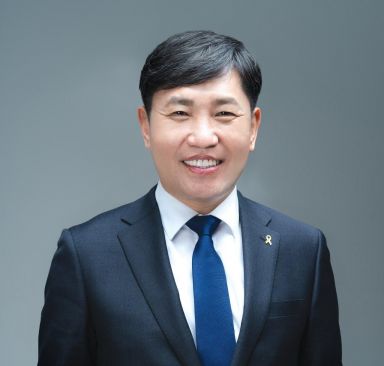
On the 7th, Assemblyman Jo O-seop (Gwangju Buk-gu Gap, Land, Infrastructure and Transport Committee & Budget Committee) pointed out at the LH national audit, "LH is forcing unfair contracts in rental-only complexes it operates by making new tenants bear the unpaid rent of all previous tenants."
Currently, LH operates 21 districts, including Gwangju Advanced 2nd Phase, in consultation with local governments and project implementers, renting to 259 companies.
To ensure smooth operation of rental-only complexes, legal procedures such as contract termination are initiated if rent is overdue more than three times. In the past five years, eight companies have had their contracts terminated due to arrears: one in Gwangju Advanced 2nd Phase, one in Jecheon Industrial Complex, three in Changwon General Industrial Complex, and three in Miryang Sap'o Industrial Complex.
Among these, excluding the Jecheon Industrial Complex which only has land without separate buildings, seven sites (including buildings) were supplied through public auction or foreclosure in a form where unpaid rent was paid on behalf of the previous tenants, and the rent paid by new tenants for the previous tenants' arrears amounted to 2,848.71 million KRW.
It was confirmed that LH forces payment by including a clause in the auction/foreclosure of buildings stating, "The buyer can only contract the land lease rights if they assume (bear) the overdue land rent arrears that the previous building owner failed to pay."
In fact, Company A, newly entered in Gwangju Advanced 2nd Phase, paid a total of 1.8 billion KRW including 200 million KRW in overdue interest of Company B whose contract was terminated.
Company A needed to build a warehouse for raw materials for product manufacturing and for storing finished products awaiting shipment, but could not obtain a building permit without signing a lease contract, so it was forced to accept LH's conditions unwillingly.
Moreover, LH seriously infringes on the rights of new tenants by not including the period corresponding to the paid rent in the mandatory lease period (5 years), even after shifting the unpaid rent of all previous tenants onto them.
LH's position is that there is no problem according to legal advice that when the tenant's status is transferred, the previous tenant's debts are also inherited.
However, the Supreme Court ruled that "when the contractual position as a party to the contract is comprehensively transferred to a third party, the transferee succeeds the contractual position of the transferor, thereby inheriting all claims and debts already incurred under the original contract" (2007Da63089, 63096 Grand Bench ruling).
Ultimately, Assemblyman Jo explained that LH's behavior can only be seen as a typical administrative convenience practice where state power uses its superior position to shift responsibility while ignoring corresponding rights.
Assemblyman Jo said, "It is an overstepping power abuse that a national public institution forces new companies to pay previous companies' overdue fees and refuses to include the period in the mandatory lease term, which contradicts the purpose of supporting small and medium enterprises and revitalizing the local economy," adding, "We must eliminate deeply rooted unfair practices such as unfair contracts and power abuses that have been customarily practiced by national public institutions."
© The Asia Business Daily(www.asiae.co.kr). All rights reserved.
![Clutching a Stolen Dior Bag, Saying "I Hate Being Poor but Real"... The Grotesque Con of a "Human Knockoff" [Slate]](https://cwcontent.asiae.co.kr/asiaresize/183/2026021902243444107_1771435474.jpg)















