KOFAC-Hosted Nobel Prize in Physiology or Medicine Discussion
Korean Medical Scientists Urge 'Government Support and Social Environment Development'
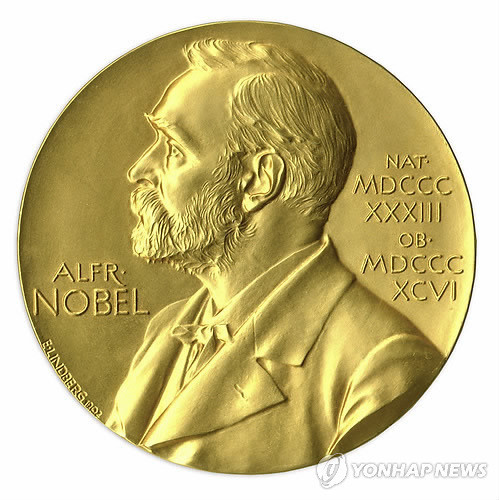
[Asia Economy Reporter Kim Bong-su] On the 4th, the 2021 Nobel Prize in Physiology or Medicine was awarded to Professor David Julius of the University of California and Professor Ardem Patapoutian of the Scripps Research Institute in the United States. They were recognized not for achievements in specific disease treatments but for elucidating the fundamental physiological mechanism of touch in the human body. In response, domestic medical experts unanimously agreed that for Korea to produce Nobel laureates in this field, continuous government investment in basic and fundamental research and the creation of a supportive social environment are necessary.
◇ Reaffirming the Importance of 'Basic and Fundamental Research'
At a Nobel Prize-related briefing hosted by the Korea Federation of Science and Technology Societies on the day, medical experts said the selection of the laureates would serve as an opportunity to re-recognize how important basic and fundamental research is. Professor Han Hee-cheol of Korea University College of Medicine stated, "Basic research, which may seem to be conducted out of curiosity, is actually extremely important, and its potential is difficult to gauge," adding, "A representative example is that after the discovery of the capsaicin receptor in the human body by the laureates, numerous subsequent studies identified other related cells and led to the development of pain relief and suppression drugs."
Professor Hwang Yong-soo of Seoul National University College of Medicine also explained, "It is significant that the Nobel Prize was awarded for very basic research."
Korea also needs institutional and financial support to steadily conduct deep, long-term basic science research rather than focusing on short-term research outcomes. Professor Hwang said, "Although Korea is providing support, long-term investment is insufficient," adding, "It is practically impossible for researchers to receive support while pursuing research directions that interest them. Since the government is now taking the lead, in the long run, Nobel laureates can emerge."
◇ Changing the Overall Social Atmosphere
Professor Park Byung-joo of Seoul National University College of Medicine mentioned the need to reform the education curriculum. Professor Park said, "To unravel the mysteries of the human body, it is necessary to support research driven by curiosity and to continuously monitor it," adding, "There is a need to reform the education system that emphasizes creativity throughout society, and universities must also shift their mindset to support long-term and sustainable research in basic medical sciences."
Professor Lee Eun-jik of Yonsei University College of Medicine pointed out that a change in perception and the overall social atmosphere is necessary. Professor Lee said, "Basic science requires depth in research, which ultimately relates to national power. Immediate investment will not yield quick results," adding, "Korea needs to become more prosperous so that the nation can invest more. National and public awareness of science investment must be awakened, and more patience is needed. It is also necessary to identify talents who seek out and solve curiosities."
Meanwhile, Professor Lee Ho-wang, Professor Emeritus at Korea University who discovered the Hantavirus causing hemorrhagic fever with renal syndrome, was mentioned as a candidate by predictive institutions but unfortunately did not win. Additionally, developers of mRNA vaccine technology, which has been combating COVID-19 worldwide since last year, were also considered strong candidates but did not receive the award. Professor Park explained, "The Nobel Prize involves global recommendations and evaluations starting a year in advance, and in September last year, mRNA vaccine technology had not yet gained attention," adding, "Since the award process results are disclosed only after 50 years, specific details cannot be known."
© The Asia Business Daily(www.asiae.co.kr). All rights reserved.
![Clutching a Stolen Dior Bag, Saying "I Hate Being Poor but Real"... The Grotesque Con of a "Human Knockoff" [Slate]](https://cwcontent.asiae.co.kr/asiaresize/183/2026021902243444107_1771435474.jpg)















