Human Rights Commission: Nearly Half of Disabled Students Experience Human Rights Violations at School
Disabled Students Find It Difficult to Recognize Their Own Harm... Shortage of Special Education Teachers for Monitoring, Only 75% of Legal Staffing
Experts Say "Educational Culture Improvement and Stronger Punishments Needed... Environment Easily Stigmatizes Children"
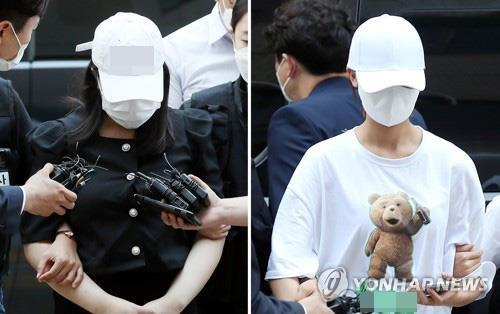 Teenagers accused of spraying toilet water and filth and assaulting a high school girl with intellectual disabilities at a motel in Incheon appeared at the Incheon District Court on the afternoon of the 28th of last month for a pre-trial detention hearing.
 [Image source=Yonhap News]
[Asia Economy Reporter Kim Seohyun] Recently, a group school violence incident targeting high school students with intellectual disabilities occurred, raising calls for improved measures to prevent human rights violations against disabled students.
On the 30th of last month, peer students who repeatedly committed cruel acts such as gang assault and pouring filth on a female student with intellectual disabilities at a motel in Incheon were sentenced to two years in prison.
The perpetrators confined Ms. A, who has a level 3 intellectual disability, at a motel in Incheon in June, stripped her of her clothes, slammed her head into a toilet bowl, spat on her, and poured shampoo and toilet water on her face. The court pointed out, "The crimes committed by these juveniles are so sadistic and audacious that it is hard to believe they were committed by youths."
Additionally, in November of last year, a group school violence incident occurred at a middle school in Gunsan, Jeonbuk, where students surrounded and bullied a student with severe disabilities by mimicking a slurred speech pattern. They forced the victim to drink water they called "life water" and made the victim perform deep bows. However, the victim was not even separated from the perpetrators, and it was revealed that the victim developed disabilities as a consequence of the abuse.
Disabled students have consistently suffered human rights violations within schools. In 2018, the National Human Rights Commission conducted a survey on the educational rights of students with severe and multiple disabilities involving 738 teachers, administrators, and parents from 15 special schools for the physically disabled. The results showed that 40.8% of teachers, 56.3% of school administrators, and 55.2% of parents responded that students with multiple disabilities had experienced at least one instance of human rights violations or disability discrimination at school.
 Students with disabilities find it difficult to recognize the harm they have suffered during school violence incidents. The photo is unrelated to specific expressions in the article. [Image source=Yonhap News]
Disabled students themselves often do not fully recognize school violence victimization, making consistent monitoring by teachers essential. However, the number of special education teachers responsible for educating these students is severely insufficient.
The current Special Education Act for Persons with Disabilities stipulates that there should be one special education teacher for every four students. Additionally, if there are more than six special education students, two classes must be established.
However, according to the Ministry of Education, as of 2019, the total number of special education teachers assigned to public schools across 17 metropolitan and provincial education offices was 14,456, which is only 75% of the legally mandated number calculated based on the Special Education Act enforcement decree. This number, however, represents the highest ever achieved, thanks to the Moon Jae-in administration's enthusiastic efforts to increase special education teacher staffing as a national policy task.
Furthermore, according to the Gyeonggi Provincial Office of Education in April, as of this year, there are 5,445 special education teachers in the Gyeonggi region, while the number of special education students is 23,107. To meet legal standards, 5,777 special education teachers should be assigned.
Given this situation, social service agents are sometimes assigned in place of special education teachers. However, social service agents, who can be assigned after only 16 hours of training, generally lack sufficient understanding of disabilities.
Experts suggest that resolving the issue of school violence against disabled students requires improvements in educational culture and stronger punishments.
A representative from the Institute for the Rights of Persons with Disabilities stated, "The education sector is particularly conservative and resistant to change. The culture needs to shift to create an equal learning environment, but that is not happening. For example, when taking exams at school, disabled students are openly categorized as different types of students. When writing the total number of students on the blackboard, it is written like 'Grade 1, Class 3, 20 students, 1 entrusted student.' Such an environment can foster prejudice against disabled students." They continued, "Although there are provisions to punish abuse against disabled students, the burden of proof is difficult, so punishments often end up being lenient or resolved through settlements. Strict punishments are necessary to prevent recurrence," they emphasized.
© The Asia Business Daily(www.asiae.co.kr). All rights reserved.


















