Road Rage Triggered by Driving Interference
Over 10,000 Annual Reports of Retaliation and Reckless Driving
Threats with Vehicle Overtaking and Baseball Bats
Experts Call for Safety Education and Legal Revisions
 When driving is obstructed or the path is blocked, people with a short temper who cannot control their anger often engage in retaliatory or reckless driving, known as 'road rage.' The photo is unrelated to any specific expression in the article. / Photo by Yonhap News
[Asia Economy Reporter Lim Juhyung] #Last March, on a two-lane road in Daedeok-gu, Daejeon. While driving, Mr. A drove straight in the first lane, which was designated for left turns only, and became enraged after seeing another passenger car overtake him. After catching up and overtaking the passenger car, Mr. A got out of his vehicle during a red light, approached the car, shouted insults such as "If you can't drive, don't get on the road," and threatened by brandishing a baseball bat as if to swing it.
So-called 'road rage,' where drivers lose control of their momentary anger when obstructed or overtaken and engage in retaliatory or reckless driving, continues unabated. Road rage can escalate into more serious traffic accidents or lead to disputes, assaults, and other violent incidents. Experts suggest that driver prevention education is necessary to curb violent driving behavior and that specific legal provisions should be established to punish such acts similarly to drunk driving.
On the 1st of last month, the Daejeon District Court Criminal Division 11 (Presiding Judge Kim Seongryul) sentenced Mr. A, who was indicted on charges including special intimidation and violation of the Act on the Aggravated Punishment of Specific Crimes, to 1 year and 6 months in prison with a 2-year probation period, along with probation and 80 hours of community service.
The court stated, "He not only engaged in retaliatory driving but also took out a baseball bat and threatened the victims, causing them significant psychological trauma," and added, "Considering that the crime appears to have been committed impulsively without controlling emotions and the defendant’s remorse, these factors were taken into account in sentencing."
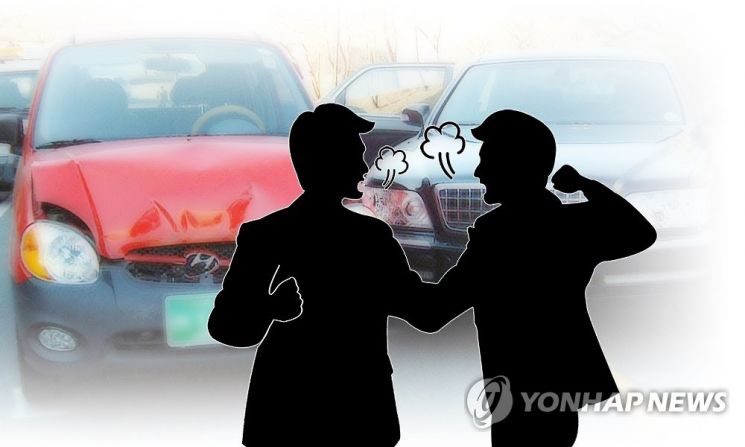 Retaliation and reckless driving have been reported more than 10,000 times in recent years. / Photo by Yonhap News
Mr. A’s case is a typical example of road rage. When his driving was obstructed by another vehicle, he could not control his sudden anger and engaged in reckless driving.
Retaliatory and reckless driving caused by road rage is not a recent phenomenon. In March, in Busan, a driver who had committed retaliatory driving five times over about six months since September of last year was apprehended. This driver was found to have engaged in threatening driving by chasing and overtaking cars that cut in front of his vehicle or by closely tailgating and pushing other cars.
According to a report titled "A Study on the Actual Conditions for Preventing Reckless and Retaliatory Driving," authored last year by Choi Suhyung, a research fellow at the Korea Institute of Criminology and Justice Policy, retaliatory and reckless driving has been continuously occurring in recent years.
The report, which reorganized data from the National Police Agency, shows that the number of retaliatory and reckless driving cases detected through emergency calls (112), crackdowns, police station visits, and public reports from 2017 to 2019 was 12,447 (2017), 10,189 (2018), and 14,912 (2019), consistently exceeding 10,000 cases annually.
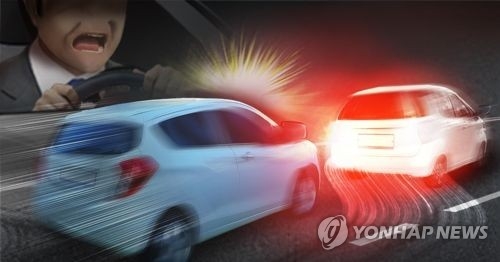 Reckless driving appears in various forms, such as chasing and overtaking a car, or driving threateningly alongside or behind a vehicle. / Photo by Yonhap News
Road rage is not an act committed only by people with particularly aggressive tendencies. Even usually calm or introverted individuals can suddenly engage in retaliatory or reckless driving when their driving is obstructed.
The exact cause why some drivers experience road rage has not yet been identified. However, there is speculation that road rage might be a type of mental disorder, which could explain its unpredictability.
American psychologists Dr. Michael McCloskey and Dr. Lois Lee have suggested that road rage might be a form of Intermittent Explosive Disorder (IED). People with IED are usually calm but suddenly erupt in explosive anger in certain situations. Road rage may be a disorder that manifests among drivers placed in the confined and closed environment of a vehicle.
Because of this, the American Psychiatric Association has previously referred to road rage as "road rage disorder" and argued that it should be officially recognized as a formal disorder and included in diagnostic and statistical manuals for systematic management.
Meanwhile, citizens who have experienced retaliatory or reckless driving cases expressed feelings of anxiety. A 20-something office worker, Mr. A, said, "While driving with my family, a car suddenly honked aggressively and drove recklessly," adding, "Although it was not a direct threat, it was very unpleasant."
Another office worker, Mr. B (31), said, "A friend who is usually calm becomes reckless and loses reason when behind the wheel," and added, "I became worried that he might cause an accident someday, so I stopped riding with him."
Experts advise strengthening traffic safety education for drivers and revising related laws to reduce road rage.
Researcher Choi Suhyung said, "Currently, in Korea, pre-drivers receive about one hour of traffic safety education, but the time devoted to actual safe driving education is limited," and pointed out, "Specialized education that allows more concrete experiences related to reckless and retaliatory driving is necessary."
He added, "Regarding punishment for retaliatory driving, there are no clear legal provisions in the Road Traffic Act, so the Criminal Act is applied. Since various situations such as death or injury caused by reckless and retaliatory driving can occur, it is necessary to establish clear judgment criteria and reorganize the scattered traffic-related laws."
© The Asia Business Daily(www.asiae.co.kr). All rights reserved.



















