Banking Sector Regulation Balloon Effect Spreads to Insurance Sector
"Household Loan Total Volume Management... Increasing Proactive Responses"
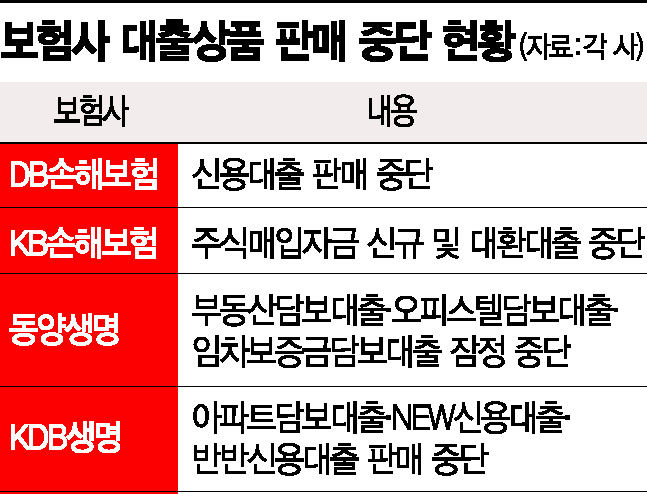
[Asia Economy Reporter Oh Hyung-gil] Following large insurance companies, relatively smaller and medium-sized insurers with smaller loan portfolios are also locking down new loans.
Amid comprehensive loan regulations by financial authorities, some insurers have proactively halted new lending, and this trend appears to be spreading to other insurers. This year, with a sharp increase in insurance policy loans, the 'balloon effect' caused by loan regulations is spreading uncontrollably.
According to the insurance industry on the 1st, Dongyang Life Insurance has stopped accepting new applications for real estate-secured loans, officetel-secured loans, and lease deposit-secured loans since last month. These products allowed borrowing up to 70% of the collateral value and up to 90% of the lease deposit at interest rates of 3-4% per annum, similar to banks.
The suspension of loans, which was mainly seen among large insurers, is now spreading to small and medium-sized companies. On the 1st of last month, DB Insurance suspended new credit loan operations until the end of this year. KB Insurance stopped stock purchase fund loans. Stock purchase fund loans are stock loan products where the insurer lends stock investment funds using assets held in securities accounts as collateral.
Samsung Life Insurance is also managing the borrower's total debt service ratio (DSR) at the first-tier financial institution level of around 40%. While the second-tier financial sector allows a DSR of up to 60%, Samsung Life is interpreted to have proactively slowed down due to the recent trend of increasing household loans.
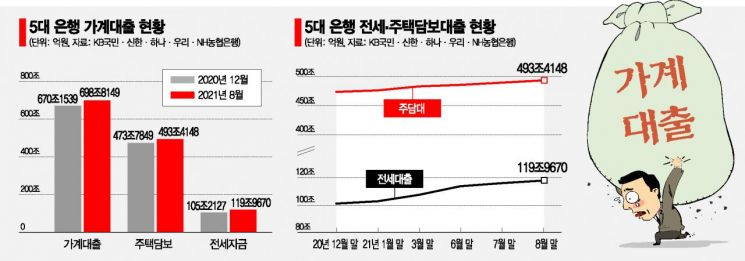
The balloon effect caused by loan regulations in the banking sector is clearly appearing in the insurance industry this year. According to the status of insurance company loan receivables announced by the Financial Supervisory Service at the end of June, the balance of household loans by insurers was 126.6 trillion KRW, an increase of 1.7 trillion KRW compared to the previous quarter.
Mortgage loans increased by about 1 trillion KRW to 49.8 trillion KRW compared to the previous quarter, insurance policy loans increased by 400 billion KRW, other loans by 200 billion KRW, and credit loans by 100 billion KRW each. It is analyzed that before the DSR regulation started in July, loans were taken from insurers, which have relatively low loan interest rates among non-bank sectors.
Although there have been no cases yet of suspending insurance policy loans, which are major loan products of insurers, some point out that it is only a matter of time. Insurance policy loans, secured by payable insurance benefits, can be borrowed without credit checks as long as identity is verified, and can be repaid at any time, making them considered livelihood loans.
For this reason, concerns arise that as banks, savings banks, and card companies tighten loans, borrowers will turn to easily accessible insurance policy loans.
It is also noteworthy that major insurers' insurance policy loans have shown a sharp increase in the first half of this year. Hyundai Marine & Fire Insurance's insurance policy loans increased by 4.1%, DB Insurance rose by 2.6%, and KB Insurance increased by as much as 6.3%. Additionally, NH Nonghyup Life Insurance increased by 2.5%, Hanwha Life Insurance by 1.7%, and Kyobo Life Insurance by 0.6% respectively.
An industry insider said, "Due to total household loan volume management, there is a trend to reduce other loans to secure a margin for policy loans," adding, "Considering the trend of household loan demand moving to the non-bank sector, where regulations have been relatively weak, the number of insurers proactively managing loans is expected to increase."
© The Asia Business Daily(www.asiae.co.kr). All rights reserved.
![Clutching a Stolen Dior Bag, Saying "I Hate Being Poor but Real"... The Grotesque Con of a "Human Knockoff" [Slate]](https://cwcontent.asiae.co.kr/asiaresize/183/2026021902243444107_1771435474.jpg)
















