[Asia Economy Reporter Chunhee Lee] The health insurance premium rate for next year will increase by 1.89%. Employees will see an average increase of about 30,000 KRW in their insurance premiums next year.
On the afternoon of the 28th, the Ministry of Health and Welfare held the 21st Health Insurance Policy Deliberation Committee meeting of 2021 and reported on revisions to the drug benefit list and benefit ceiling price table.
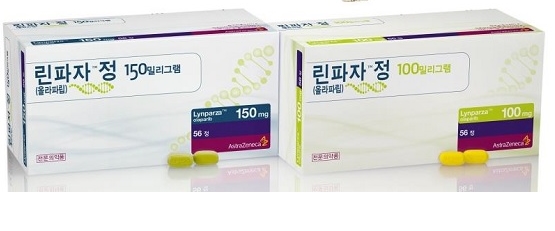
Accordingly, starting next month, two HIV (Human Immunodeficiency Virus) infection (AIDS) treatments, Pipeltro tablets and Delstrigo tablets distributed by Korea MSD, and two ovarian cancer treatments, Lynparza tablets 100mg and 150mg distributed by Korea AstraZeneca, will be included in the health insurance benefit coverage.
These three drugs had their ceiling prices (or expected claim amounts) determined through evaluations by the Drug Benefit Evaluation Committee of the Health Insurance Review and Assessment Service on clinical usefulness, cost-effectiveness, opinions from related academic societies, and registration status in other countries, followed by negotiations with the National Health Insurance Service. The prices were set at 7,975 KRW per Pipeltro tablet, 19,491 KRW per Delstrigo tablet, and for Lynparza tablets, 38,842 KRW for 100mg and 48,553 KRW for 150mg.
Additionally, the coverage scope of the anticancer drug "Zejula capsules 100mg" (Korea Takeda Pharmaceutical), which is currently covered by health insurance, will be expanded. The Health Insurance Policy Deliberation Committee decided to apply insurance benefits for Zejula capsules as a "maintenance monotherapy for ovarian cancer responding to first-line platinum-based chemotherapy." The ceiling price is set at 69,733 KRW per capsule.
This decision will enable health insurance coverage for new drugs and expand coverage for existing drugs, improving treatment accessibility and reducing patients' medical expenses. For example, in the case of Lynparza tablets, the annual medication cost without insurance is 71 million KRW, but with health insurance coverage and a 5% patient co-payment, the annual burden is reduced to only 3.5 million KRW.
Furthermore, the dispensing fee for self-administered injectable drugs such as insulin and growth hormones will be improved to support storage, management, and safe use by patients themselves. Going forward, when self-administered injectable drugs are prescribed alone, the dispensing fee will be improved by reflecting the injection fee at the current level of ‘external medicine’ fees. Accordingly, pharmacies will receive compensation of 4,620 KRW for dispensing fees, and clinics and hospitals will be compensated 240 to 570 KRW for outpatient dispensing and medication guidance fees.
Along with the fee improvement, standards will be established to specify the recognized types and scope of injectable drugs. Priority will be given to commonly used therapeutic categories such as diabetes medications and pituitary hormones, and within the scope approved by the Ministry of Food and Drug Safety, self-administration may be recognized or emergency patients may be assessed based on physician judgment.
At the same meeting, the Health Insurance Policy Deliberation Committee also discussed launching a pilot project to screen patients using non-psychiatric primary care institutions who are at risk of depression or suicide and connect them to mental health institutions capable of treatment and management. Discussions were also held regarding auxiliary personnel and scope related to the insured cardiac ultrasound examination.
© The Asia Business Daily(www.asiae.co.kr). All rights reserved.
![Clutching a Stolen Dior Bag, Saying "I Hate Being Poor but Real"... The Grotesque Con of a "Human Knockoff" [Slate]](https://cwcontent.asiae.co.kr/asiaresize/183/2026021902243444107_1771435474.jpg)















