Daegu Gyeongbuk Institute of Science and Technology Discovers Prostate Cancer Regulatory Gene and Potential Fundamental Therapeutic Protein
[Asia Economy Reporter Kim Bong-su] Domestic researchers have discovered a method to prevent the progression of prostate cancer and fundamentally treat it.
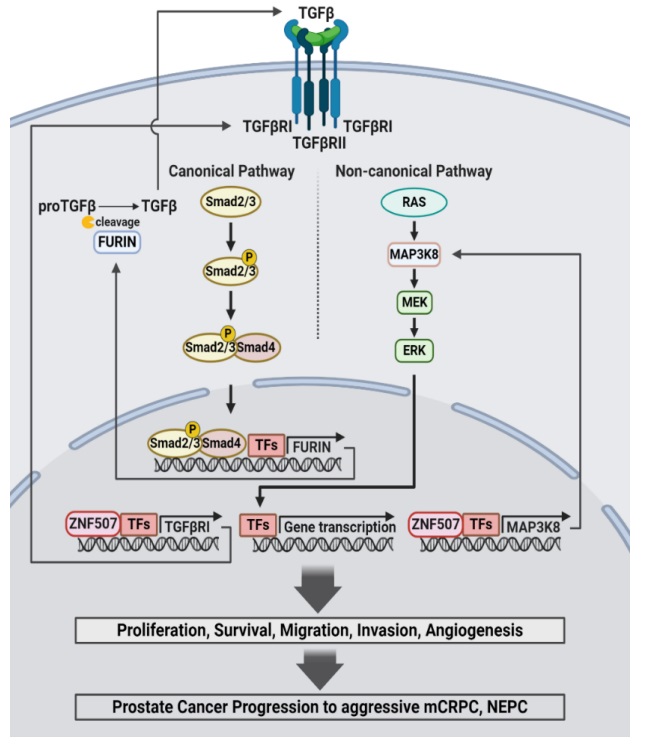
The research team led by Choi Sung-gyun, head of the Core Protein Resource Center at Daegu Gyeongbuk Institute of Science and Technology (DGIST), in collaboration with Professor Ryu Jae-woong’s team at Kyungpook National University, announced on the 28th that they successfully identified the ‘ZNF507’ gene that regulates prostate cancer and elucidated the molecular biological processes controlling prostate cancer.
Prostate cancer has a high incidence rate not only in Korea but worldwide. In particular, the high metastasis and mortality rates make treatment crucial. Current prostate cancer treatments often involve surgery, hormone blockade therapy, and general chemotherapy. However, long-term treatment can lead to drug resistance, reducing efficacy, and even after complete remission, recurrence is common. Therefore, there is an urgent need to discover fundamental and efficient prostate cancer treatments.
The research team studied clinical samples of human prostate cancer and found that the ‘ZNF507’ gene is expressed at significantly higher levels in patients with prostate cancer compared to normal individuals. They confirmed that this gene is highly expressed in prostate cancer and that its expression increases as the cancer worsens.
Additionally, the team established prostate cancer cell lines with inhibited ZNF507 activity to conduct various studies tracking the phenotypes of prostate cancer. As a result, they confirmed that when ZNF507 expression is suppressed, cancer proliferation and colony-forming ability significantly decrease, reducing the cancer’s ability to migrate and invade other tissues. They also observed an increase in cancer cell apoptosis, or programmed cell death.
The team succeeded in understanding at the molecular biological level why cancer occurrence and metastasis decrease when ZNF507 is inhibited. They confirmed that suppressing ZNF507 expression blocks cancer cell signaling pathways, cutting off the forces necessary for cancer cell growth and metastasis. This correlation was observed not only in animal experiments but also in clinical prostate cancer tissues from actual human patients.
Center Director Choi said, "We have discovered a fundamental therapeutic candidate protein that overcomes the limitations of existing prostate cancer treatments and enables the development of new drugs." He added, "Current prostate cancer chemotherapy faces many issues such as reduced efficacy over time due to drug resistance and side effects like cardiovascular diseases. However, if this research is well utilized, it will lead to the development of new drugs that can fundamentally overcome these side effects."
The research results were published online on the 18th in the international oncology journal, Journal of Experimental & Clinical Cancer Research.
© The Asia Business Daily(www.asiae.co.kr). All rights reserved.
![Clutching a Stolen Dior Bag, Saying "I Hate Being Poor but Real"... The Grotesque Con of a "Human Knockoff" [Slate]](https://cwcontent.asiae.co.kr/asiaresize/183/2026021902243444107_1771435474.jpg)















