Essential Checks Before Long-Distance Driving: Engine Oil, Coolant, Tires, and Lighting Equipment
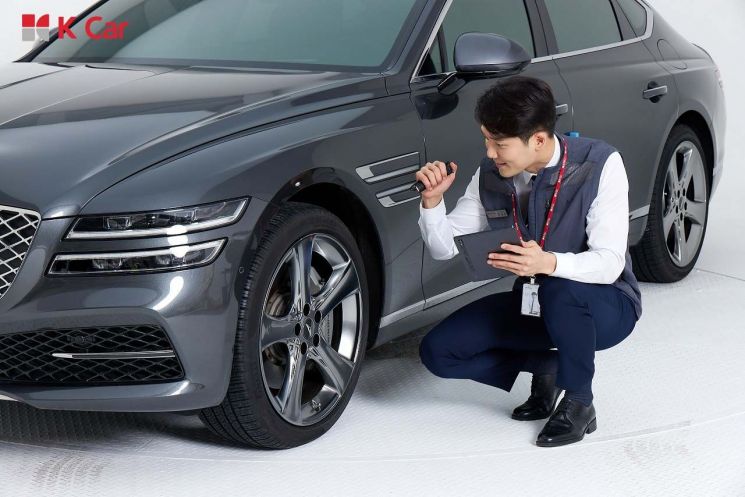
[Asia Economy Reporter Changhwan Lee] As Chuseok approaches, many drivers are preparing for long-distance travel. Basic vehicle inspection is essential for safe driving.
It is convenient to receive free inspection services provided by vehicle manufacturers or insurance companies, but if time is limited, you can also easily check your car yourself.
On the 18th, K Car disclosed methods for vehicle inspection in preparation for long-distance driving.
First, to prevent engine overload during long-distance driving, checking the engine oil and coolant is essential. Engine overload is likely on congested roads during the return trip.
Usually, it is recommended to change the engine oil after one year or 10,000 km of driving. Open the car hood and check the yellow inspection stick; if the oil level is between the F and L marks, it is normal. If it is close to L or below L, you need to add engine oil.
The coolant, which cools the hot engine, is within the normal range if the gauge is between MAX and MIN. Open the cap directly to check if the coolant is properly filled, and if the coolant is below MIN, you should refill it to prevent problems such as fire risk caused by engine overheating.
Essential Inspection of Tire and Brake Condition
Next is tire inspection. First, check whether your car’s tire pressure is appropriate. Tires are particularly affected by temperature; air pressure expands in hot summer but can decrease as the temperature drops.
Therefore, extra caution is needed during this season transitioning from summer to autumn. If your vehicle has the recommended tire pressure indicated on the driver’s door or fuel filler cap, adjust the tire pressure accordingly.
You can easily check tire wear, which affects braking power, by inserting a 100-won coin into the tread groove. If the wear limit line visible through the tire groove is level with other parts of the tire, it is advisable to replace the tires.
Brake pad and brake fluid inspection are also necessary. On highways with heavy traffic congestion, brake usage frequency increases, causing brake pads to wear out easily.
If the steering wheel shakes or friction noise occurs when braking, or if you need to press the brake pedal deeper than usual to stop, you should replace the brake pads and fluid before driving.
You should also check the lighting system. This is because night driving increases during the holiday to avoid traffic jams. If you plan to drive at night, check in advance whether the headlights, brake lights, and turn signals are functioning properly.
Especially brake lights are difficult to check alone, so it is recommended to inspect them with family members or passengers before driving.
Hwang Gyuseok, head of K Car’s diagnostic center, said, “This Chuseok holiday, due to the ongoing COVID-19 situation, many drivers are expected to use private cars instead of public transportation. For the safety of yourself and your family, please thoroughly inspect your vehicle before long-distance driving and have a pleasant holiday.”
© The Asia Business Daily(www.asiae.co.kr). All rights reserved.
![Clutching a Stolen Dior Bag, Saying "I Hate Being Poor but Real"... The Grotesque Con of a "Human Knockoff" [Slate]](https://cwcontent.asiae.co.kr/asiaresize/183/2026021902243444107_1771435474.jpg)
















