Dementia: Greater Symptom Severity Increases Care Dependency
Caregiver Stress and Fatigue Severe... Leading to 'Caregiver Homicide'
In Aging Japan, 'Kaigo Homicide' Statistics Created for Focused Management
In Korea, 'National Dementia Responsibility System' Announced... Still a Long Way to Go
Experts Say "Comprehensive Welfare Including Caregiver Support and Education Needed"
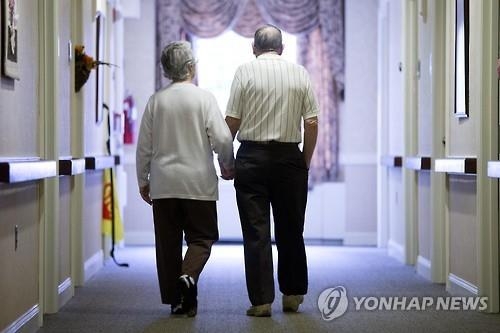 An octogenarian killed his wife, who was suffering from dementia, and then ended his own life by an extreme act. The photo is unrelated to specific expressions in the article. / Photo by Yonhap News
[Asia Economy Reporter Lim Juhyung] "I will take her with me."
This is the content of a suicide note left by an elderly man in his 80s who killed his wife, a dementia patient, with his own hands and then took his own life. It appears he could no longer bear the burden of caring for his wife.
Dementia, which severely affects cognitive abilities, requires a caregiver to provide round-the-clock care. However, if one cannot afford to hire a professional caregiver, some family members inevitably have to make sacrifices. Conflicts often arise between caregivers and those being cared for, sometimes escalating into greater tragedies. This is known as 'caregiving murder.'
As South Korea enters an aging society, the issue of caring for dementia patients has become an important social concern, yet there are still no proper statistics on caregiving murders. Experts emphasize the need for comprehensive support for family caregivers of dementia patients.
◆'I will take her with me' - Husband kills wife with dementia
According to multiple media reports, the incident occurred around 3:30 p.m. on the 13th at a villa in Ogeum-dong, Songpa-gu, Seoul. On that day, Mr. A (80) and his wife Mrs. B (78) were found dead at their home. Their daughter, who came to check on them after losing contact with her parents, discovered the bodies and reported to the police.
Mr. A left a suicide note at the scene containing the phrase "I will take her with me." Police believe Mr. A killed Mrs. B before taking his own life.
Mrs. B was diagnosed with dementia in 2018. Since then, Mr. A had cared for her for three years. When his wife's symptoms began to worsen, Mr. A showed dedication by visiting a dementia relief center for counseling and education. However, as Mrs. B's condition rapidly deteriorated this year, Mr. A reportedly stopped visiting the dementia center from May onward.
◆Severe stress on dementia caregivers... sometimes leading to 'caregiving murder'
Cases where caregivers kill those they care for due to unbearable caregiving stress and financial hardship continue to occur. In January, a similar 'caregiving murder' happened in Iksan, Jeonbuk, where a woman in her 50s killed her elderly mother with dementia after an argument.
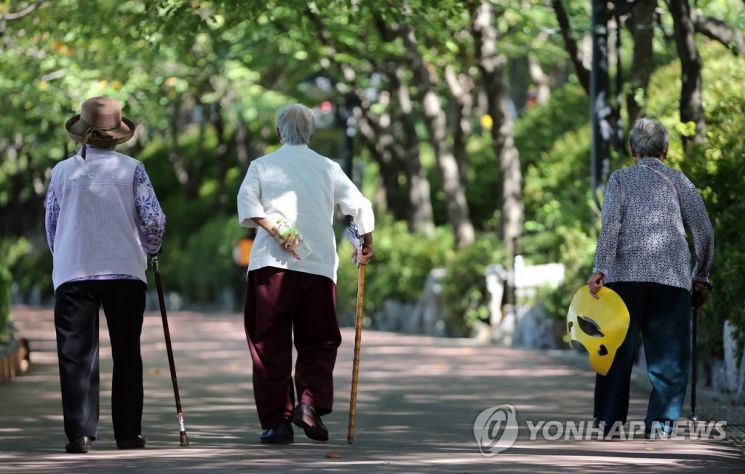 Dementia is an acquired condition characterized by a decline in cognitive function, and when symptoms become severe, caregiving assistance is essential. Photo by Yonhap News
Dementia is an acquired disease characterized by changes in cognitive function, memory, and personality. Due to declining cognitive abilities, dementia patients require close caregiving. Patients with severe symptoms may be unable to perform daily activities and must rely on caregivers for most of the day.
Living in nursing homes or hospitals or having the means to hire professional caregivers is somewhat better. However, impoverished families without such resources require sacrifices from family members. This often leads to conflicts between exhausted caregivers and those being cared for. When combined with financial difficulties, some patients are abandoned or, in severe cases, caregiving murders occur.
◆Over 800,000 dementia patients in South Korea... 'caregiving murder' is not a minor issue
The caregiving crisis is not a problem limited to a few. According to Statistics Korea, as of 2019, the prevalence of dementia among the elderly population aged 65 and older was 10.3%. This means one in ten elderly people is a dementia patient.
As of the end of March this year, the population aged 65 and older in South Korea was 8,574,588. Roughly estimating, there are about 850,000 dementia patients in the country, many of whom are likely receiving care from professional caregivers or family members.
Japan, which entered an aged society earlier, has long maintained statistics on related cases under the term 'kaigo (caregiving) murder.' Since 2006, Japan's Ministry of Health, Labour and Welfare and the National Police Agency have been compiling and publishing data on caregiving murder cases. The Japanese government's 'National Livelihood Survey' also meticulously records the proportion of elderly couples who care for each other, known as 'nono (old-old) caregiving' households.
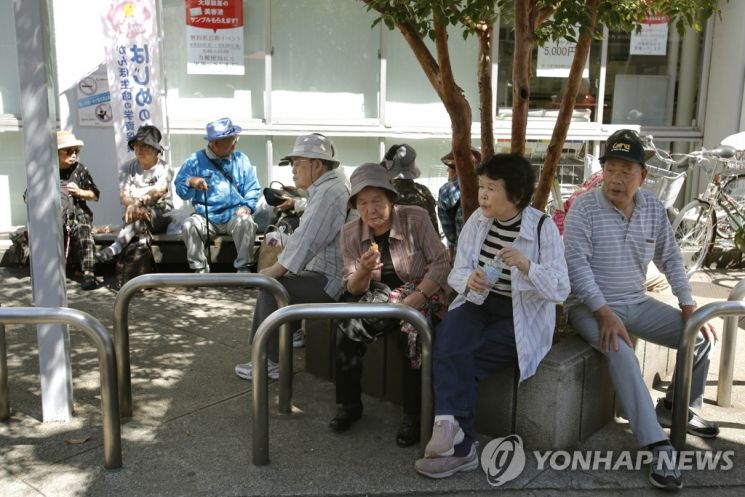 Japan, which entered an aging society early, has created related statistics under the name "Kaigo Murder" and is managing them intensively. / Photo by Yonhap News
In contrast, South Korea currently lacks proper statistical data on caregiving households. Although the government announced the 'National Responsibility for Dementia' policy in 2017 and has been working to expand infrastructure related to dementia treatment and care, there are still many shortcomings.
Given this situation, citizens express their fears about dementia.
C, a 28-year-old office worker, said, "These days, when my mother occasionally forgets things, I worry if it might be dementia. Honestly, if my parents really become dementia patients, I wonder if I could handle it."
Another office worker, D (32), said, "I'm concerned about caring for my parents with dementia, but I also worry about whether I might develop dementia in the future."
Experts suggest that comprehensive support and education are needed not only for dementia patients but also for their caregivers.
An official from the Korea Institute for Health and Social Affairs stated, "The expansion of dementia support services such as 'Dementia Relief Centers' over the past decade should be highly appreciated. However, if past policies were provider-centered, future policies should be user-centered, including preventive screenings based on dementia severity and comprehensive support and education for caregivers providing care to dementia patients."
© The Asia Business Daily(www.asiae.co.kr). All rights reserved.



















