Exports Achieved Double-Digit Growth but Fell Short of Expectations
"Delta Variant and Semiconductor Supply Shortage Are the Causes"
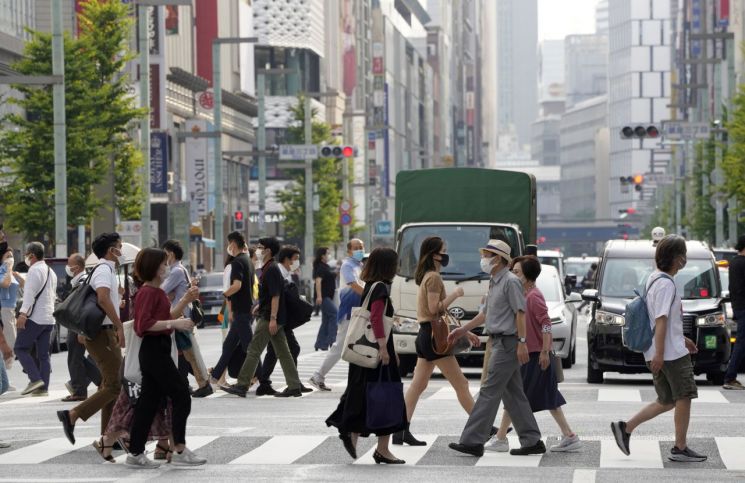
[Asia Economy Reporter Kim Suhwan] Japan's trade balance turned to a deficit in August as the spread of the Delta variant within the country dampened the economic rebound.
According to preliminary trade statistics released by Japan's Ministry of Finance on the 16th, Japan's trade balance in August showed a deficit of 635.4 billion yen (approximately 6.8 trillion won), marking a return to deficit two months after turning to a surplus in June.
The announced trade deficit exceeded market expectations of a 47.7 billion yen deficit.
The shift to a trade deficit is analyzed to be due to export growth falling short of expectations.
Exports increased by 26.2% compared to the same month last year, below the market forecast of a 34.1% increase.
The ongoing semiconductor supply shortage is believed to have caused export growth to fall short of expectations.
Japan's Norinchukin Research Institute stated, "Automobile exports have been affected by semiconductor issues," and predicted, "The impact of semiconductor shortages is expected to continue until the end of the year."
Meanwhile, exports showed double-digit growth for six consecutive months, supported by a surge in semiconductor demand.
Specifically, exports to China increased by 12.6% year-on-year due to increased exports of semiconductor parts and chemical products.
Exports to the United States surged by 22.8%. Foreign media analyzed that the increase in exports of power generation machinery was a factor in the rise of exports to the U.S.
Exports to the entire Asia region increased by 26.1%, and exports to the European Union (EU) rose by 29.9%.
Imports increased by 44.7% year-on-year, exceeding the forecasted 40% increase.
With Japan's economy yet to recover to pre-COVID-19 pandemic levels, the trade statistics released on this day are expected not to alleviate pessimistic outlooks on the Japanese economy. In particular, the spread of the Delta variant across Asia is expected to make economic recovery more difficult.
Accordingly, Japan's third-quarter economic growth forecast was also revised down to 1.2%, less than half of the initial estimate of 2.7%.
© The Asia Business Daily(www.asiae.co.kr). All rights reserved.
![Clutching a Stolen Dior Bag, Saying "I Hate Being Poor but Real"... The Grotesque Con of a "Human Knockoff" [Slate]](https://cwcontent.asiae.co.kr/asiaresize/183/2026021902243444107_1771435474.jpg)















