Hyundai Heavy Industries and Maersk Negotiating Methanol-Powered Container Ships Since February
Despite Sharp Rise in Steel Plate Prices, 100% Freight Rate Reflected
CO₂ Reduction of 1 Million Tons Annually... "Leading the Eco-Friendly Ship Market"
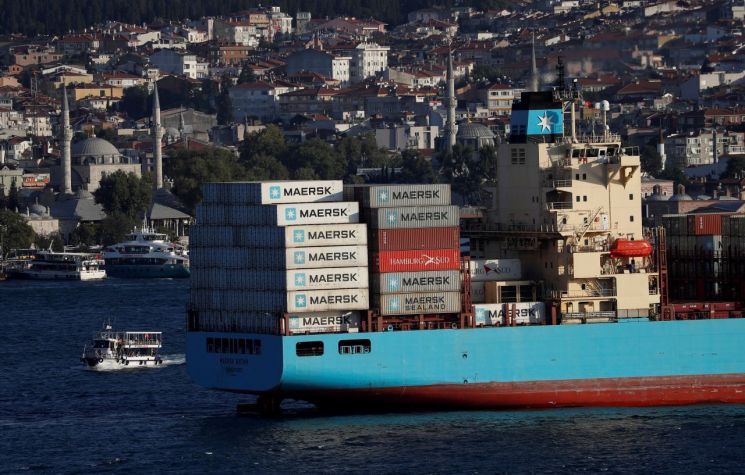
[Asia Economy Reporter Choi Dae-yeol] Maersk, the world's largest shipping company, has been negotiating exclusively with Hyundai Heavy Industries since February this year to order large container ships powered by methanol. Methanol is considered an environmentally friendly fuel source as it emits fewer pollutants.
During the negotiations, the price of thick steel plates (steel plates over 6mm thick used in shipbuilding) rose by about 50%. The supply price of thick steel plates is usually determined through individual negotiations between shipbuilders and steel companies, but prices had been frozen for several years until recently, so this time they increased significantly. It is reported that the price per ton rose from around 700,000 KRW in the first half of this year to about 1,100,000 KRW.
Although it varies by ship type, thick steel plates account for about 20% of the ship price. This means the contract amount increased by about 10% at once, and Maersk accepted all the increased costs. A Hyundai Heavy Industries official said, "We are developing and manufacturing engines in-house, and the fact that we have operated medium-sized methanol ships built by our affiliate (Hyundai Mipo Dockyard) was highly evaluated."
The ships being built this time are 16,000 TEU class (one 20ft container equals 1 TEU), with a total of eight vessels to be constructed, and the contract amount reaches 1.6474 trillion KRW. The price per ship exceeds 200 billion KRW, comparable to LNG carriers, which are considered high-value-added vessels. There are four options, so additional orders are highly likely. Large ships require considerable time and cost in the initial design phase, which can be reduced afterward. Producing multiple ships of the same type increases profitability accordingly. Hyundai Heavy Industries also expects high profitability from this project.
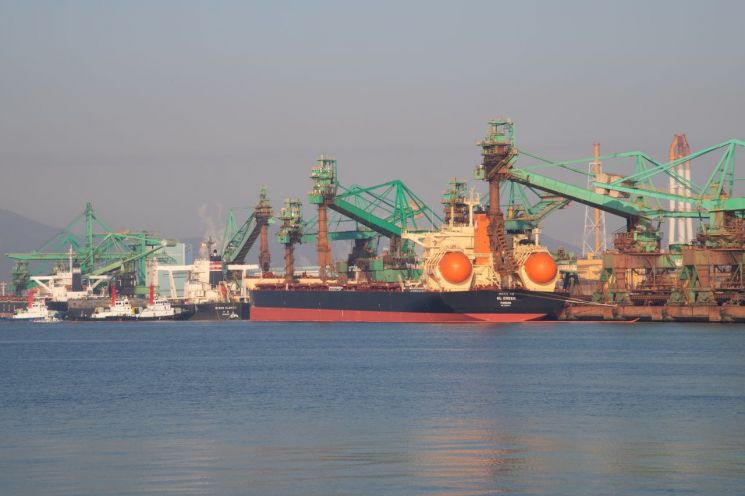 The bulk carrier HL Green, dedicated to transporting raw materials for POSCO. It is the world's first bulk carrier to use LNG, a fuel with low harmful emissions. Carbon neutrality is an issue that affects not only shipping companies but also the businesses of customers, the cargo owners.
 Deciding Phase-Out Based on Carbon Dioxide Emissions
Active Replacement of Existing Aging Fleets with Eco-Friendly Fuel Ships
In line with environmental regulations that will be strengthened within a few years, major global shipping companies are disposing of existing aging vessels and replacing them with ships using eco-friendly fuels such as methanol or liquefied natural gas (LNG). This is because they must reduce harmful emissions according to roadmaps established by the International Maritime Organization (IMO) and the European Commission (EC). Cheap fuels like bunker fuel, which were mainly used by ships in the past, emit large amounts of harmful substances such as sulfur oxides, so shipping and shipbuilding companies have responded by installing scrubbers to reduce these emissions.
Going forward, even this will become difficult, so companies are acquiring entirely new ships. Starting the year after next, ships in operation will be inspected for how much carbon dioxide they emit, graded, and their phase-out will be decided. Europe has decided to apply the carbon emissions trading system to the shipping industry starting next year. This means additional costs will be incurred immediately. This is why other shipping companies are expected to follow Maersk's similar moves.
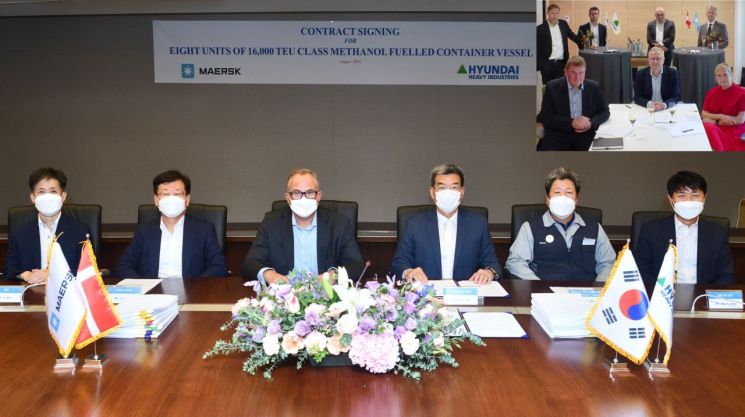 On the 24th of last month, Musk and the management of Korea Shipbuilding & Offshore Engineering signed a dry contract.
 If environmental standards are not met, there is a high possibility of being shunned not only by international regulatory bodies but also by cargo owners. Since carbon emissions are measured throughout the entire process?from sourcing raw materials to selling to the final consumer?shipping companies responsible for a significant portion of international cargo volume must operate environmentally friendly fleets.
Maersk expects to reduce carbon dioxide emissions by about 1 million tons annually with the large methanol-powered container ships ordered this time. Maersk stated, "Methanol ships will be the first in the shipping industry to truly realize carbon neutrality for customers (cargo owners)," and explained, "More than half of the major cargo owners have plans to make their supply chains carbon neutral or are working toward that goal."
© The Asia Business Daily(www.asiae.co.kr). All rights reserved.



















