The Birth and Origin of Various 'Symbol Images'
[Asia Economy Reporter Jin-kyung Lee] How were everyday symbols born? Even without speaking the same language, we can easily communicate, obtain information, and conveniently use items through simple symbols. These concise symbols, frequently seen in daily life, can convey meaning easily without lengthy descriptions. Who created these various symbols, and how did they come into existence?
1. Heart
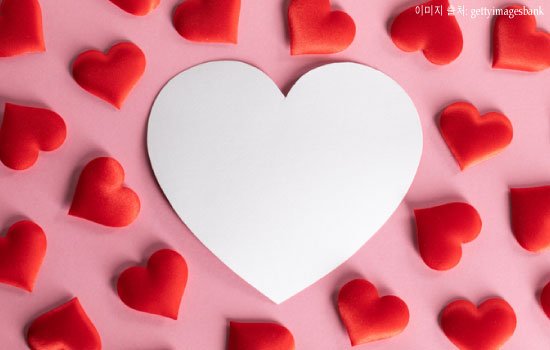
How did the heart-shaped symbol, mainly used to express feelings of love, come about? There are several theories about the origin of the heart symbol. Some say it was inspired by the shape of a human heart or a cow’s heart, while others claim it came from the shape of a woman’s buttocks. The most plausible theory is that it originated from the seed shape of a plant called ‘Silphium’ that existed in ancient Greece. It closely resembles the heart shape we use today. Silphium was used not only for cooking but also for contraception and abortion, symbolizing free love and sexual relations at the time. Due to demand far exceeding supply, the plant became extinct in the 1st century. The people of the ancient Greek city ‘Cyrene’ even used the seed shape of this plant on silver coins.
2. Equal Sign
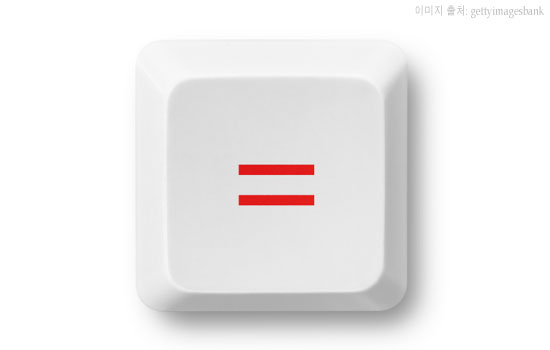
The equal sign was first discovered in the earliest algebra book written in English. According to records, the ‘=’ symbol was used because “nothing is equal to two parallel lines of the same length.” Originally, the ‘=’ was written longer horizontally but gradually shortened to the current form.
3. Voting Symbol
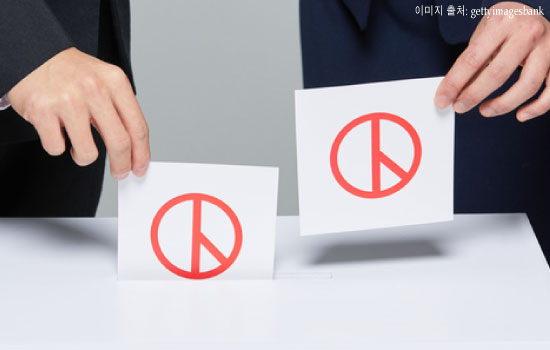
Until 1985, an ‘O’-shaped seal was used, but since this shape is symmetrical in all directions, ink could easily smudge other parts of the ballot when folded, causing difficulties in distinguishing votes during counting and often resulting in invalid ballots. To improve this, in the 1992 14th presidential election, a stamp with the Chinese character ‘人’ (person) inside a circle was used, but since it was also symmetrical left to right, confusion continued when ballots were folded. Two years later, a voting stamp using the character ‘卜’ (divination) inside a circle was introduced. This character is asymmetrical in all directions, effectively reducing invalid votes, and has been consistently used as the voting symbol since then.
4. USB
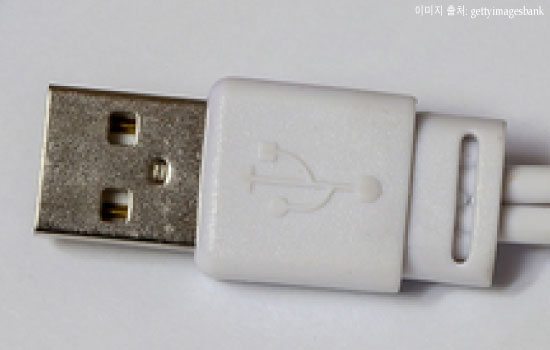
The USB symbol, often seen when storing files, is actually related to Greek mythology. It was designed based on Neptune’s trident from Greek mythology. The symbol’s ends vary in shape?round, triangular, square?to represent the ability to connect various types of devices to a USB port.
5. Dollar
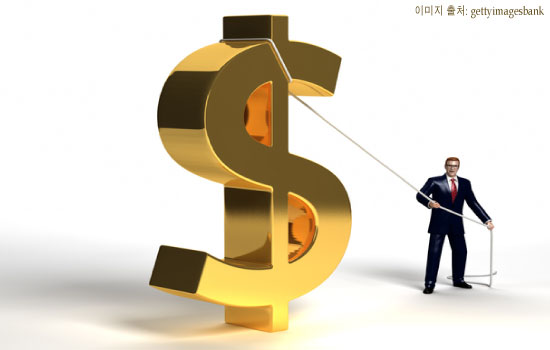
Why is the dollar symbol ‘$’ used instead of a symbol based on the letter D? There are several theories. The dollar originated from a widely used European silver coin called the ‘Joachimsthaler,’ but its name was too long and inconvenient, so it was shortened to ‘Thaler’ and became widely accepted. For over 400 years, it was the most commonly used currency in Europe. The ‘Thaler’ was introduced to America by Spain and was chosen as the new currency when the United States declared independence in 1776. The most plausible theory for the ‘$’ symbol is that it comes from the Spanish silver coin’s ‘S,’ as the U.S. used Spanish currency during colonial times. Another theory suggests it evolved from the Mexican 8-reales Spanish silver coin, which was marked as ‘l8l’ before independence.
6. Power Button
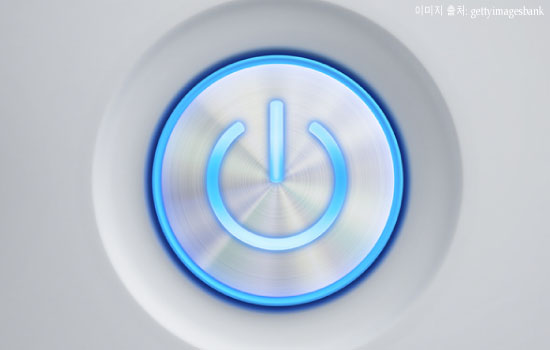
The power button symbol was created based on binary code. The ‘O’ shape and ‘|’ shape represent the numbers ‘0’ and ‘1,’ where ‘0’ means the power is off and ‘1’ means the power is on. Did you know that the power button symbol varies slightly depending on standby power? A power button with a ‘|’ clearly inside the ‘O’ indicates a device with no standby power, meaning you don’t need to unplug or turn off a power strip. However, a power button where the ‘|’ extends outside the ‘O’ means the device still consumes power in standby mode, so unplugging is necessary to prevent power consumption.
7. Email Symbol
The ‘@’ symbol, commonly seen in email addresses, is called ‘chiocciola’ (snail) in Italy and ‘monkey tail’ in the Netherlands. In Korea, it is called ‘golbaengi.’ The ‘@’ symbol means ‘at’ in English and has been used since medieval times as a shorthand due to the scarcity of paper. In July 1972, Ray Tomlinson, who invented email, proposed using ‘@’ as the email symbol, which has been used ever since.

8. Bluetooth
Jim Kardach, a technical engineer at the American semiconductor company Intel, named the short-range wireless connection technology ‘Bluetooth.’ The name comes from the Viking king Harald Bluetooth, who unified Norway and Denmark in the late 900s. He achieved peaceful unification through negotiation, and his achievements and spirit were seen as analogous to the technology facilitating communication between the PC and wireless communication industries. The Bluetooth symbol was created by combining the initials ‘H’ and ‘B’ from his name, represented in Danish runes.

9. Male and Female Symbols
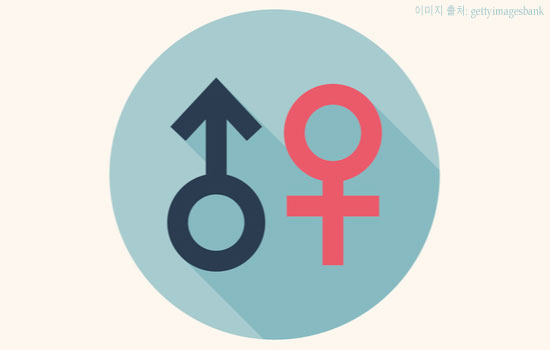
The gender symbols ‘♂’ (male) and ‘♀’ (female), commonly used to distinguish men and women, actually originated from astrology and were first used as symbols representing planets. The ‘♂’ symbol represents Mars, the god of war in Greek mythology, symbolizing a spear and shield. The ‘♀’ symbol represents Venus, the goddess of beauty, symbolizing her mirror. In 1753, Swedish botanist Linnaeus repurposed these symbols to distinguish male and female organisms, inspired by the strong impression of ‘♂’ and the gentle impression of ‘♀’.
10. Infinity
The infinity symbol ‘∞’ represents an unbounded, very large value or state. It looks like two circles joined together, resembling the number 8 rotated 90 degrees. This symbol, called the lemniscate, was first used by John Wallis in his paper on conic sections and arithmetic. He used this shape to indicate the concept of moving endlessly along a curve.

© The Asia Business Daily(www.asiae.co.kr). All rights reserved.
![Clutching a Stolen Dior Bag, Saying "I Hate Being Poor but Real"... The Grotesque Con of a "Human Knockoff" [Slate]](https://cwcontent.asiae.co.kr/asiaresize/183/2026021902243444107_1771435474.jpg)

















