UNIST Next-Generation Catalysis Center Partners with Ulsan Chemical Company Kapro for Industry-Academia Collaboration
Process Efficiency Improvement, Sales Growth, and Technology Competitiveness Achieved 'Big Success' in 3 Years
[Asia Economy Yeongnam Reporting Headquarters, Reporter Kim Yong-woo] Research universities and companies are joining forces and seeing “solid benefits.” They have made significant achievements in efficiency and sales, which are core to corporate competition.
Ulsan National Institute of Science and Technology (UNIST) has collaborated with the Ulsan-based chemical company “Capro” through industry-academia cooperation, achieving improvements in process efficiency and increased sales.
The two institutions have decided to further combine their efforts to develop eco-friendly processes aimed at realizing carbon neutrality.
UNIST’s Next-Generation Catalysis Center and Research Support Headquarters (UCRF) announced on the 24th that they succeeded in increasing the efficiency of Capro’s caprolactam manufacturing process by more than 6%, resulting in an annual cost reduction effect exceeding 2.2 billion KRW.
The company expects an annual sales effect worth approximately 22 billion KRW through the improved process.
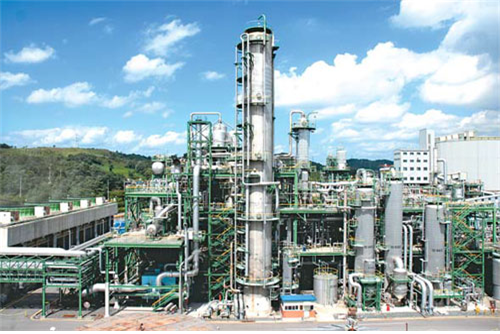
Capro operates a factory in the petrochemical complex in Nam-gu, Ulsan. It is the only domestic producer of caprolactam, the raw material for nylon.
Facing difficulties due to weakened cost competitiveness of imported raw materials, Capro has been working on process improvements through research and development with UNIST since August 2018.
UNIST’s Next-Generation Catalysis Center and Research Support Headquarters focused their research efforts on solving the productivity decline of catalysts occurring during the caprolactam production process, based on analytical equipment.
As a result, the research team succeeded in solving the problem by reducing catalyst poisoning substances that lower activity on the catalyst surface.
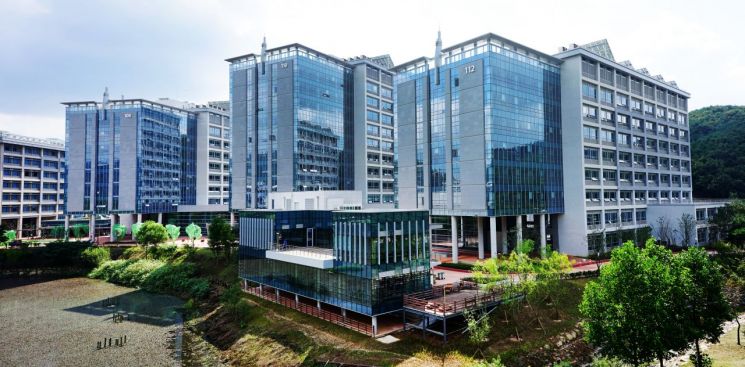
Shin Tae-joo, head of the Research Support Headquarters, explained, “Since UNIST is located near the Ulsan petrochemical complex, there is an advantage in being able to visually confirm and cooperate on actual technology development by companies. This case is a meaningful achievement where university technology has linked with a company to realize substantial sales growth.”
Capro’s process improvement was a result of the corporate membership system operated by the UNIST Industry-Academia Cooperation Foundation.

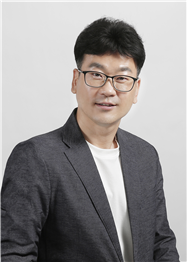 Ahn Kwangjin, Director of the Next-Generation Catalysis Center at UNIST.
The Ulsan city government has consistently supported budgets to secure corporate competitiveness within the petrochemical complex. UNIST corporate members with local ties received 90% support for research and development costs using the Research Support Headquarters’ analytical equipment and other resources.
UNIST’s Research Support Headquarters is a facility equipped with approximately 30 billion KRW in investment and about 300 types of advanced research equipment, performing various support tasks upon requests from local small and medium-sized enterprises facing difficulties in research, development, and analysis.
A Capro official said, “The company has grown into a mid-sized enterprise based on competitive raw material production, but has struggled with new technology development due to the lack of independent research personnel and facilities. UNIST in Ulsan has essential infrastructure capable of solving the company’s technical difficulties and helping improve process technology, providing practical assistance.”
UNIST’s Next-Generation Catalysis Center and Capro plan to advance beyond this cooperation to jointly develop technologies contributing to the realization of carbon neutrality.
They aim to develop carbon dioxide reduction technologies, which have recently emerged as key issues in climate change and renewable energy development.
Among these, the goal is to secure process technology that converts carbon dioxide emitted from petrochemical product manufacturing processes into high value-added materials.
Ahn Kwang-jin, director of the Next-Generation Catalysis Center and professor in the Department of Energy and Chemical Engineering, said, “There are countless areas where UNIST and Ulsan companies can collaborate, from upgrading aging petrochemical facilities to developing technologies for an eco-friendly future. If UNIST, which possesses carbon dioxide catalytic conversion technology, collaborates with Ulsan companies, it can greatly contribute to carbon neutrality projects.”
© The Asia Business Daily(www.asiae.co.kr). All rights reserved.
![Clutching a Stolen Dior Bag, Saying "I Hate Being Poor but Real"... The Grotesque Con of a "Human Knockoff" [Slate]](https://cwcontent.asiae.co.kr/asiaresize/183/2026021902243444107_1771435474.jpg)

















