Restrooms Divided Only by 'Men/Women': Where Do Sexual Minorities Go?
"Banning Transgender Women from Women's Restrooms Is Discrimination," Court Ruling
Experts Say "Public Facilities Should Create 'Restrooms for All'"
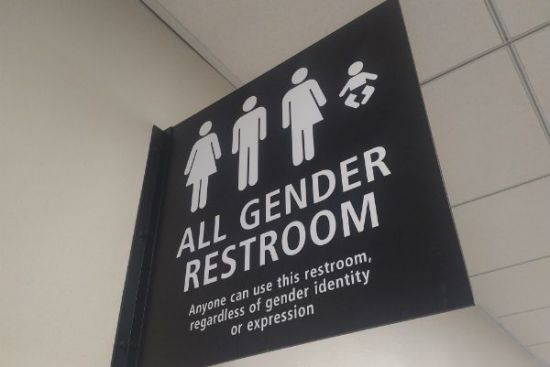
[Asia Economy Reporter Kang Joo-hee] Some people feel uncomfortable using restrooms separated strictly by male or female. Transgender individuals, whose biological sex differs from their gender identity, face awkward situations whenever they use public restrooms. Because they may not appear outwardly as male or female, they sometimes receive disapproving looks or misunderstandings when using restrooms.
There are calls for alternatives to prevent discomfort or confusion caused by clearly gender-segregated restrooms. Experts suggest that restrooms in public facilities should be designed so that everyone can use them safely.
According to an SBS report on the 22nd, a citizen’s complaint was recently filed with the police regarding a woman’s restroom in a shopping center in Goyang-si, Gyeonggi Province. The complaint stated, "A person wearing a skirt who entered the restroom seems to be a man." Police who responded searched inside the shopping center and apprehended a man in his 30s, identified as Mr. A, matching the description. Mr. A was found to have entered the women’s restroom wearing a skirt and a wig.
Suspecting a sexual crime, the police inspected Mr. A’s cellphone and the restroom but found no evidence of wrongdoing. During the investigation, Mr. A admitted that he usually dresses in women’s clothing, and those around him confirmed this. Mr. A reportedly said, "I could not use the men’s restroom while dressed as a woman."
As such, some citizens experience significant discomfort or awkward situations when using public restrooms due to issues related to appearance or gender identity. According to the "Survey on Transgender Hate and Discrimination" released by the National Human Rights Commission of Korea (NHRCK) in February, among 589 transgender respondents, 241 (40.9%) said they used facilities of a gender different from their gender identity out of fear of unfair treatment.
Among them, 231 (39.2%) said they avoided drinking beverages to prevent needing to use the restroom, 212 (36%) said they gave up using the restroom due to fear of unfair treatment, and 72 (12.2%) reported being prohibited from using the restroom.
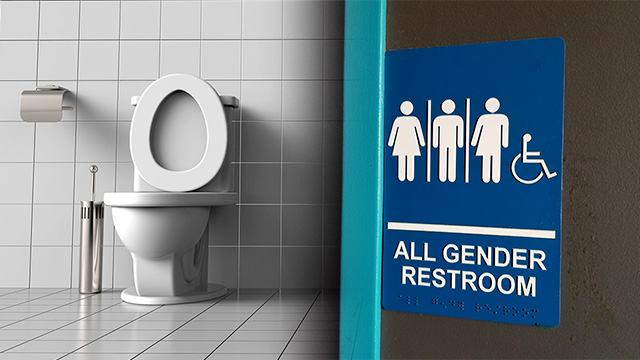
Meanwhile, a court ruling declared that restricting transgender women from using women’s restrooms constitutes discrimination. According to a report on the 13th, the director of a beauty academy, Mr. C, who was ordered by the NHRCK to correct his behavior after demanding transgender woman Ms. B to use the women’s restroom on a different floor or the men’s restroom, lost an administrative lawsuit challenging the decision.
Mr. C had prohibited Ms. B from using the women’s restroom, citing complaints from other students due to conflicts. The court ruled, "The fact that complaints were made by other students does not constitute a reasonable ground to restrict (Ms. B’s) use of the women’s restroom," and judged that "this constitutes discrimination based on gender identity."
Some are proposing the creation of "gender-neutral restrooms" as a solution to such issues. In May, the Emergency Committee of the Sungkyunkwan University Student Council announced plans to install "restrooms for everyone" within the university by the end of the year, which anyone can use regardless of gender, age, disability, or gender identity.
In a post on the Student Council’s Facebook page, the committee stated, "Current restrooms are inappropriate spaces for sexual minorities. If a person is not recognized as either male or female, it is difficult to use either restroom," and pointed out, "(There have been) several cases where sexual minorities were reported to the police and arrested while using public restrooms. When they want to relieve themselves after leaving home, their most common choice is to 'hold it in.'"
They added, "Restrooms for everyone are not special facilities. The difference is that more people can use them conveniently," emphasizing that restrooms for everyone are not a "desired project" but a "necessary project."
Experts emphasize that restrooms in public facilities such as subways, airports, and city halls should be designed so that anyone can use them safely. Kim Ji-hak, director of the Korea Diversity Research Institute, said, "Some sexual minorities, especially transgender people, hold it in all day or do not leave their homes at all because they cannot use restrooms," and pointed out, "As seen in recent court rulings, experiencing inconvenience in restroom use due to being a sexual minority constitutes a human rights violation."
He continued, "Recent investigations revealed that women’s restrooms are not properly provided at construction sites and other places. This was shocking as it reflects the poor working conditions of female workers, and the restroom issue for sexual minorities is no different," adding, "Gender-neutral restrooms will greatly help not only sexual minorities but also people who cannot use male/female restrooms for various reasons, such as disabled persons who need caregivers or parents accompanying children of a different gender."
© The Asia Business Daily(www.asiae.co.kr). All rights reserved.
![Clutching a Stolen Dior Bag, Saying "I Hate Being Poor but Real"... The Grotesque Con of a "Human Knockoff" [Slate]](https://cwcontent.asiae.co.kr/asiaresize/183/2026021902243444107_1771435474.jpg)
















