"Regional Hub National Universities to Raise Per Capita Education Investment to Yonsei University and Korea University Levels"
Reducing Tuition Burden by Half and Achieving Tuition-Free Education Within 5 Years
[Asia Economy Reporter Oh Ju-yeon] Lee Nak-yeon, former leader and presidential candidate of the Democratic Party of Korea, announced on the 11th as an education pledge that he will make regional flagship national universities, excluding Seoul National University, "tuition-free universities." He also stated that he will increase per-student education investment to the level of Yonsei University and Korea University to improve the quality of education.
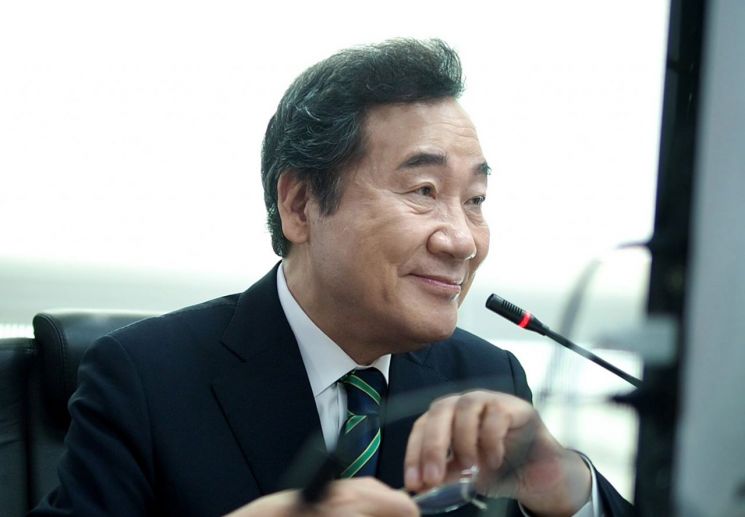
On the afternoon of the same day, Lee held a press conference at the National Assembly Communication Office and said, "Regional universities must thrive for regional cities to thrive," proposing "inclusive upward leveling" as a new alternative for university education.
To this end, Lee promised to raise per-student education investment at regional flagship national universities to the level of Yonsei University and Korea University and reduce the burden of tuition fees.
Lee said, "Currently, the per-student education cost at regional flagship national universities (excluding Seoul National University) is about 17 million KRW per year," adding, "I will raise it to the average of Yonsei and Korea University, about 27 million KRW, to improve the quality of education." He explained that this includes increasing the rate of securing full-time faculty and eliminating overcrowded classes. Additionally, he said he will invest in enhancing students' basic competencies such as foreign languages and coding, and establish high-level education and research infrastructure by deploying state-of-the-art experimental equipment.
He also said, "I will reduce the tuition burden by half and implement tuition-free education within five years." He expressed expectations that "if the education at regional flagship universities improves to the level of Yonsei and Korea University and the tuition burden is eliminated, talented individuals will gather, and that human resource will become the greatest competitive advantage of regional flagship national universities."
Furthermore, he emphasized that a "nano-degree" program for undergraduates will be fully introduced at Seoul National University and 10 other regional flagship national universities to nurture IT talent demanded by companies, and that the departments and enrollment quotas of regional flagship national universities will be reorganized to meet the demands of future industries.
Regarding the "inclusive upward leveling" proposed that day, Lee explained, "It is a balanced development plan to raise the level of regional universities through active government investment," adding, "It is a method to drive regionally specialized growth by connecting regional private universities and regional industries centered on regional flagship national universities." He continued, "The state must take responsibility for the starting line of society so that students entering regional universities can receive high-quality education and participate in fair competition," emphasizing, "Each regional university will have representative departments symbolizing the university, and those departments will become important reasons for admission decisions."
© The Asia Business Daily(www.asiae.co.kr). All rights reserved.
![Clutching a Stolen Dior Bag, Saying "I Hate Being Poor but Real"... The Grotesque Con of a "Human Knockoff" [Slate]](https://cwcontent.asiae.co.kr/asiaresize/183/2026021902243444107_1771435474.jpg)















