Crop Damage Worsens, Pork Belly Prices Up 49%
Meat Prices Including Samgyeopsal Continue Rising
Chicken and Eggs Remain Unstable for a Year
Chuseok Table Setting Expected to Cost Over 300,000 Won
[Asia Economy Reporter Seungjin Lee] With Chuseok just over 40 days away, consumer prices are raising alarms. The impact of highly pathogenic avian influenza (AI) has persisted for a year, and combined with poor crop yields due to the heatwave and the outbreak of African swine fever (ASF) after three months, prices of major food ingredients have surged, making this Chuseok expected to have the most expensive table setting costs in history.
Heatwave and Swine Fever Raise Price Concerns
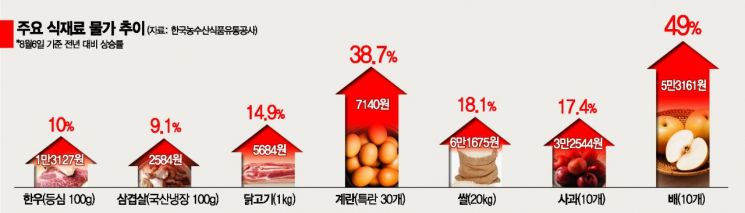
According to the Korea Agro-Fisheries & Food Trade Corporation (aT) on the 9th, as of the 6th, prices of representative Chuseok fruits, apples and pears, have risen by 17.4% and 49% respectively compared to last year. This is due to poor crop yields caused by the continuous 35-degree scorching heat. If five apples and five pears are placed each on the Chuseok ancestral rites table, it will cost about 45,000 won, which is 15,000 won more than last year. Due to the impact of Typhoon No. 9 'Lupit', crop damage is expected, and as Chuseok approaches, apple and pear prices are expected to rise further.
Meat prices are also rising daily. The price of 100g of pork belly is 2,584 won, up 9.1% from last year, and it is expected to rise further due to the recent recurrence of ASF after three months. If the ASF outbreak at a pig farm in Goseong, Gangwon Province leads to a movement ban due to concerns about spread to nearby areas, supply disruptions could occur nationwide. Pork prices have already increased by more than 20% compared to January this year due to increased demand caused by COVID-19.
Korean beef prices have been rising since last year due to the combined effects of disaster relief payments and increased home meal demand after COVID-19. This year, with 88% of the population receiving disaster relief payments, demand for Korean beef is expected to increase. When disaster relief payments began last year, Korean beef prices rose about 8% in the following week, so a similar increase is expected as payments become widespread this year. Currently, the price of 100g of Korean beef sirloin is 13,127 won, up 10% from last year, and it is likely to exceed 14,000 won due to the disaster relief effect.
Impact of Avian Influenza Continues for One Year
Chicken and egg prices have also failed to stabilize due to the ongoing AI impact for a year. Chicken costs 5,684 won per kilogram, 14.9% higher than last year, due to culling caused by AI and increased demand. Egg prices have maintained double-digit growth for seven consecutive months since January this year (15.2%). The price of a tray of special eggs (30 eggs) is 7,140 won, remaining above 7,000 won throughout the year. Eggs are used in most dishes essential for Chuseok, such as various jeon (Korean pancakes), directly affecting table price inflation.
With major food ingredient prices soaring, this year’s Chuseok table setting cost (based on traditional ancestral rites table) is expected to exceed 300,000 won, an increase of 60,000 won from last year. Rice prices have risen 20% over the past year, and sesame prices have increased by 30%, which is expected to significantly raise the price of songpyeon (rice cakes). Additionally, various processed food prices have been raised since the beginning of the year, leading to the highest table setting costs ever recorded.
© The Asia Business Daily(www.asiae.co.kr). All rights reserved.

















