Comparison of Major Medium and Large Groups Excluding Top 10 Groups
Hyosung Group's Market Cap Soars 135% Compared to Last Year
Hyosung TNC's Stock Price Rises 310% Amid Strong Spandex Market
Market Caps of Celltrion, Mirae Asset Securities, and KT&G Decline
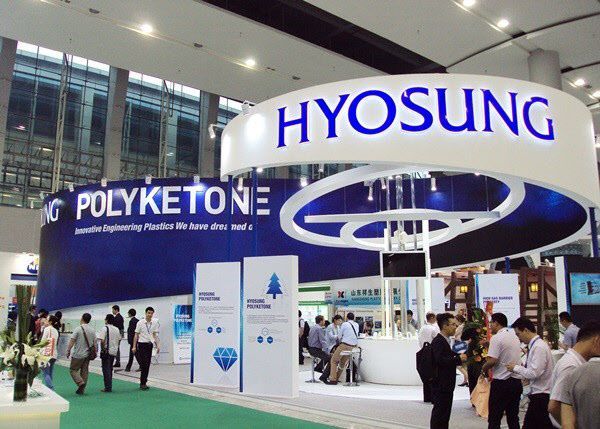
[Asia Economy Reporter Minji Lee] The market capitalization (market cap) of medium to large groups, excluding the top 10 major conglomerates, is undergoing rapid changes. While chemical-related groups attracted massive funds due to demand recovery effects following the resumption of economic activities, securities and pharmaceutical/biotech companies saw their market caps decline as the factors driving their stock price increases disappeared.
According to financial information provider FnGuide on the 4th, as of the 1st of this month, the market caps of major groups outside the top 10 showed mostly an upward trend compared to the end of last year. The most notable increase was seen in Hyosung, which rose approximately 135% from 5.1927 trillion KRW to 12.2261 trillion KRW in about eight months. Among its 10 listed affiliates, except for Jinheung Enterprise (-6.55%), all nine companies saw significant stock price increases, leading to a substantial rise in market cap. Following Hyosung, the groups with high market cap growth rates were Kakao (3 companies, 89%), KCC (3 companies, 80%), Hanjin (5 companies, 58%), Kolon (6 companies, 54.8%), Doosan (6 companies, 54.7%), Daelim (3 companies, 46.7%), SM (3 companies, 42.4%), and KT (9 companies, 42.3%).
Among the group stocks, Hyosung TNC (321%), Hyosung Advanced Materials (312%), and Hyosung Chemical (150%) showed triple-digit growth rates, playing a key role as the 'cash cows' of the Hyosung Group. Their main products include spandex, tire cords, and polypropylene (PP), which are used as materials for textiles, clothing, and tires. The supply situation has not kept pace with the surging demand, resulting in price increases benefiting these companies. For example, Hyosung TNC, which produces spandex, saw its stock price rise about 310% this year alone, from 211,000 KRW to 867,000 KRW, driven by growth in China's sportswear (yoga and athletic wear) market and an increased blending rate of spandex in general apparel.
Researcher Wooje Jeon from Hanwha Investment & Securities said, "We set a target price of 1.1 million KRW, and since the expansion cycle is scheduled for the fourth quarter, the market conditions are expected to remain strong for the time being." He added, "The spandex inventory days decreased by 35 days in three months, meaning demand growth has outpaced supply by 35%." Additionally, SM Group's TK Chemical saw its market cap increase about 191%, from 230.9 billion KRW to 672.6 billion KRW, due to strong performance in the chemical sector centered on spandex. Kolon Group's Kolon Industries grew 97% due to increased sales of petroleum resins for tires and rising demand in the tire cord market.
Conversely, the market caps of the Celltrion, Mirae Asset, and KT&G groups declined compared to the end of last year. Despite Mirae Asset Venture Investment's strong performance and a 60% surge in its stock price, the overall market cap of the Mirae Asset Group fell about 3%, from 7 trillion KRW to 6.7 trillion KRW. This was due to the sluggish stock price performance of Mirae Asset Securities (-6.87%) this year, following a sharp rise in securities stocks during last year's stock market boom.
Celltrion Group's market cap decreased by 32%, the largest drop among major groups. By stock, Celltrion Pharm (-41%), Celltrion Healthcare (-34%), and Celltrion (-29%) all declined. While pharmaceutical and biotech stocks surged sharply last year, they have been undergoing prolonged corrections this year. KT&G Group's Youngjin Pharmaceutical's market cap also dropped from 1.4 trillion KRW to 1 trillion KRW, pulling the group's market cap down by about 4%. In particular, Celltrion Group's stock price decline accelerated after the positive momentum from last year's development of the COVID-19 neutralizing antibody treatment drug, Rekirona, faded. Researcher Geunhee Seo from Samsung Securities explained, "Sales of Ramsima SC and Rekirona, which were expected to drive growth this year, have been sluggish, lowering market expectations. Although the merger of Celltrion, Celltrion Healthcare, and Celltrion Pharm is expected to conclude this year, the momentum remains valid. However, concerns about the major shareholder's tax issues, share succession, and the adjusted market cap of the merged entity due to internal transaction offsets will likely complicate the merger process."
© The Asia Business Daily(www.asiae.co.kr). All rights reserved.
![Clutching a Stolen Dior Bag, Saying "I Hate Being Poor but Real"... The Grotesque Con of a "Human Knockoff" [Slate]](https://cwcontent.asiae.co.kr/asiaresize/183/2026021902243444107_1771435474.jpg)











