Operation of Customized Health Classes Linked with Welfare Centers in Integrated Care Pilot Project Areas
[Asia Economy Yeongnam Reporting Headquarters Reporter Kim Yong-woo] “Elderly person, you are currently taking stomach medicine and anti-inflammatory painkillers simultaneously!”
As people age and rely on medication due to overlapping conditions such as hypertension and diabetes, they often do not know what medicines they are taking and simply focus on taking them. Most are unaware that the medications prescribed from various places may contain the same active ingredients.
A customized project launched by the National Health Insurance Service Busan-Gyeongnam Regional Headquarters to manage chronic diseases is gaining attention.
It is a program that supports individuals to manage their eating habits, exercise, and medication intake on their own.
In 2020, the elderly population aged 65 and over in Busan was 19.4%, and in 2021 it exceeded 20%, expected to enter a super-aged society.
Although the number of chronic disease patients is increasing due to aging, the prolonged COVID-19 pandemic has made it difficult for low-income vulnerable groups to manage chronic diseases. In particular, the importance of proper medication use is growing.
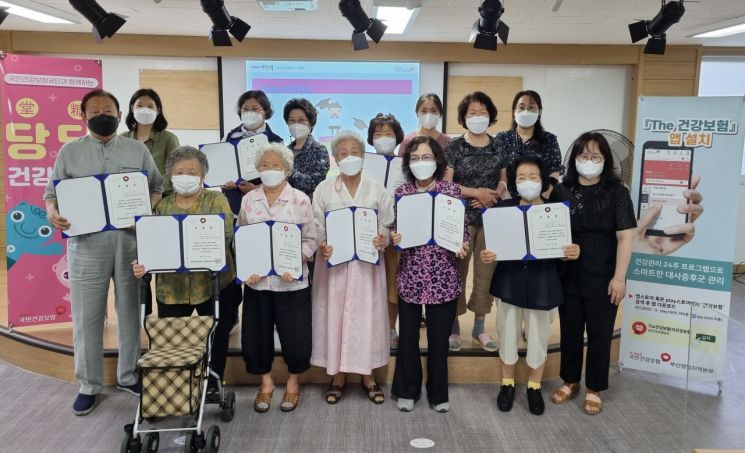
The National Health Insurance Service Busan-Ulsan-Gyeongnam Regional Headquarters operates the ‘Dangdang! Healthy Classroom ? Healthy Medication’ program targeting low-income vulnerable elderly aged 65 and over with chronic diseases in Buk-gu, Busan.
This project is being conducted in cooperation with three welfare centers, including Dongwon Comprehensive Social Welfare Center, which operates the Integrated Care Harmony Center.
For Harmony Center users receiving treatment for hypertension or diabetes, face-to-face health classes are held, and if participation in face-to-face classes is difficult, non-face-to-face video health classes are provided in connection with care workers.
The health classes offer programs to improve self-management skills such as ‘understanding diseases and managing complications, diet management, customized exercise, and medication counseling.’
During medication counseling with pharmacists, they also check for duplicate use of similar drugs and provide self-monitoring blood glucose meters and supplies to support individuals in measuring and managing their blood sugar levels independently.
One participant who completed the health class said, “I receive prescriptions from several hospitals, but through medication counseling, I realized I was taking stomach medicine and anti-inflammatory painkillers simultaneously,” expressing gratitude.
Another participant said, “When I recorded the foods I ate when my blood sugar levels were higher than usual, I found that levels rose significantly after eating fried foods and stews,” realizing the importance of dietary control in diabetes treatment.
Jang Su-mok, head of the National Health Insurance Service Busan-Ulsan-Gyeongnam Regional Headquarters, said, “During these difficult times due to COVID-19, more meticulous and customized health management services are needed for vulnerable groups.”
Head Jang added, “As a public institution, we will strive harder to promote the health of local residents and realize social value.”
© The Asia Business Daily(www.asiae.co.kr). All rights reserved.
![Clutching a Stolen Dior Bag, Saying "I Hate Being Poor but Real"... The Grotesque Con of a "Human Knockoff" [Slate]](https://cwcontent.asiae.co.kr/asiaresize/183/2026021902243444107_1771435474.jpg)
















