Amendment to the Enforcement Decree of the Environmental Impact Assessment Act Approved at the Cabinet Meeting
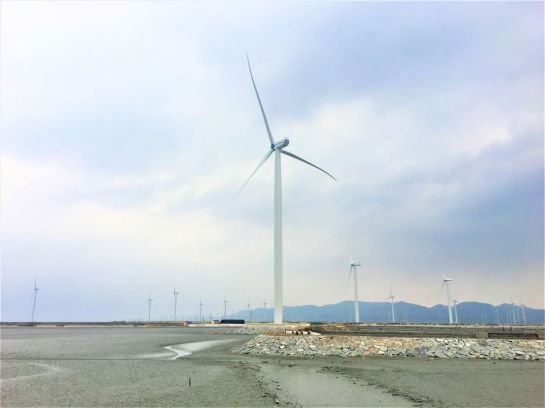
[Sejong=Asia Economy Reporter Joo Sang-don] The environmental review consultations for wind power projects, which were previously delegated to local environmental offices, will now be conducted entirely by the Ministry of Environment's Wind Environment Evaluation Task Force. This aims to provide consistent environmental reviews through the dedicated team and accelerate the evaluation process to facilitate faster project progress.
The Ministry of Environment announced that the partial amendment to the "Enforcement Decree of the Environmental Impact Assessment Act," which includes this change, was approved at the Cabinet meeting on the 3rd and is scheduled to take effect on the 10th.
The main point of this amendment is to unify the consultation authority for wind power projects, which had been dispersed between the Ministry of Environment and local environmental offices, under the Ministry of Environment (Wind Environment Evaluation Task Force) to enhance the speed of consultations for wind power projects.
According to the Environmental Impact Assessment Act, an environmental impact assessment is mandatory when installing wind power plants of 100 MW or more, equivalent to 20 units of 5 MW wind turbines. The evaluation items cover 21 categories across six fields, including flora and fauna in the natural ecological environment affected by the project, natural environmental assets, and meteorological, air quality, odor, and greenhouse gas items in the atmospheric environment field.
Project operators must draft an initial evaluation report and collect opinions from local residents, the Minister of Environment, and approval authorities. In particular, to hear the opinions of residents in the evaluation area, the draft evaluation report must be publicly announced and displayed, and explanatory meetings must be held. Subsequently, the final evaluation report, reflecting the results of the resident opinion collection on the draft, is submitted to the local government or other project approval authorities. The approval authority reviews the report preliminarily and then requests consultation from the Ministry of Environment, which is the environmental impact assessment consultation agency. The Ministry of Environment reviews the report and issues conclusions such as rejection, disapproval, conditional approval, or approval. If the conclusion is rejection or disapproval, the project cannot proceed.
Until now, environmental impact assessment consultations have been conducted by the local environmental offices where the project site is located. This has led to issues where the speed of progress varies depending on the conditions of each local office. A representative from the Korea Wind Industry Association said, "Even for similar wind projects, different local office staff sometimes request additional documents separately," adding, "Also, in local offices where there are many suitable areas for wind power generation, the workload piles up, causing delays in reviewing evaluation reports."
Therefore, through the amendment of the Enforcement Decree of the Environmental Impact Assessment Act, the environmental review for wind power projects will be centralized under the Ministry of Environment's Wind Environment Evaluation Task Force. A Ministry of Environment official stated, "We expect that the dedicated team will enable more professional, consistent, and efficient evaluations," and added, "This will speed up the review process of environmental impact assessments."
Additionally, this amendment advances the timing of disclosure regarding the results of resident opinion collection and whether those opinions were reflected, to before the "request for consultation on strategic environmental impact assessments and environmental impact assessment reports." The timing of disclosure of resident opinion collection results and their reflection, which is conducted when preparing strategic environmental impact assessments and environmental impact assessment reports, has been changed to before the project plan is finalized. This allows residents to know the results of opinion collection before the consultation request, ensuring the residents' right to know and expanding their participation opportunities during the evaluation consultation process.
Hong Jeong-seop, Director of the Nature Conservation Bureau at the Ministry of Environment, said, "Through this amendment, consistent evaluation consultations for wind power projects will contribute to expanding renewable energy for carbon neutrality implementation," and added, "We also expect that the reliability and transparency of the evaluation process will improve by disclosing the results of resident opinion collection early."
© The Asia Business Daily(www.asiae.co.kr). All rights reserved.
![Clutching a Stolen Dior Bag, Saying "I Hate Being Poor but Real"... The Grotesque Con of a "Human Knockoff" [Slate]](https://cwcontent.asiae.co.kr/asiaresize/183/2026021902243444107_1771435474.jpg)
















