One Year After Announcement, No Designated Supply Areas
Panic Buying Continues Despite Restraint on Catch-Up Purchases
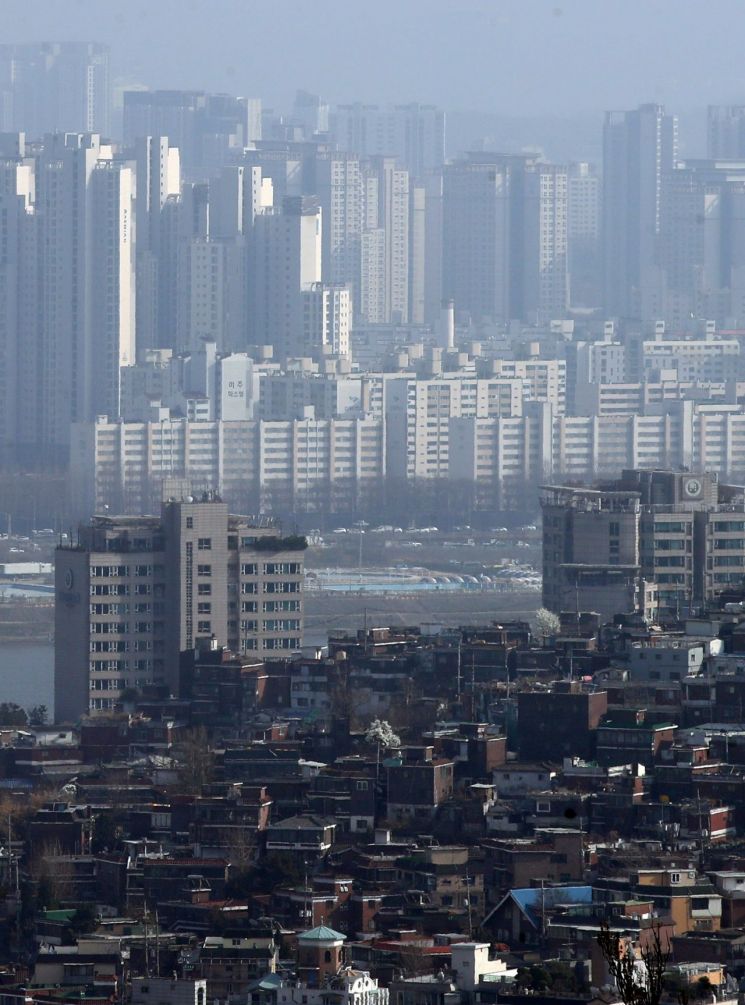
[Asia Economy Reporter Jo Gang-wook] The August 4 supply plan, centered on large-scale development of idle land in downtown Seoul and public-oriented redevelopment and reconstruction, is faltering. Even one year after its announcement, controversy over its 'hasty and rushed' nature continues, and no supply areas have yet been designated. Despite the severe drought in apartment transactions in Seoul, the 'panic buying' by the 2030 generation continues unabated, ignoring the government's requests to refrain from speculative purchases. ▶Related article on page 3
According to the real estate industry on the 2nd, the government plans to announce supply plans this month for the development projects of idle sites such as Gwacheon Government Complex idle land, alternative sites, and Taereung Country Club in the metropolitan area. It is only after one year since the August 4 plan announcement last year that concrete development plans for one of the main pillars, the metropolitan area land development project, are emerging. This implicitly acknowledges that there has been no progress on major projects for a year.
The August 4 plan primarily aimed to increase housing supply in downtown Seoul and nearby areas according to demand. Although the total supply volume of 132,000 households was large, the market showed great interest in the plan to supply more than 30,000 households through easing reconstruction regulations in downtown Seoul and discovering new urban sites such as the Gwacheon Government Complex idle land, Taereung Golf Course site, and Yongsan Camp Kim site.
However, immediately after the plan was announced, there was strong criticism that it was nothing more than a hasty and rushed 'desk administration.' In fact, the plan to supply 4,000 households around the Gwacheon Government Complex was scrapped on the 4th of last month, and alternative sites had to be sought. The 10,000-household scale project at Taereung CC in Nowon-gu is still stalled. There is also strong resident opposition at sites such as the Seocho-dong Seoul Regional Public Procurement Service site, the National Diplomatic Academy idle land, Mapo-gu Western Driver's License Test Site, and unsold land in Sangam DMC.
For the public reconstruction project targeting 50,000 households, only about 3% of the volume has been secured so far. Some existing candidate sites have even withdrawn their participation decisions. Publicly directly implemented reconstruction has yet to disclose any candidate sites. In the case of downtown public housing complex development projects, voices demanding project cancellation are growing in some areas.
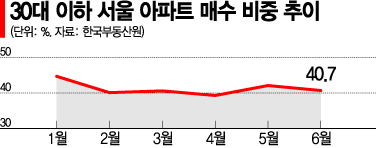
While the August 4 plan, which the government touted as a signal for policy shift, has been at a standstill for a year, the 'panic buying' craze among the 2030 generation has intensified. According to the Korea Real Estate Board, among the 4,240 apartment sales transactions in Seoul last month, 1,724 were by those aged 30 or younger, accounting for 40.7% of the total. The proportion of transactions by those aged 30 or younger peaked at 44.7% in January this year, then maintained the 40% range with 40.1% in February and 40.6% in March, slightly dropped to 39.3% in April, rose again to 42.1% in May, and maintained the 40% range for two consecutive months until last month. By region, the transaction share of those aged 30 or younger exceeded half in Seodaemun-gu (52.2%), Seongbuk-gu (51.0%), and Gangseo-gu (50.6%). This is interpreted as the 30-and-under generation continuing to secure homes in outer areas with many mid-to-low priced apartments and relatively convenient downtown commuting areas.
Ko Jun-seok, adjunct professor at Dongguk University Law School, said, "The important thing is that occupancy happens 3 to 4 years after groundbreaking, but only announcements have been made with no actual groundbreaking," adding, "Compared to the abundant supply announcements, the lack of actual implementation risks turning the plan into a meaningless measure."
© The Asia Business Daily(www.asiae.co.kr). All rights reserved.
![Clutching a Stolen Dior Bag, Saying "I Hate Being Poor but Real"... The Grotesque Con of a "Human Knockoff" [Slate]](https://cwcontent.asiae.co.kr/asiaresize/183/2026021902243444107_1771435474.jpg)
















