Offshore Subdivision and Nearshore Boundary Adjustment... Minimizing Inconvenience to Island Residents' Maritime Traffic and Fishing Activities
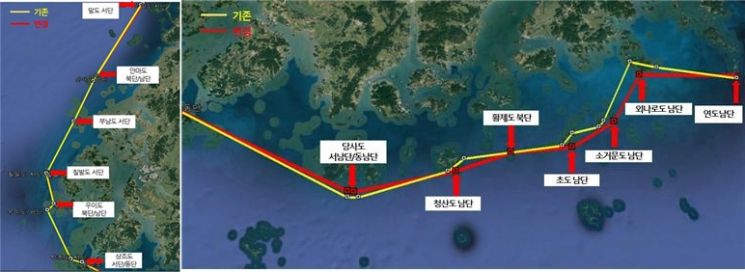
[Asia Economy Honam Reporting Headquarters, Reporter Yoon Jamin] The Gwangju Regional Meteorological Administration (Director Kim Geumran) announced on the 29th that it will reorganize and operate the 'Marine Warning and Advisory Zones' to enhance maritime safety while minimizing inconveniences to island residents in maritime transportation and fishing activities.
First, the offshore sea areas will be subdivided. The northern and southern offshore areas of the southern West Sea will each be divided into inner offshore and outer offshore areas, increasing the number of sea zones from 2 to 4.
Along with improving the spatial representativeness of forecast information, additional marine meteorological observation equipment will be installed in the separated offshore zones to strengthen monitoring of hazardous weather such as high waves, and maritime safety will be enhanced through warning operations suited to actual conditions.
Previously, even if only the outer offshore area experienced bad weather, warnings were issued for the entire offshore area. However, with optimal marine warning operations only for zones requiring hazard information, it is expected that the passage rights of island residents and visitors will expand and the number of fishing days will increase.
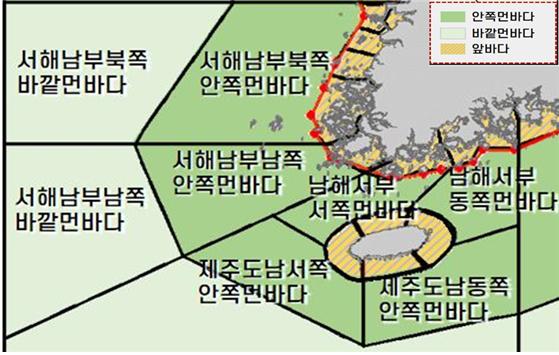
The boundary of the nearshore sea has also been adjusted. Previously, the boundary line passed through the interior of the reference island, dividing the inside and outside of the reference island into nearshore and offshore areas respectively, but now the reference island is included either in the nearshore or offshore area.
This allows for clear confirmation of the warning announcement zones, preventing confusion among users of marine meteorological information and supporting efficient maritime safety management by related agencies.
The Meteorological Administration started a policy study on the development plan for the marine forecast system in 2020 and formed a special task force in coordination with regional meteorological administrations to improve the marine warning and advisory zones. Based on scientific evidence such as eliminating observation gaps through additional installation of marine meteorological observation equipment and analyzing sea area characteristics, the reorganization plan was derived.
At the same time, the opinions of fishing workers and marine-related agencies, as users of marine meteorological information, were actively reflected, and through a public survey, the new sea area names (inner offshore and outer offshore) were decided, practicing proactive administration with public participation.
Kim Geumran, Director of the Gwangju Regional Meteorological Administration, said, “With the reorganized operation of marine warning and advisory zones, maritime safety will be secured while maximizing the benefits of fishing activities and maritime transportation. We will continue to strive to improve services that the public can feel and enhance satisfaction.”
© The Asia Business Daily(www.asiae.co.kr). All rights reserved.
![Clutching a Stolen Dior Bag, Saying "I Hate Being Poor but Real"... The Grotesque Con of a "Human Knockoff" [Slate]](https://cwcontent.asiae.co.kr/asiaresize/183/2026021902243444107_1771435474.jpg)
















