Bank of Korea to Release 'Q2 2021 Real GDP' Preliminary Report on 27th
Exports Down 2.0%, Imports Up 2.8%
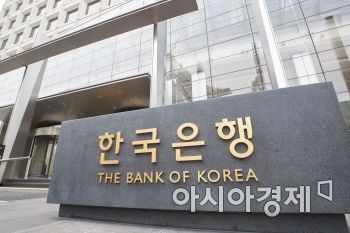
[Asia Economy Reporters Eunbyeol Kim, Sehee Jang] South Korea's economy grew by 0.7% in the second quarter of this year, continuing the recovery trend throughout the first half. This marks four consecutive quarters of positive growth. However, with the persistent spread of the COVID-19 Delta variant, the growth rate for the third quarter remains uncertain.
According to the preliminary report on "Real Gross Domestic Product (GDP) for the second quarter of 2021" released by the Bank of Korea on the 27th, the real GDP for April to June this year was 475.7625 trillion won, an increase of 0.7% compared to the previous quarter. Real GDP had contracted due to the impact of COVID-19, with -1.3% in the first quarter and -3.2% in the second quarter of last year, but turned positive at 2.2% in the third quarter and has maintained growth for four consecutive quarters. Previously, the Bank of Korea stated that if GDP growth rates of 0.6% were recorded in the second to fourth quarters, an annual growth rate of 4.0% would be achievable.
The increase in GDP in the second quarter was largely driven by private consumption and government consumption. Private consumption rose by 3.5%, led by semi-durable goods (such as clothing) and services (including entertainment, culture, food, and accommodation). Government consumption increased by 3.9%, mainly due to health insurance benefit expenditures. This is the largest growth in private consumption since the second quarter of 2009 (3.6%) and in government consumption since the second quarter of 1987 (4.2%).
Construction investment decreased by 2.5%, as both building construction and civil engineering declined, while facility investment increased by 0.6%, centered on transportation equipment.
Exports decreased by 2.0%, mainly due to automobiles and liquid crystal displays (LCDs), whereas imports increased by 2.8%, driven by primary metal products and chemical products.
By economic activity, GDP in manufacturing and construction turned negative, but the increase in services expanded.
Manufacturing decreased by 1.2%, due to a decline in transportation equipment, and construction also fell by 1.4%, mainly in civil engineering. Agriculture, forestry, and fisheries, as well as electricity, gas, and water supply sectors, decreased by 13.6% and 3.5%, respectively. On the other hand, services increased by 1.9%, led by transportation, culture, and other service industries.
Meanwhile, real gross domestic income (GDI) decreased by 0.6% due to worsening terms of trade, falling short of the GDP growth rate (0.7%).
© The Asia Business Daily(www.asiae.co.kr). All rights reserved.
![Clutching a Stolen Dior Bag, Saying "I Hate Being Poor but Real"... The Grotesque Con of a "Human Knockoff" [Slate]](https://cwcontent.asiae.co.kr/asiaresize/183/2026021902243444107_1771435474.jpg)















