 KakaoBank IPO Presstalk Press Conference
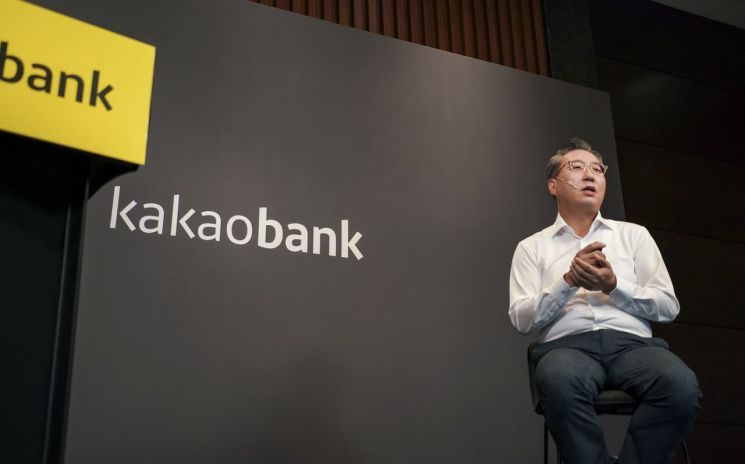
(Seoul=Yonhap News) Yoon Ho-young, CEO of KakaoBank, is announcing the listing plan at the IPO Presstalk held at the Conrad Hotel in Yeouido, Seoul, on the morning of the 20th. 2021.7.20
[Provided by KakaoBank. Resale and DB prohibited]
photo@yna.co.kr
(End)
<Copyright(c) Yonhap News Agency, Unauthorized reproduction and redistribution prohibited>
[Asia Economy Reporter Junhyung Lee] It has been revealed that foreign underwriters are taking most of the institutional shares in KakaoBank (Kabang)'s public offering. On the other hand, the mandatory lock-up ratio for foreign institutions is relatively low, raising the possibility that foreign investors may flood the market with profit-taking sales immediately after the listing, increasing stock price volatility.
According to the securities registration statement disclosed by Kabang on the 24th, Kabang is offering a total of 65.45 million new shares. Of these, 55% (35,997,500 shares) were allocated to institutions, excluding the employee stock ownership association (20%) and general investors (25%).
87.6% of the institutional shares are being underwritten by two foreign underwriters. Credit Suisse is taking 18,326,000 shares, and Citigroup Global Markets is taking 13,090,000 shares. The foreign securities firms serving as channels for foreign institutions are underwriting about 90% of the institutional shares. This accounts for about half of the total public offering shares.
However, since the underwriting volume does not necessarily translate into allocated shares, the actual investment ratio of foreign institutions may differ from this. Kabang plans to disclose detailed allocation results, including the composition ratio of institutional investors, later through a stock issuance performance report.
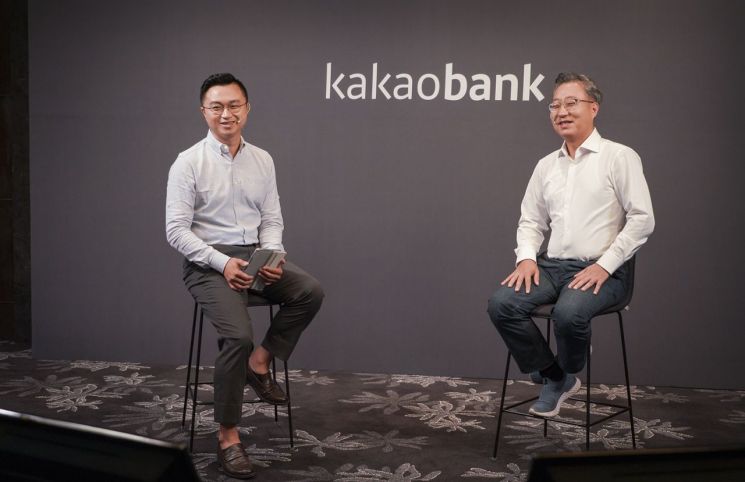 (Seoul=Yonhap News) Yoon Ho-young, CEO of KakaoBank (right), is announcing the listing plan at the IPO press talk held at Conrad Hotel in Yeouido, Seoul on the morning of the 20th. 2021.7.20
 [Provided by KakaoBank. Redistribution and DB reproduction prohibited]
photo@yna.co.kr
(End)
<Copyright(c) Yonhap News Agency, Unauthorized reproduction and redistribution prohibited>
The mandatory lock-up commitment ratio based on the application quantity from foreign institutions (15 days to 6 months) was only 13.4%. Although the commitment ratio may change based on the actual allocated quantity, it is likely to remain low. A low mandatory lock-up commitment ratio among institutional investors generally means that if the stock price surges immediately after listing, there will be many shares available for quick profit-taking.
The mandatory lock-up commitment is a system that requires institutions to hold the public offering shares for a certain period after listing as a condition for receiving a relatively large allocation of shares. However, due to the lack of clear regulations, underwriters autonomously allocate shares based on the lock-up commitment applications submitted by institutions during demand forecasting.
Given this situation, the mandatory lock-up commitment ratio of foreign investors participating in domestic public offerings is low. According to data received by Representative Byungwook Kim of the Democratic Party from the Financial Supervisory Service, the mandatory lock-up commitment ratio of foreign investors among the allocated shares of 10 companies that went public last year, including SK Biopharm and Kakao Games, was 4.64%.
Kabang stated in its prospectus that it allocated shares to institutions that proposed a final public offering price of 39,000 KRW or higher. Underwriters autonomously decide the allocation volume considering factors such as the price proposed by the institution, the institution's asset management scale, investment tendencies, public offering participation performance, and whether there is a mandatory lock-up commitment. This means that demand forecasting participants who meet these conditions may receive allocations corresponding to their entire participation quantity.
Underwriters do not disclose the importance or bonus points of each factor considered when allocating institutional shares.
© The Asia Business Daily(www.asiae.co.kr). All rights reserved.
![Clutching a Stolen Dior Bag, Saying "I Hate Being Poor but Real"... The Grotesque Con of a "Human Knockoff" [Slate]](https://cwcontent.asiae.co.kr/asiaresize/183/2026021902243444107_1771435474.jpg)

















