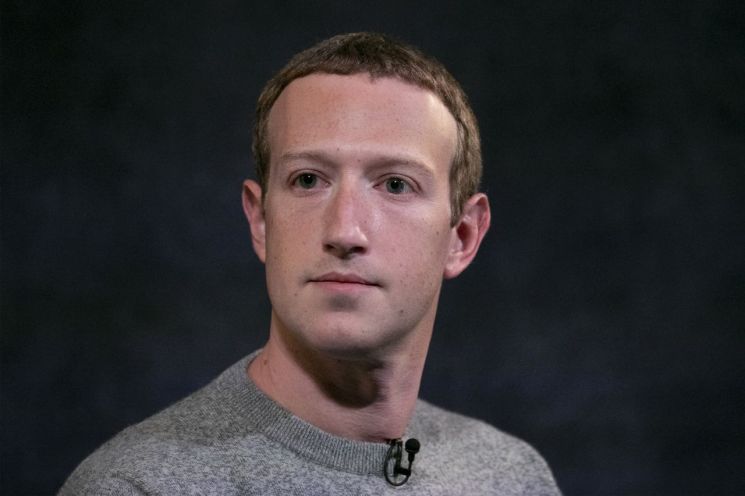
[Asia Economy Reporter Seulgina Jo] Mark Zuckerberg, the founder of Facebook, revealed a vision to transform Facebook from a social networking service (SNS) into a metaverse (3D virtual world) company within the next five years.
The metaverse, encompassing both reality and virtuality, has recently become a symbolic theme of the COVID-19 era, fueled by the popularity of the gaming platform Roblox, which has tens of millions of daily users. It is evaluated that the so-called 'metaverse era' is accelerating as individuals represented by avatars in virtual spaces engage in hobbies, work, and even economic activities such as earning and spending money.
◆Zuckerberg: "Metaverse, the Successor to Mobile Internet"
On the 23rd (local time), in an interview with the American media outlet The Verge, Zuckerberg emphasized the transition to a metaverse company, stating, "The metaverse is a vision spanning many companies and industries, the successor to mobile internet." The term metaverse, first appearing in Neal Stephenson's 1992 novel, refers to a 3D virtual world where the boundary between reality and virtuality disappears. Representative metaverse companies include Roblox, known as a playground for American elementary school students, and Naver Z's metaverse platform 'Zepeto,' which features 3D avatars.
Zuckerberg explained, "It is not simply a form created for people to communicate," adding, "It is not just about viewing content, but about embodying oneself within the internet and existing there." He also mentioned, "(The metaverse) allows experiences such as dancing and fitness, which were not possible on 2D apps or web pages, to be enjoyed together with people in different locations," calling it "a technology that delivers the clearest form of presence."
In particular, Zuckerberg emphasized that the metaverse is a platform accessible across all computing platforms including virtual reality (VR), augmented reality (AR), PCs, mobile devices, and game consoles. It is a 'powerful' platform that makes people feel as if they are in the same place even if they are hundreds of miles apart in different states.
Currently, Facebook is developing the workplace 'Infinite Office' through VR technology. Previously, it invested $2 billion to acquire Oculus, a VR device developer. In 2019, it also launched Horizon, a VR SNS where users can create avatars and socialize and chat in virtual spaces.
◆A 317 trillion won market opens in 2025... The dominant Metaverse Economy
Domestic and international companies alike are naming the metaverse as the next-generation computing platform to succeed mobile. Especially as new technologies such as virtual currency, Internet of Things (IoT), cloud, and smart health connect within the metaverse, there are growing expectations that a new market will be formed. This is why global companies like Google and Microsoft (MS) have already begun forming the market early, leveraging their massive financial and technological capabilities.
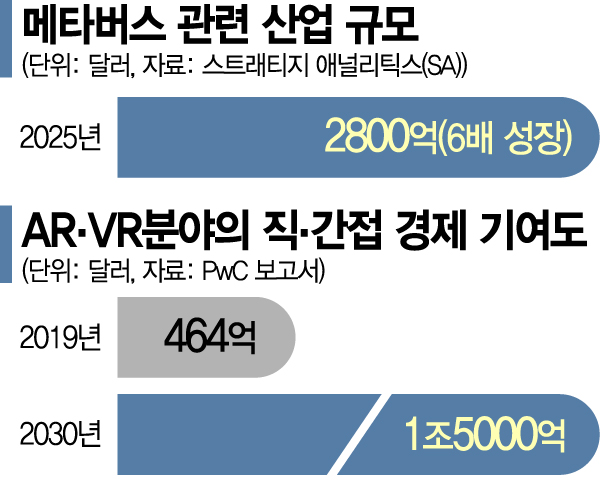
The global metaverse market is expected to reach $280 billion (approximately 317 trillion won) in related sales by 2025. In particular, due to the spread of untact (contactless) culture caused by COVID-19, restrictions on international travel and gatherings have accelerated the evolution of all aspects of daily life?games, hobbies, work?into the metaverse by more than ten years. In this process, the 'metaverse economy,' where people enjoy and consume in virtual worlds, has become an unstoppable trend.
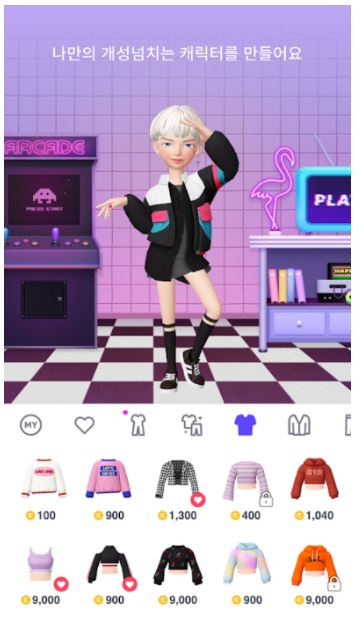
Among domestic companies, Naver is leading the metaverse transition. Naver Z's metaverse platform Zepeto, featuring 3D avatars, has surpassed 200 million cumulative users. Naver Labs and Naver Cloud are driving the transition to the metaverse era by implementing a 'mirror world' using aerial photography and artificial intelligence (AI), not just a simple virtual space. This is the concept of a digital twin that simulates cities in the metaverse, going beyond mere virtual spaces.
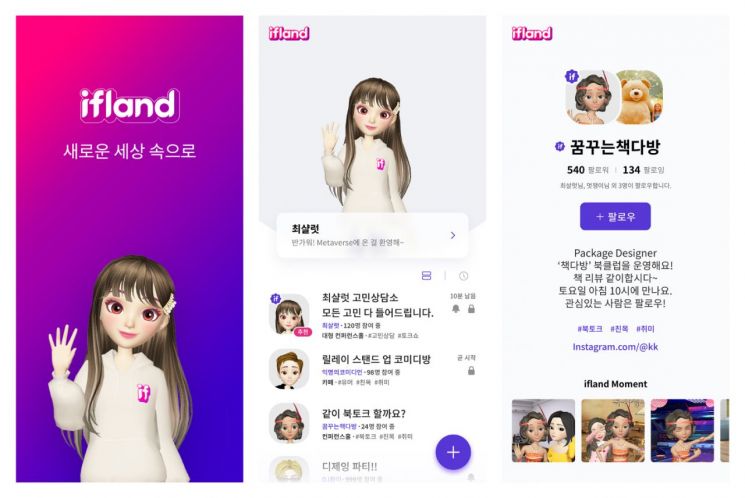
SK Telecom, which officially announced its corporate split within the year, also proposed metaverse as a new keyword for the surviving telecommunications business company under CEO Park Jung-ho. SK Telecom, which attracted attention earlier this year with metaverse-themed entrance ceremonies and recruitment briefings, recently launched a new metaverse platform called 'Ifland.' It is characterized by significantly enhanced social functions that allow not only the MZ generation familiar with the metaverse concept but all generations to express themselves through various avatars in virtual spaces and easily participate in forums, concerts, small gatherings, and other activities.
Domestic companies have also formed a so-called 'Metaverse K-Alliance' to avoid falling behind global companies with massive financial power in the metaverse competition. The Metaverse Alliance is a public-private cooperative system for the development of the metaverse industry ecosystem based on extended reality (XR), including AR and VR. Seventeen companies participate, including the three major telecom operators SK Telecom, KT, LG Uplus, as well as Hyundai Motor, Naver Labs, Kakao Entertainment, CJ ENM, Bundang Seoul National University Hospital, Lotte World, Maxst, VRTCT, and Raontech.
The Software Policy Research Institute stated, "The metaverse has scalability without constraints of time and space and high accessibility to users in their teens and twenties, who are future potential customers," adding, "It is expected to create innovation across all industries and society, which is why domestic and international companies are paying attention." Market research firm PwC forecasts that by 2030, the AR market will grow to $1.0924 trillion, and the VR market to $450.5 billion.
© The Asia Business Daily(www.asiae.co.kr). All rights reserved.
![Clutching a Stolen Dior Bag, Saying "I Hate Being Poor but Real"... The Grotesque Con of a "Human Knockoff" [Slate]](https://cwcontent.asiae.co.kr/asiaresize/183/2026021902243444107_1771435474.jpg)

















