"The Trend of the Capital Region Is Crucial... Foreign Quarantine Systems Do Not Fit Our Country"
[Asia Economy Reporter Seo So-jeong] As the fourth level of 'social distancing' in the Seoul metropolitan area is set to end on the 25th, the government has stated that it is still discussing whether to extend it and aims to reach a conclusion by the 25th at the latest. However, due to the recent surge in COVID-19 cases, the prevailing view is that it will be difficult to ease the distancing measures.
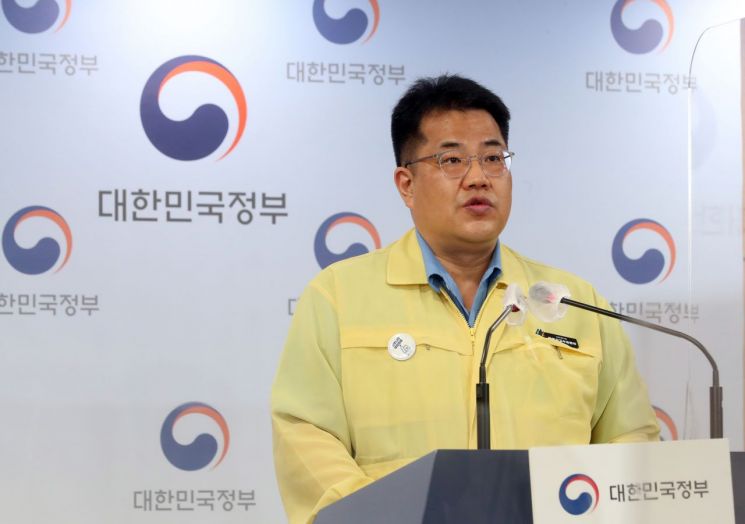
On the 22nd, Son Young-rae, head of the Social Strategy Division at the Central Disaster and Safety Countermeasure Headquarters of the Ministry of Health and Welfare, said at a press briefing, "At the Living Quarantine Committee, an advisory body on distancing policies, many opinions were expressed that it is generally difficult to ease the currently applied distancing measures," adding, "We are closely monitoring the situation this week."
Son said, "The assessment of the epidemic in the metropolitan area, which is the central region, is in a delicate situation," and "We plan to continue discussions on adjusting quarantine measures between local governments and related ministries today and tomorrow, so we believe more time is needed."
The authorities have not yet finalized the timing of the announcement regarding the extension of the metropolitan area’s level 4 distancing, and they intend to observe the epidemic situation at least until the latter half of this week. Son stated, "The latter half of this week is very important to assess the effect of distancing," and "We plan to watch the situation until the end of today and tomorrow to decide whether to strengthen the current distancing policy or adjust it differently."
Reversing the Metropolitan Area Epidemic is the Primary Goal... Blocking the Epidemic in Non-Metropolitan Areas is Also Important
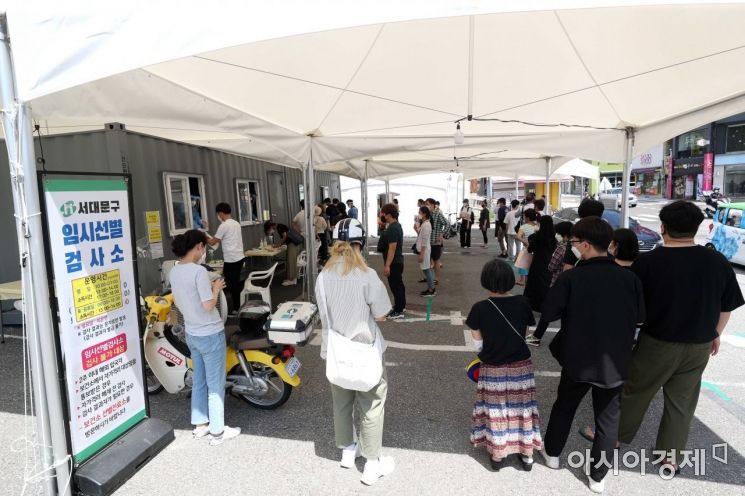 On the 21st, as the spread of COVID-19 continues, citizens are waiting for testing at the temporary screening clinic in the public parking lot of Sinchon Train Station, Seodaemun-gu, Seoul. Photo by Moon Honam munonam@
Regarding the capacity of the medical system, he said, "We have prepared a medical response system assuming about 2,000 new confirmed cases," emphasizing, "Even so, reversing the epidemic in the metropolitan area, the central region, is the top priority."
Son explained, "If the epidemic in the central area spreads, it will transmit to other regions and quickly deplete medical resources, so reversing the trend in the central area is crucial," adding, "Besides that, blocking the epidemic in non-metropolitan areas is important."
He expressed a negative view on the perspective that the paradigm of quarantine should be shifted because the fatality rate of the Delta variant is low.
Son said, "Currently, there are not many critically ill patients, but if the total number of infections increases, the number of critically ill patients will also increase," and "In that sense, reducing the scale of confirmed cases is important." He added, "We believe that moving to a response system focused on critically ill patients rather than the number of confirmed cases, as seen in foreign countries, does not suit our country."
© The Asia Business Daily(www.asiae.co.kr). All rights reserved.
![Clutching a Stolen Dior Bag, Saying "I Hate Being Poor but Real"... The Grotesque Con of a "Human Knockoff" [Slate]](https://cwcontent.asiae.co.kr/asiaresize/183/2026021902243444107_1771435474.jpg)

















