[Seoul District News] Gangbuk-gu Supports Local Business Revitalization and Specialized Streets... Songpa-gu Extends 'Dalbit Sanchaek-ro' Along Pungnap Toseong Trail Highlighting 2000-Year Baekje Hanseong History... Gwanak-gu Launches 'Tourism Electronic Map' Service...
Geumcheon-gu First Selected as Top Partner in Community Safety 'Crisis Family Integrated Support Center' Field
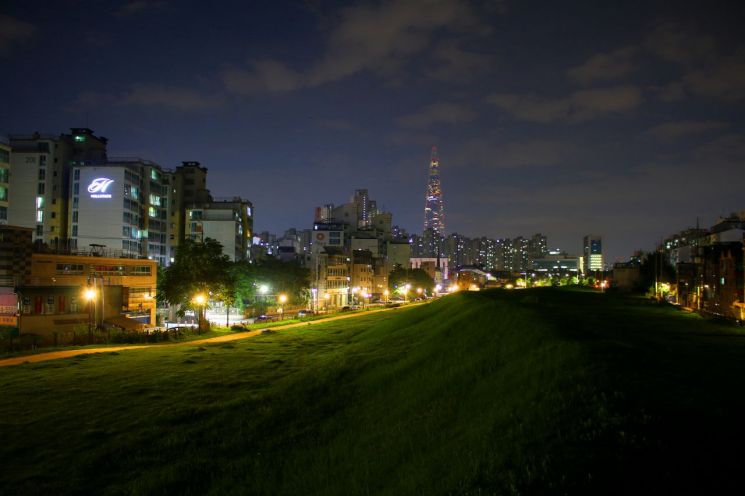
Songpa-gu Extends ‘Moonlight Walkway’ Highlighting 2000-Year History of Baekje Hanseong Period at Pungnap Toseong Trail
[Asia Economy Reporter Park Jong-il] Songpa-gu (Mayor Park Seong-su) has newly extended the ‘Moonlight Walkway’ along the Pungnap Toseong trail, reflecting the historical characteristics of the 2000-year-old Baekje Hanseong period.
The Pungnap Toseong trail, connected to the Songpa Dullegil, is a 3.8 km walking tourism course utilizing the historical and cultural content of Pungnap Toseong, the capital fortress of the Baekje Hanseong period.
It provides various sights and experiences to residents and tourists by featuring historic sites including Pungnap Toseong, storytelling spaces, and an information system.
In particular, the ‘Moonlight Walkway’ created along the trail beautifully illuminates Pungnap Toseong with traditional patterns and colorful lighting. To revitalize tourism around Pungnap Toseong, Songpa-gu first established an 800m section of the Moonlight Walkway around the eastern fortress wall of Pungnap Toseong last year, and extended it by 400m from the Pungnap 1-dong trail to the area behind Yeongpa Girls’ High School at the end of June this year, creating the second phase of the Moonlight Walkway.
The district decorated the Moonlight Walkway area with blocks featuring Baekje Hanseong period roof tile patterns and solar-powered floor lighting to provide night views and other attractions, improving the previously barren walking environment.
Especially, the solar-powered floor lighting in each section is themed with three colors symbolizing Baekje: blue (Baekje official uniform color), yellow (Baekje flag color), and green (Pungnap Toseong landscape color), adding meaningful symbolism.
While the first phase last year was themed yellow, the extended section this time is themed blue, recreated based on historical records related to Baekje official uniforms. The ‘Samguk Sagi’ records that officials ranked 16th or higher during King Goi’s reign wore blue official uniforms, and the ‘Yangjikgongdo’ depicts Baekje envoys wearing blue-toned official uniforms, inspiring the use of blue solar floor lighting.
Next year, the district plans to further extend the Moonlight Walkway to the southern fortress wall section of Pungnap Toseong, theming it with green, the main landscape color of Pungnap Toseong’s grass and surroundings. Through this, it is expected to further promote the historical significance of Pungnap Toseong and its appeal as a walking tourism course to residents and tourists.
Songpa-gu Mayor Park Seong-su said, “Songpa-gu is the center of historical culture where the spirit of Baekje lives on,” adding, “We will continue to develop various historical and cultural contents alongside the preservation and restoration projects of Pungnap Toseong to create a historical and cultural city where past and present coexist.”
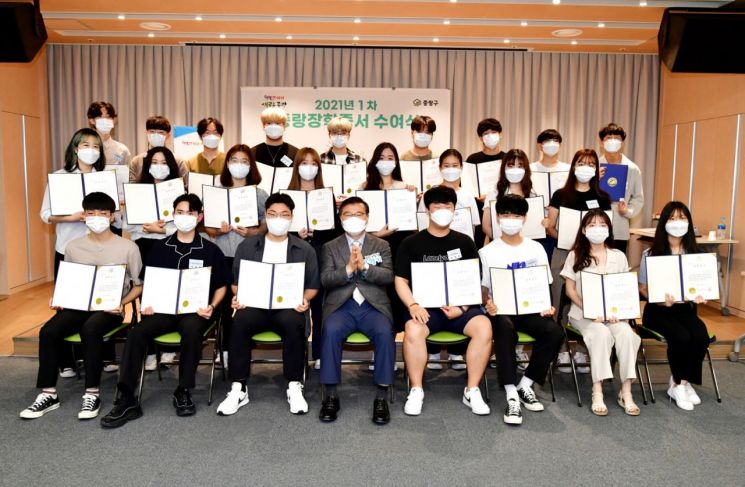
Jungnang-gu Provides 540 Million KRW in Scholarships to 800 Students This Year
Jungnang-gu (Mayor Ryu Gyeong-gi) will provide a total of 540 million KRW in scholarships to 800 students selected as Jungnang scholarship recipients this year to help them nurture their future dreams.
Scholarship recipients include ▲students admitted to prestigious universities and middle/high school students ranking in the top 5-10% academically (academic excellence scholars), ▲winners of various competitions such as arts and sports (specialty scholars), ▲students with household incomes below 80% of the median and academic rankings within the top 70% (low-income scholars), and ▲students recognized for good deeds, volunteer work, filial piety, academic improvement, and children of contributors to regional development.
This year, the support scope has been significantly expanded compared to last year, supporting about 300 more students. Not only academically excellent students but also children who contributed to community development are included, and the income threshold for low-income scholars has been raised from 70% to 80% of the median income.
Last month, the district selected 105 first-round scholars, including 29 students admitted to prestigious universities and 76 students ranking in the top 5%, and decided to provide 113.14 million KRW in scholarships. The second round will select 695 students, including those ranking in the top 10%, low-income students, children of community contributors, and specialty students, starting in August.
Since 2008, Jungnang-gu has enacted the ‘Jungnang-gu Scholarship Fund Establishment and Management Ordinance’ and started building the scholarship fund to discover and nurture outstanding local talents and support economically disadvantaged students. To date, about 11.7 billion KRW has been raised, and over the past 10 years from 2010 to last year, 4,576 students have received scholarships totaling approximately 4.65 billion KRW.
Jungnang-gu Mayor Ryu Gyeong-gi said, “We hope this scholarship support allows students to study without worries,” adding, “In addition to scholarships, we will strengthen public education and nurture future talents through the operation of the Bang Jeong-hwan Education Support Center, which opened in May.”
Thanks to active educational projects, including nearly doubling the education budget since the 7th local government, residents’ satisfaction with the educational environment rose from 18th among autonomous districts in 2017 to 6th in 2020, and the Seoul four-year university entrance rate increased from 24% in 2018 to 38% in 2020.
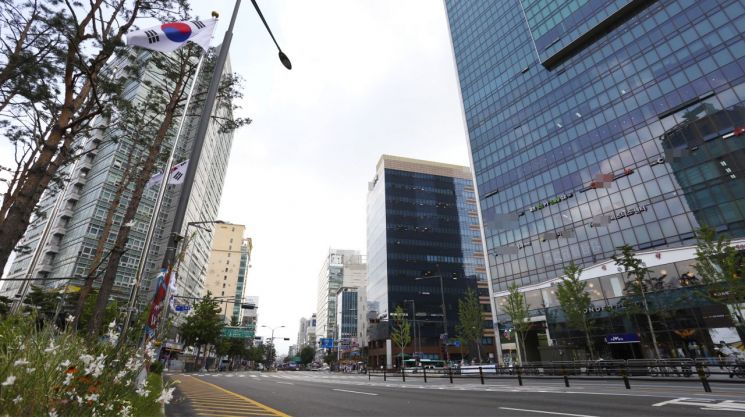
Gangbuk-gu Supports Local Commercial District Revitalization and Specialized Streets
Gangbuk-gu (Mayor Park Gyeom-su) is promoting the ‘Local Commercial District Revitalization and Specialized Street Support Project’ to discover and nurture specialized streets by linking local conditions and the characteristics of various commercial districts.
The ‘Specialized Street Support Project’ refers to a project that supports designated streets, complexes, or shopping areas for specific purposes such as strengthening small business competitiveness and revitalizing local commercial districts.
The core is to create differentiated spaces that stand out from other areas.
Previous commercial district revitalization projects mainly focused on traditional markets and large stores, leaving blind spots for small business owners and unique commercial districts. In contrast, this project requires the formation of autonomous organizations such as business associations or merchant associations, and applications are possible with participation from at least 20 stores of the same industry or 40 clustered stores in a certain area.
Based on a five-year basic plan from 2021 to 2025, the project is implemented annually from this year. The district plans to designate at least one specialized street each year through the Seoul Gangbuk-gu Local Commercial District Revitalization Specialized Street Review Committee and provide a total project budget of 140 million KRW. However, merchants’ organizations must bear at least 10% of the project cost.
Interested applicants can visit the Gangbuk-gu Office’s Job and Economy Division by the 27th of this month or apply via email or mail. Application forms and required documents can be downloaded from the Gangbuk-gu Office website (Our District Introduction → Notice Board → News).
Support includes ▲environmental improvement projects aligned with the tradition and characteristics of local commercial districts, ▲joint marketing, joint product and design development projects, ▲promotion, consulting, education, and cultural projects for revitalizing local commercial districts, ▲community activation projects for shopping villages, and ▲continuous customer attraction projects such as cultural programs for customers and local residents.
Gangbuk-gu Mayor Park Gyeom-su said, “In the face of intensified competition from large corporations, franchises, and online platforms, it is necessary to discover and nurture specialized commercial districts unique to our district,” adding, “We will make various efforts, including the specialized street support project, to help the local commercial districts, which have been depressed due to COVID-19, gain competitiveness.”
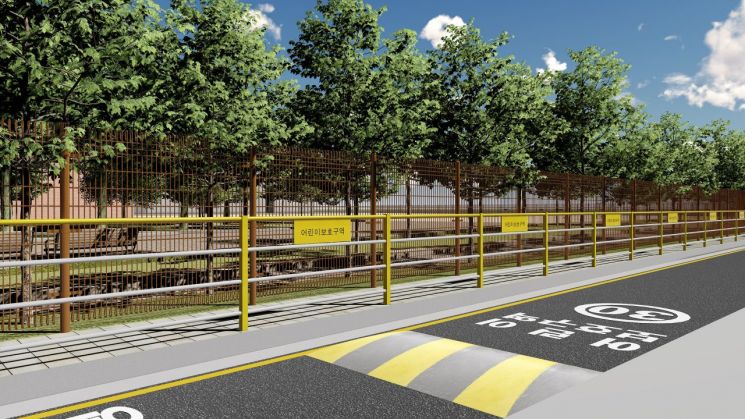
Seongdong-gu Creates Safe School Routes at Gyeongdong Elementary School...A Model Case of Solving Local Issues Through Resident Participation
Seongdong-gu (Mayor Jeong Won-oh) began construction this month to create safe school routes at Gyeongdong Elementary School.
After starting groundwork with landscaping tree planting in April, construction began this month aiming for completion by the end of next month, enabling elementary students at the school to attend the second semester on safer school roads.
The construction area is a 190m section of the school route between Gyeongdong Elementary School on Seongsuil-ro 4-gil and Kumho Bestville, with a road width between 4.8m and 6m.
This school route is a semi-industrial area densely populated with apartments, office facilities, and shops, with heavy pedestrian traffic including students. It lacked clear separation between sidewalks and roads, exposing pedestrians to frequent safety risks and generating many complaints.
Residents took the initiative to resolve the issue. In 2018, a volunteer group in Seongsu-dong participated in the ‘Walkable Seoul Citizen Contest’ and secured a budget, but due to narrow road width, additional sidewalk expansion was difficult, requiring use of school and kindergarten grounds. The kindergarten expressed concerns about encroachment on learning spaces due to proximity to the construction area.
To resolve conflicts, the district, Seongdong-Gwangjin Education Support Office, Gyeongdong Elementary School, and related parties including parents held dozens of meetings and repeated consultations.
Following the enactment of the ‘Min-sik Law’ emphasizing school zone safety, social awareness of the importance of school route traffic safety increased. The district promised various supports for learning environment creation, leading to consensus.
Continuous meetings were held with the kindergarten principal and education office officials. In October last year, a joint business agreement was signed among the district, the education office superintendent, the elementary school principal, and the kindergarten principal.
A 14-member practical promotion council including related agencies, local residents, and parents was launched, establishing an unprecedented public-private-academic governance. At the end of last year, the Seoul Metropolitan Council and Gyeongdong Elementary and Kindergarten approved the use of 285㎡ of school grounds, securing the school route area and solving the shared challenge of improving the dangerous school route.
In April, at Gyeongdong Elementary’s request, landscaping trees within the school grounds incorporated into the school route were removed and transplanted first. The construction period was scheduled during summer vacation of each institution, with all processes considered and carried out together with residents.
Upon completion, safe school routes with crosswalks and protective fences will be installed, providing a safe and pleasant walking environment for students and nearby residents.
Seongdong-gu Mayor Jeong Won-oh emphasized, “This project is the result of three years of dedicated effort since 2018 with local residents for children’s safety,” adding, “It is a meaningful model case and achievement of resolving local issues through long deliberation and collaboration among residents, schools, kindergartens, and administrative agencies.”
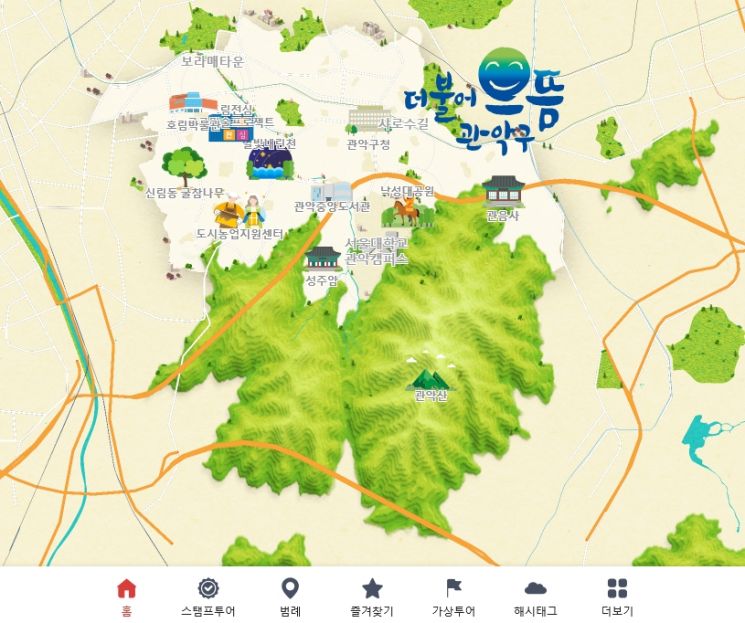
Gwanak-gu Launches ‘Gwanak-gu Tourism Electronic Map’ Service
Gwanak-gu (Mayor Park Jun-hee) provides the ‘Gwanak-gu Tourism Electronic Map’ service, allowing users to easily and conveniently access tourism information within the district using smartphones.
To stimulate continuous visitation demand for local tourist attractions, cultural events, traditional markets, and to revitalize the local economy, the district built a smartphone-based tourism electronic map service and started the service in July.
The Gwanak-gu tourism electronic map can be used immediately by searching ‘Gwanak-gu Electronic Map’ on major domestic portal sites’ search bars without installing a separate app.
Based on a mobile website, this service overcomes the limitations of traditional paper maps by using location information systems to provide information on nearby tourist spots, restaurants, accommodations, and more at once. It also links navigation and public transportation guidance services to minimize travel routes.
Anyone can easily access it via smartphone, and information can be frequently updated and modified, enabling faster and easier information provision not only to tourists visiting Gwanak-gu but also to local residents.
The district has registered information and photos for a total of 591 locations categorized by parks, restaurants, cultural heritage, convenience facilities, etc., and implemented five mobile village tourism stamp tour courses with 36 locations using smartphone GPS automatic visit certification to attract tourists’ interest.
Gwanak-gu Mayor Park Jun-hee said, “We created the tourism electronic map to make it easier and more convenient for residents and tourists to use our district’s tourism information,” adding, “We will actively utilize the map as a foundation to revitalize village tourism and local commercial districts in connection with various cultural events and local projects.”
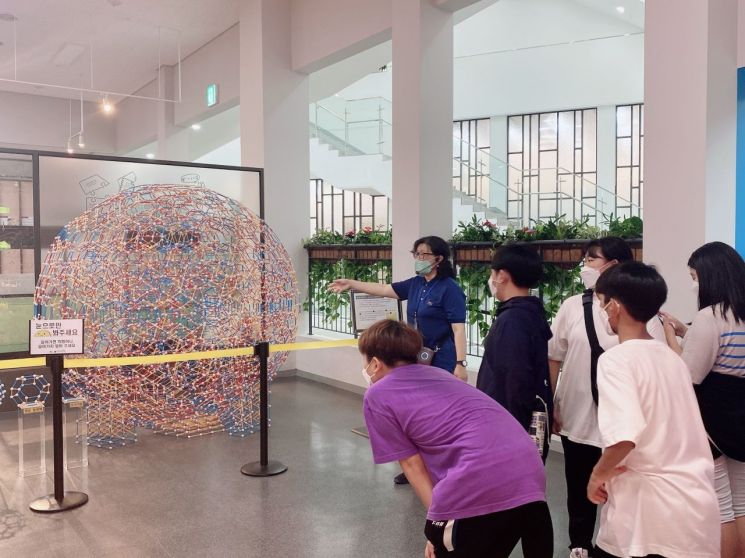
Nowon-gu Operates ‘Math Picnic’ and ‘Math Clinic’ at Nowon Math Culture Center
Nowon-gu (Mayor Oh Seung-rok) is running special programs ‘Math Picnic’ and ‘Math Clinic’ at the Nowon Math Culture Center during summer vacation to spark interest in mathematics and help solve students’ concerns.
First, the ‘Math Clinic’ is a counseling program designed to address difficulties students face in studying math.
Seven teachers from the National Math Teachers Association provide personalized math study advice through counseling.
The program targets elementary school students in grades 3 to 6 (with parents) and middle school students in grades 1 to 3, prioritizing residents of Nowon-gu and students attending schools in Nowon-gu.
Counseling sessions run from August 11 to 14, 2 PM to 5 PM, with 40 minutes per individual session.
Also prepared is a special exhibition and experience program ‘Math Picnic’ under the theme ‘An Artistic Journey with Math,’ exploring mathematical principles hidden in art and nature.
Various creative activities to learn math principles hands-on include ‘Scanimation’ to learn optical illusions where pictures appear as videos, ‘Sierpinski Carpet’ made by infinite repetition of squares, and ‘Mirror Cube’ using mirrors and light reflection principles.
Classes run from August 3 to 7, 2 PM to 4 PM, lasting 120 minutes. The program is limited to 10 students per session for grades 5 and 6, following COVID-19 distancing guidelines.
Both ‘Math Picnic’ and ‘Math Clinic’ are free. Registration opens at 10 AM on the 21st via the Seoul Public Service Reservation website and closes on a first-come, first-served basis.
The Nowon Math Culture Center, opened in October 2019 as the nation’s first math experience learning center at the local government level, operates various programs to break the stereotype that math is difficult and boring. It offers invited lectures, coding and 3D software education programs, creative experiences, and weekend family activities to popularize math.
Nowon-gu Mayor Oh Seung-rok said, “We ask for much interest and participation in these special summer vacation programs,” adding, “We will strive to provide diverse programs so that everyone can enjoy math in a fun way.”
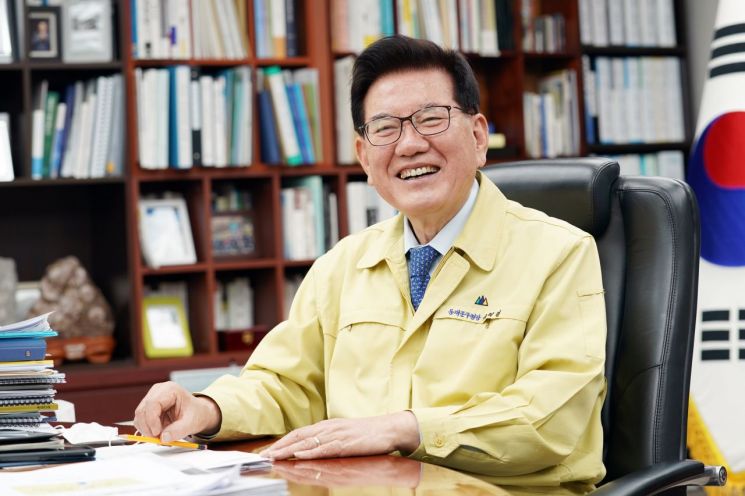
Dongdaemun-gu Offers Up to 1 Million KRW in Seoul Love Gift Certificates to ‘Good Landlords’
Dongdaemun-gu (Mayor Yoo Deok-yeol) is accepting applications until August 31 for the ‘Seoul-type Good Landlord Support Project’ in cooperation with Seoul City to encourage landlords of commercial buildings to actively participate in rent reduction agreements and spread a social atmosphere of rent reduction.
The district is promoting this project to help tenant merchants overcome the crisis amid the prolonged COVID-19 pandemic.
Eligible applicants are landlords who have signed coexistence agreements to reduce rent for stores located in Seoul with a converted deposit of 900 million KRW or less as defined by the 2021 Commercial Building Lease Protection Act. Selected ‘good landlords’ can receive Seoul Love Gift Certificates (mobile gift certificates) ranging from 300,000 to 1 million KRW depending on the amount of rent reduction.
Rent reduction amount brackets and support are as follows: 1 million to less than 5 million KRW → 300,000 KRW; 5 million to less than 10 million KRW → 500,000 KRW; 10 million KRW or more → 1 million KRW gift certificates.
Landlords who received support in the first half of this year can receive additional gift certificates if they further reduce rent and the total reduction amount increases.
Applications can be submitted by downloading the application form from the Dongdaemun-gu Office website’s notice section under ‘Good Landlord Support Project’ and submitting it in person or by mail to the Small Business Support Team on the B2 floor of Dongdaemun-gu Office.
Dongdaemun-gu Mayor Yoo Deok-yeol said, “We sincerely thank the good landlords who voluntarily participate in rent reduction during these difficult times,” adding, “We hope many landlords will join in the second half of the year to continue fostering a social atmosphere of coexistence between tenants and landlords.”
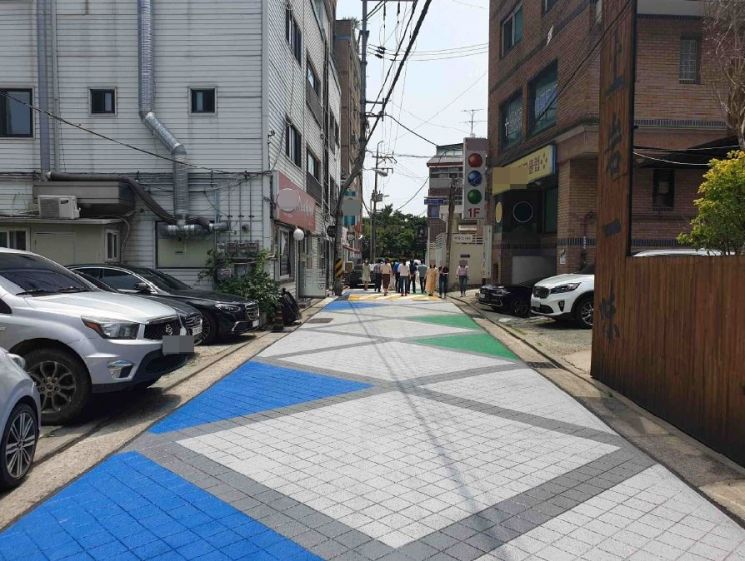
Mapo-gu (Mayor Yoo Dong-gyun) completed design stamping coating work on Seongam-ro 13-gil and 15-gil, and World Cup Buk-ro 42-ga-gil areas to improve the pedestrian environment in Sangam-dong old town area, continuing efforts from last year.
This year’s work is an extension of the Sangam-dong pedestrian environment improvement district created in 2019 as part of the regional traffic safety environment improvement project.
Responding to residents’ requests to extend pedestrian-priority roads, the district carried out road surface leveling and design stamping coating over a 370m road extension and 3,000㎡ area from ‘Saenuri Park’ to the ‘Yellow Chicken’ area, where sidewalks and roads are not separated.
This project was fully funded by Seoul City.
In addition to road maintenance for pedestrians, the district completed maintenance work converting 26 road signs to road name guide signs to improve convenience for road users.
According to the district, the road name guide sign maintenance project aims to activate road name addresses and improve location-finding convenience for road users. Following maintenance of 41 signs in 2019 (Mapo-daero, Seongsan-ro, Gusudong Intersection to Sinsu-dong Intersection) and 26 signs in 2020 (Seongam-ro section), 26 signs in parts of Gayang-daero and Seongam-ro were completed last month.
Thus far, 93 of the 530 directional and advance directional signs targeted for final maintenance have been converted to road name guide signs by this year. The district plans to secure annual budgets to continue maintenance of the remaining road signs.
Also, to improve residents’ bus usage convenience, the district continued last year’s project to expand bus stop shelters, completing installation at six bus stops this year.
Following these six city bus stop shelters, five village bus stop shelters are currently being installed, expected to play a significant role in providing convenient public transportation services.
Mapo-gu Mayor Yoo Dong-gyun said, “We appreciate residents’ understanding who have endured inconvenience and noise,” adding, “We will continue various maintenance activities for residents to create safer road walking and traffic environments and contribute to the establishment of the road name address system.”
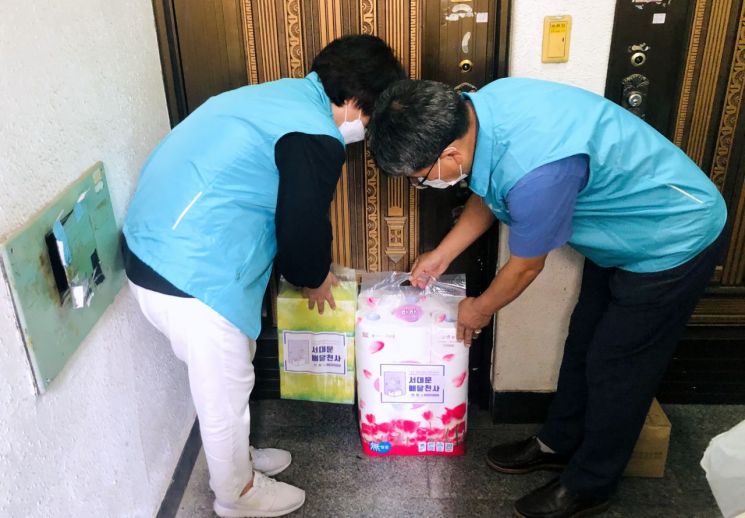
Seodaemun-gu (Mayor Moon Seok-jin) saw the Yeonhui-dong Mabom Council carry out the ‘Toilet Paper Delivery Project to Smoothly Unravel My Life’ during the past hot week.
This project was promoted as a welfare-specialized project following the council’s regular meeting last month, where members agreed to deliver daily necessities to vulnerable residents and check on their well-being.
The council purchased 100 rolls of toilet paper and 100 tissue sets from ‘Greennae,’ a vocational rehabilitation facility for the disabled in Hong Eun-dong, which has had difficulty operating due to COVID-19, to support job stability for disabled people.
One hundred households were selected by council members, welfare community leaders, and visiting nurses. To comply with social distancing, Mabom Council members and welfare community leaders delivered the items to the doors of these households and checked on their well-being by phone.
An elderly woman expressed gratitude, saying, “I couldn’t go out much due to COVID-19 and lacked daily necessities, so the gift of toilet paper and the check-in were a great comfort.”
Yeonhui-dong Mabom Council Chairperson Choi Jae-sook said, “We conducted the project non-face-to-face under social distancing level 4,” adding, “We will continue to promote various welfare-specialized projects tailored to the needs of neighbors in difficulty.”
The Yeonhui-dong Mabom Council has been a role model by implementing various projects such as personalized family mottos, dementia prevention classes, bath coupons, medicine delivery for low-income seniors, entrance insect screens installation, bed delivery, growing companion bean sprouts, and creating safe homes.
‘Mabom Council’ is the name of the Dong-level public-private welfare cooperation organization called ‘Seodaemun-gu Dong Community Security Council,’ meaning ‘caring for neighbors’ hearts and the village.’ It is organized in all 14 dongs of Seodaemun-gu and actively operates.
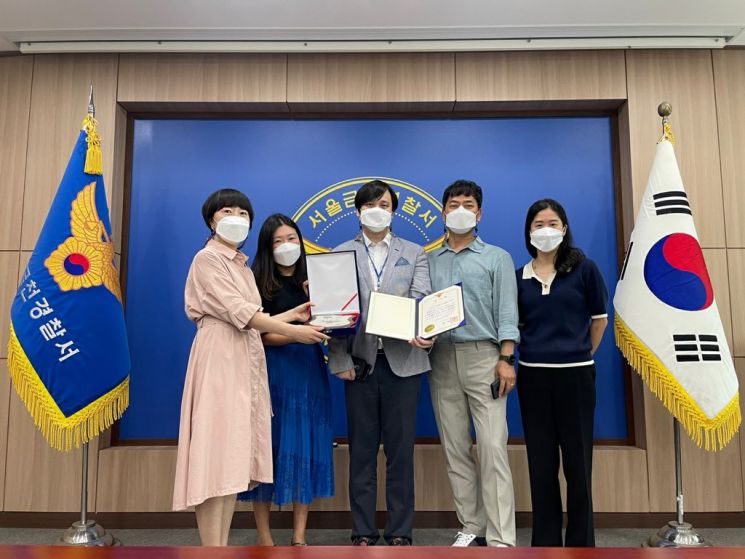
Geumcheon-gu Selected as First ‘Top Partner’ in Community Policing ‘Crisis Family Integrated Support Center’ Category
Geumcheon-gu (Mayor Yoo Seong-hoon) was selected as a ‘Top Partner’ in community policing by the Seoul Metropolitan Police Agency on the 9th of this month for 2021.
The ‘Top Partner’ in community policing is selected semi-annually by the Seoul Metropolitan Police Agency among institutions, organizations, and individuals in five categories who work to protect socially vulnerable groups. Geumcheon-gu was honored as the first-ever recipient in the newly added ‘Crisis Family Integrated Support Center’ category this year.
The district was highly evaluated for establishing a dedicated operation system with integrated case managers from the district office and abuse prevention police officers (APO) from the police station stationed at the center, and for various activities addressing welfare blind spots. Geumcheon-gu is the only place in Seoul where both integrated case managers and abuse prevention police officers are stationed full-time.
The Geumcheon-gu Crisis Family Integrated Support Center opened in October 2018 to provide proactive responses by combining administrative and policing services for families at risk of dissolution due to domestic violence and abuse. It has played a leading role as a model domestic violence case management institution benchmarked by other local governments including Gyeonggi Province and the National Police Agency.
Meanwhile, the district was also selected as a ‘Top Partner’ in the public institution category in 2019 for its contribution to strengthening the community safety net through the center’s operation.
Geumcheon-gu Mayor Yoo Seong-hoon said, “By operating the Crisis Family Integrated Support Center together with the police, we were able to discover welfare blind spots that were difficult to find with existing systems and strengthen welfare services for families experiencing domestic violence,” adding, “We will continue to cooperate with the police to build a community safety net for socially vulnerable groups.”
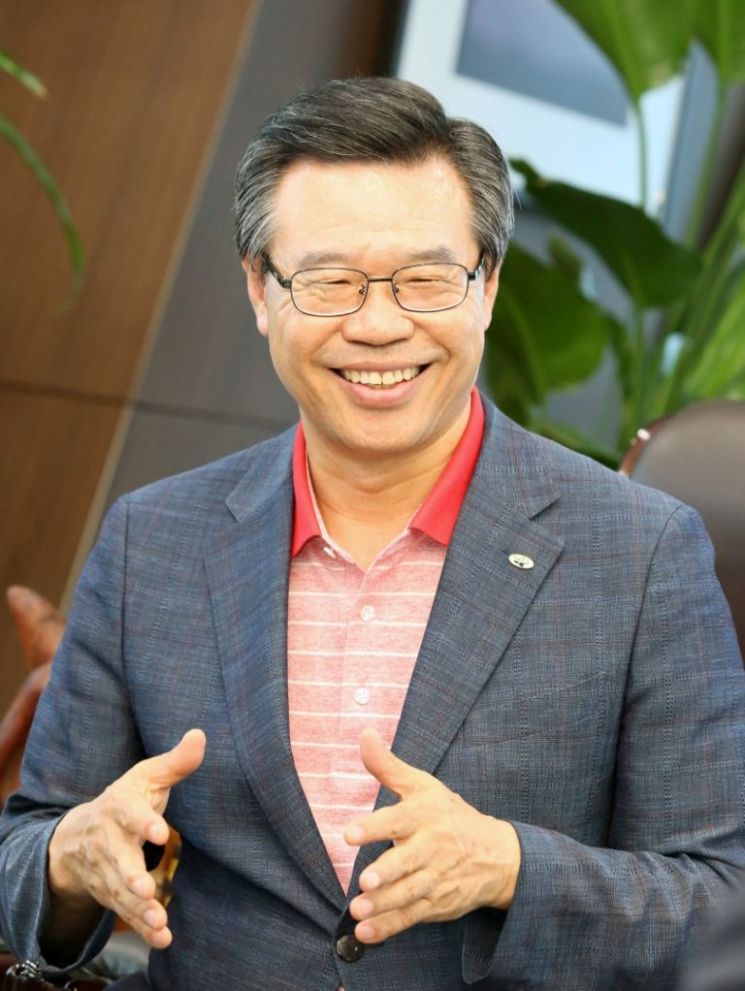
Yongsan-gu Provides Up to 1 Million KRW per Artist for Living Stabilization Fund
Yongsan-gu (Mayor Seong Chang-hyun) will accept applications for the second round of the ‘Seoul Artist Living Stabilization Fund (Emergency Disaster Relief Fund)’ from July 21 to August 3 for two weeks.
Eligible applicants are those registered residents of Yongsan-gu as of the Seoul City announcement date (July 7) who hold an ‘Artist Activity Certificate’ and whose household income is below 120% of the median income (2,193,397 KRW for single-person households, 3,705,695 KRW for two-person households, 4,780,740 KRW for three-person households, 5,851,548 KRW for four-person households).
The household members include those living together with the applicant (excluding cohabitants on the resident registration). Income is verified by the combined health insurance premiums of all household members.
Those who received the first round of the artist emergency disaster relief fund earlier this year are excluded from this round.
Applicants should submit the application form, consent for personal information collection and use, a copy of their ID, a copy of a bankbook in their name, and the artist activity certificate (issued by the Korea Artist Welfare Foundation) via email to the district officer (osfamily@yongsan.go.kr).
Related forms are posted in the news section of the district website.
District officials said, “For those with special circumstances such as elderly or disabled persons, on-site applications are accepted at the Cultural and Sports Department office,” adding, “Considering COVID-19, online applications are preferred.”
The fund provides up to 1 million KRW per person. If the number of applicants exceeds the budget, the payment amount may be reduced. After internal review and verification of duplicate benefits, payments will be deposited into individual accounts around September.
The first round of the Seoul Artist Living Stabilization Fund was held in March-April. Yongsan-gu received applications from 210 artists and provided support to 168 artists (64 men, 104 women) who met income criteria.
Mayor Seong Chang-hyun said, “Cultural and artistic workers are facing great difficulties due to the prolonged COVID-19 pandemic,” adding, “The district will spare no effort to support artists so they can continue their creative activities.”
Besides the disaster relief fund, the district supports artists through projects such as the ‘Resident Performance Group Development Support Project.’
Yeongdeungpo-gu Opens ‘Middle-aged Job Hope Platform’
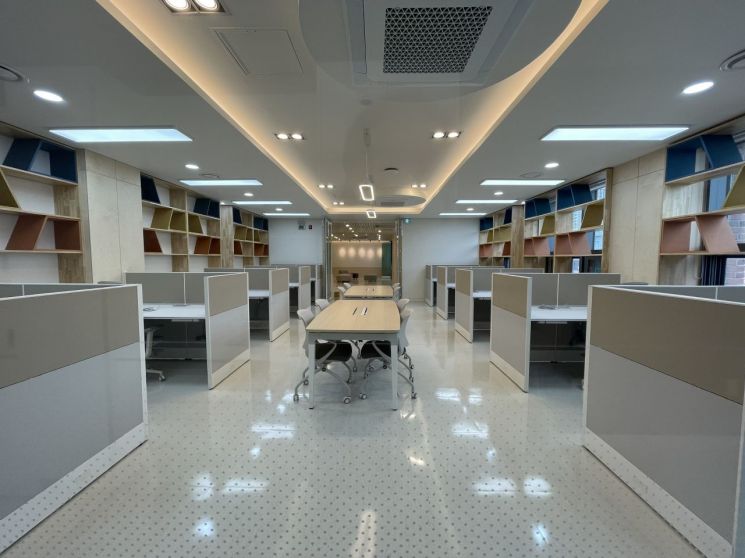
Yeongdeungpo-gu (Mayor Chae Hyun-il) has established the ‘Middle-aged Job Hope Platform’ as a hub space to support meaningful second chapters in life for middle-aged residents, starting operation in July.
In 2018, the district signed a business agreement with the Korea Manifesto Practice Headquarters to operate a retirement office. After resident briefings, the facility was set up inside the YDP Future Lifelong Learning Center in Daerim 3-dong. The district plans to continue various supports linking education to jobs for middle-aged residents here.
The platform consists of ▲Youth R Startup Zone (single-person office space), ▲multi-purpose collaboration space, ▲middle-aged capacity-building program room, and ▲job counseling room and lounge.
Especially, the Youth R Startup Zone offers shared office-style single-person workspaces. Residents receive personal desks, desktop PCs, personal lockers, shared office equipment, and address support for business registration.
This is expected to greatly reduce the burden for middle-aged people preparing for new starts such as entrepreneurship and social contribution activities.
Applicants must be middle-aged residents of Yeongdeungpo-gu (aged 40-64) with plans related to social contribution, entrepreneurship, or job-related projects using the space. Applications are open until the 23rd of this month.
Details on applications can be found on the Yeongdeungpo-gu Office website under notices or by contacting the Job and Economy Division.
The district also plans to operate various creative job academies and capacity-building programs through the platform to help the middle-aged redevelop their strengths and capabilities in a changing era.
Yeongdeungpo-gu Mayor Chae Hyun-il said, “We hope the Middle-aged Job Hope Platform becomes an open community space where the 40s and 60s generations can share their values,” adding, “We will do our best to help the rich experience and capabilities of middle-aged residents become important foundations for the local community.”
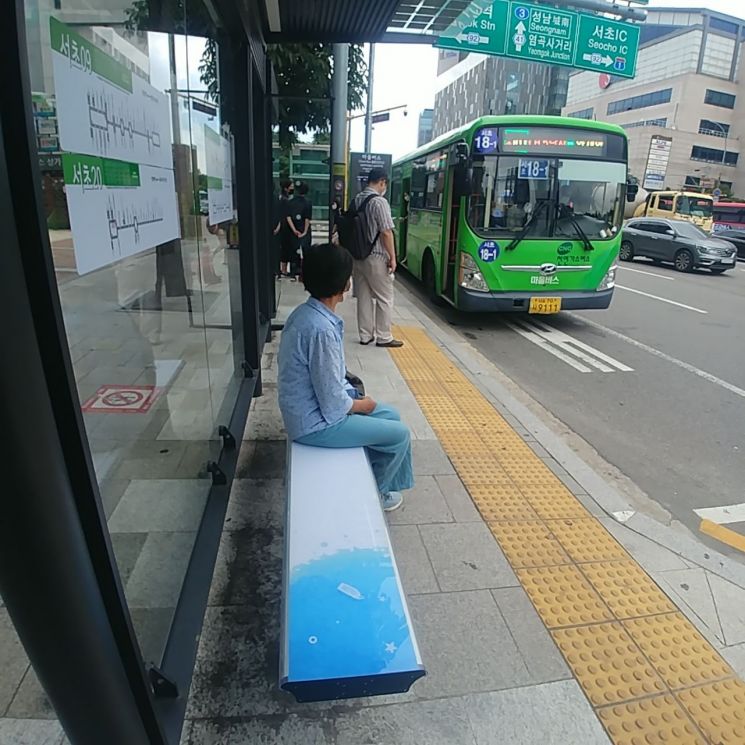
Seocho-gu Installs ‘Seoripul Cooling Chairs’ at 60 Bus Stops
Seocho-gu (Mayor Cho Eun-hee) installed ‘Seoripul Cooling Chairs’ at 60 bus stops to help residents waiting for buses stay cool during the summer.
The ‘Seoripul Cooling Chair’ is made by adding a cooling cover made of low thermal conductivity polycarbonate material on top of the ‘Seoripul Ondol Chair,’ which kept bus stop users warm during winter cold waves.
The cooling cover uses white and bright colors to prevent overheating and visually provide a cool feeling.
After a pilot operation from July to September last year, the district confirmed a temperature reduction effect of about 5-6°C compared to existing chairs. This year, the district expanded from 10 pilot stops to a total of 60 stops.
The cooling chair’s cover can be removed to revert to the original Seoripul Ondol Chair for winter use, eliminating the need to replace chairs seasonally and saving budget.
Meanwhile, to prepare for record-breaking heat, the district plans to create urban rest spaces using artificial shade under bridges such as Seocho 1 Bridge starting on the 26th.
Also, continuing last year’s resident-oriented project, the district offers Seoripul parasol rental services this year. Uniquely designed parasols are provided not only at community centers but also at temporary screening clinics for residents’ convenience.
Seocho-gu Mayor Cho Eun-hee said, “We prepared meticulous heatwave measures to ensure residents can stay safe and cool while observing COVID-19 prevention,” adding, “We hope residents waiting for buses can escape the heat even a little on the Seoripul Cooling Chairs.”
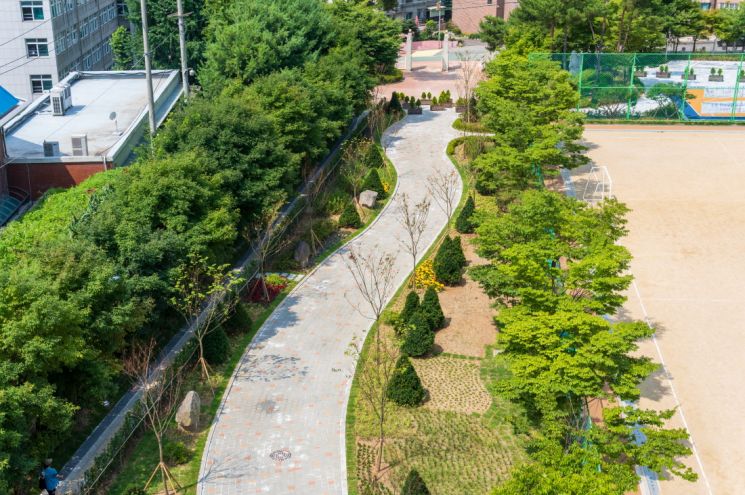
Guro-gu Creates Forest Path Inside Sejong Science High School
The vehicle passage road inside Sejong Science High School has been transformed into a ‘forest path.’
Guro-gu (Mayor Lee Sung) announced on the 19th that it completed the ‘Eco School’ project to convert idle school land into a nature-friendly space at Sejong Science High School.
About 90m from the school’s main gate to the building now features an ecological forest and walking trail covering 1,000㎡.
The ecological forest includes 2,187 trees of nine species such as zelkova, evergreen shrubs, red maple, and spirea, and 8,700 flowers of 11 species including lilies, daffodils, and hostas. Students and nearby residents can enjoy walking while viewing diverse plants.
The project, costing 100 million KRW, started in May and was completed earlier this month.
Last year, Guro-gu created green spaces at seven schools including Joo-hyeon High, Yeongnim Middle, Guil High, Guil Middle, Gaebong Middle, Gaebong Elementary, and Oryu Elementary through the Eco School project.
A Guro-gu official said, “The green space created through this project will serve as a resting place for students and nearby residents,” adding, “We hope many people find peace of mind and body while resting here.”
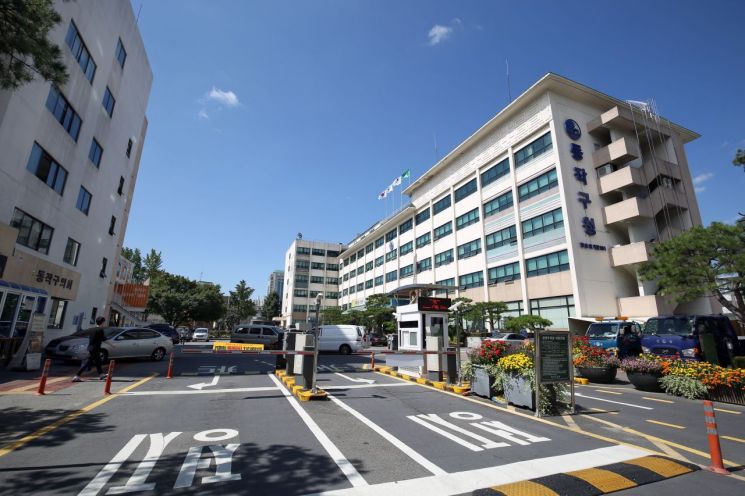
Dongjak-gu Provides Loans for Resident Income Support and Living Stabilization Fund
Dongjak-gu (Mayor Lee Chang-woo) is promoting a ‘Resident Income Support and Living Stabilization Fund Loan Support Project’ to provide low-interest loans to low-income residents needing funds amid the prolonged COVID-19 economic downturn.
The Resident Income Support Fund supports small-scale micro-business owners who need operating funds or want to develop and operate new income projects, while the Living Stabilization Fund supports those who have suffered disasters (natural disasters, fires, etc.) and need living or emergency medical expenses.
Applicants must be low-income residents registered in Dongjak-gu. Resident Income Support Fund applications are limited to businesses located in Seoul. Those currently repaying loans or with local tax arrears are excluded.
The district and entrusted financial institutions select recipients according to regulations, conduct field and collateral investigations, and provide loans up to 30 million KRW for Resident Income Support and 20 million KRW for Living Stabilization Fund. Loans have a 2-year grace period and 2-year installment repayment with an annual interest rate of 1.5%.
Applicants should submit a loan application, consent for personal information use, business registration certificate, business lease contract, income certificate, and local tax payment certificate by the 30th of this month at the Dongjak-gu Office Administrative Affairs Division (4th floor, 161 Jangseungbaegi-ro). Inquiries can be made to the division for details.
The district accepts applications quarterly for one month each and plans to continue providing loans. To prevent misuse, regular inspections of business operations will be conducted.
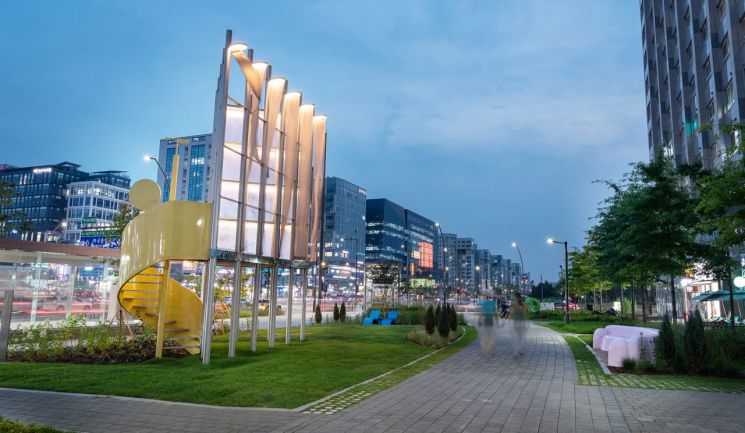
Gangseo-gu Unveils Two Public Artworks in Magok Cultural Street Area
Gangseo-gu (Mayor Noh Hyun-song), the core of Seoul’s southwestern economy, is unveiling two public artworks in the Magok Cultural Street area.
The artworks ‘Landscape ? Wave of Light’ and ‘Cloud Emblem’ are part of the public art project ‘Seoul, 25 Episodes,’ jointly organized by the Ministry of Culture, Sports and Tourism and Seoul City. The project supports artists struggling due to COVID-19 and provides cultural enjoyment opportunities to citizens.
The district selected Magok Cultural Street, a cultural hub in Magok area, as the project site. This street stretches about 1 km from Balsan Station to Magok Station on Subway Line 5. Since last year, the district has been promoting the ‘Magok Cultural Street Creation Project’ to revitalize culture in the area.
‘Landscape ? Wave of Light’ is located about a 5-minute walk from Balsan Station.
Installed in front of Magok Science Tower, the artwork measures 8m wide and 3m high and depicts the old paddy field landscape of Magok, which has transformed into a high-tech industrial complex. It evokes regional nostalgia and familiarity by recalling Magok’s past, dynamically expressing the rice paddies as golden waves to add charm.
‘Cloud Emblem’ is installed in front of Exit 3 of Magok Station.
‘Cloud Emblem’ is an installation art piece metaphorically representing the wide sky and clouds of Magok, standing 7m tall.
Located near Gimpo Airport with few tall buildings, it takes advantage of the regional characteristic of closer access to sky and clouds. Designed as an interactive piece that can be touched or climbed on, it aims to be more approachable to residents.
A district official said, “We will develop Magok as a cultural and living space beyond just a workplace,” adding, “We hope the new artworks bring comfort and joy to residents struggling with the prolonged COVID-19 and revitalize the weary city.”
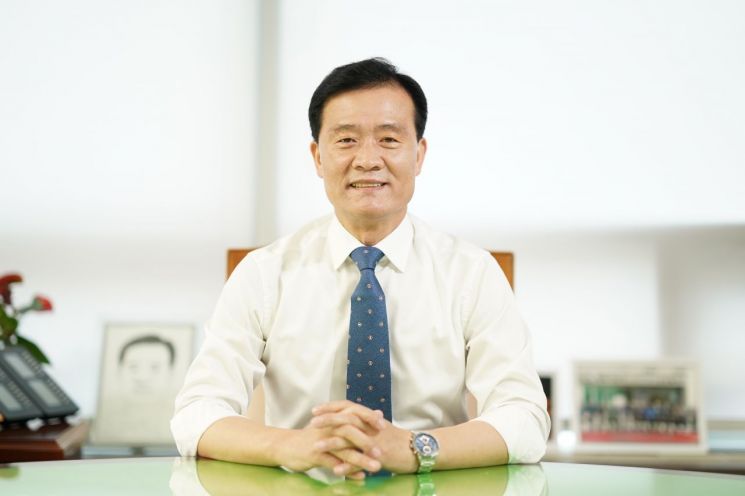
Seongbuk-gu Launches 2021 Second Round of ‘Good Landlord’ Search
Seongbuk-gu (Mayor Lee Seung-ro) will continue the ‘Seoul-type Good Landlord Support Project’ in the second half of the year following the first half to assist tenants struggling due to the prolonged COVID-19 pandemic.
The district will provide up to 1 million KRW in Seoul Love Gift Certificates (mobile) to landlords who voluntarily reduce rent.
Eligible landlords are those who reduced rent or plan to reduce rent this year for stores with converted deposits of 900 million KRW or less (deposit + monthly rent × 100). Landlords who received support in the first half can receive additional gift certificates if they further reduce rent, with the total reduction amount combined.
Gift certificates are provided based on the total annual rent reduction amount: 30 million KRW for 1 million to 5 million KRW reduction, 50 million KRW for 5 million to 10 million KRW reduction, and 100 million KRW for over 10 million KRW reduction.
Additionally, the district operates a ‘Visiting Good Landlord Reception Team’ to encourage more landlords to participate by allowing applications via a simple phone call.
Landlords wishing to participate can apply by phone to the district’s Job Economy Division or Regional Economy Division from July 19 to August 31. The reception team will visit landlords directly to provide guidance and assist with application paperwork.
Seongbuk-gu Mayor Lee Seung-ro said, “Many landlords hesitate to participate due to the burden of preparing documents despite agreeing with the project,” adding, “Seongbuk-gu operates the visiting reception team to reduce landlords’ burdens.”

Yangcheon-gu Operates Voluntary Animal Registration Reporting Period
Yangcheon-gu (Mayor Kim Soo-young) is operating a temporary voluntary animal registration reporting period from July 19 to September 30.
During this period, registering pets or reporting changes to registered pets will be exempt from fines under the Animal Protection Act.
The district aims to encourage voluntary registration by September and plans to intensively crack down on unregistered pets and failure to report changes from October onward.
Under current law, dogs kept for companionship in houses, semi-houses, or other places must be registered with the local government if over two months old. Failure to register can result in fines up to 1 million KRW, and failure to report changes can result in fines up to 500,000 KRW.
Residents wishing to register pets can visit designated animal registration agencies. Registration methods include internal microchip implantation or external attachment such as collars.
Changes to owner address, contact, death, or loss can be reported online via the Animal Protection Management System. However, changes in ownership or damage to the microchip require in-person reporting with the animal registration certificate at the agency.
A district official said, “This voluntary reporting period is designed to activate animal registration and update related information,” adding, “Starting responsible pet ownership begins with animal registration, so we hope unregistered pet owners actively participate.”
For details on the voluntary animal registration reporting period, contact the Health and Hygiene Division.
© The Asia Business Daily(www.asiae.co.kr). All rights reserved.
![Clutching a Stolen Dior Bag, Saying "I Hate Being Poor but Real"... The Grotesque Con of a "Human Knockoff" [Slate]](https://cwcontent.asiae.co.kr/asiaresize/183/2026021902243444107_1771435474.jpg)

















