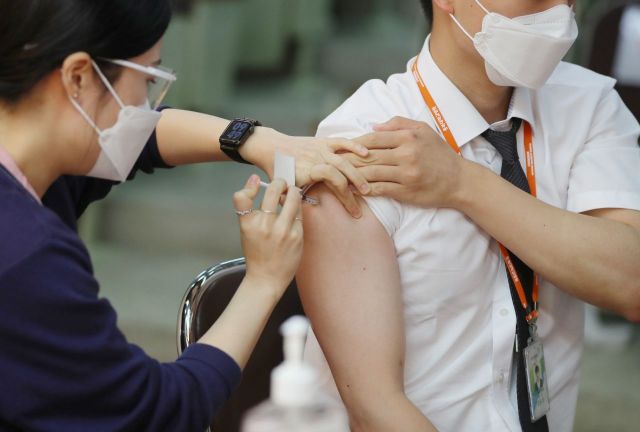
 On the 29th of last month, medical staff at Chungbuk National University Hospital in Seowon-gu, Cheongju City, received the Moderna vaccine for the novel coronavirus infection (COVID-19).
 [Photo by Yonhap News]
[Asia Economy Reporter Seoyoung Kwon] As 'heterologous vaccination' of COVID-19 vaccines increases, raising concerns, it is known that countries around the world are maintaining different stances on heterologous vaccination.
On the 1st, the government raised the AstraZeneca vaccine administration age from 30 and above to 50 and above, resulting in essential workers in their 30s and 40s, who were priority vaccination targets, receiving so-called 'heterologous vaccination.' Heterologous vaccination refers to administering the second dose with a different type of vaccine. However, those subject to heterologous vaccination continue to express concerns, and some have even stated, "If I have to receive a different vaccine for the second dose, I would rather not get vaccinated at all."
Currently, heterologous vaccination is being used not only in Korea but also in countries such as Germany, Spain, France, and Canada amid vaccine supply shortages. In particular, Canada, facing a shortage of second-dose vaccines, has allowed heterologous vaccination between mRNA vaccines like Pfizer and Moderna, and also recommends a second dose of mRNA vaccine for those who received AstraZeneca as their first dose. The Canadian National Advisory Committee on Immunization stated that it referred to research results on heterologous vaccination conducted overseas for these measures.
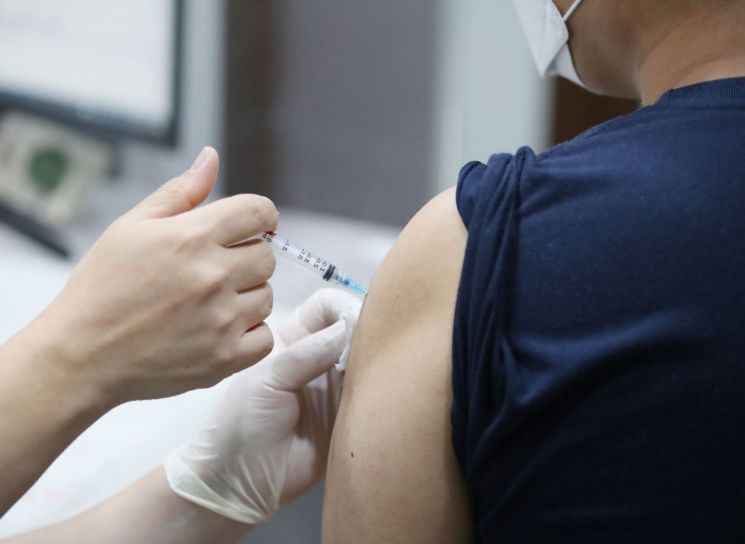 On the 10th of last month, when Janssen vaccine administration began for reservists aged 30 and above, citizens were receiving the Janssen vaccine at Kyungseong Clinic in Dongjak-gu, Seoul.
 [Photo by Yonhap News]
On the other hand, the World Health Organization (WHO) and the U.S. Centers for Disease Control and Prevention (CDC) do not recommend heterologous vaccination between mRNA vaccines and other vaccines, citing the lack of evaluation on the safety and efficacy of heterologous vaccination. In the UK, the basic recommendation is to receive the first and second doses of the same vaccine type, but heterologous vaccination is allowed in cases of vaccine shortages.
Previously, heterologous vaccination was proven effective in immune response through studies conducted at Oxford University in the UK and Saarland University in Germany. Clinical trial results from Oxford University showed immune responses in heterologous vaccination between AstraZeneca and Pfizer, and Saarland University reported that individuals who received AstraZeneca-Pfizer vaccination showed immune responses ten times stronger than those who received two doses of AstraZeneca only.
However, some experts argue that it is premature to prove the effectiveness solely based on research results, citing the sample size is still significantly small. Concerns have not completely subsided domestically either. Earlier, the Korean Medical Association issued a statement warning of possible side effects when heterologous vaccination began, and there were also criticisms among experts that there was no process allowing vaccine choice during vaccination.
© The Asia Business Daily(www.asiae.co.kr). All rights reserved.


















