Increased Possibility of Outsider Joining the Opposition
Ruling Party Gains More Time to Catch Up with Lee Jae-myung
[Asia Economy reporters Naju-seok and Gu Chae-eun] The presidential primary schedule is a hot topic in politics regardless of party affiliation. Since the pros and cons vary by candidate, power struggles often occur.
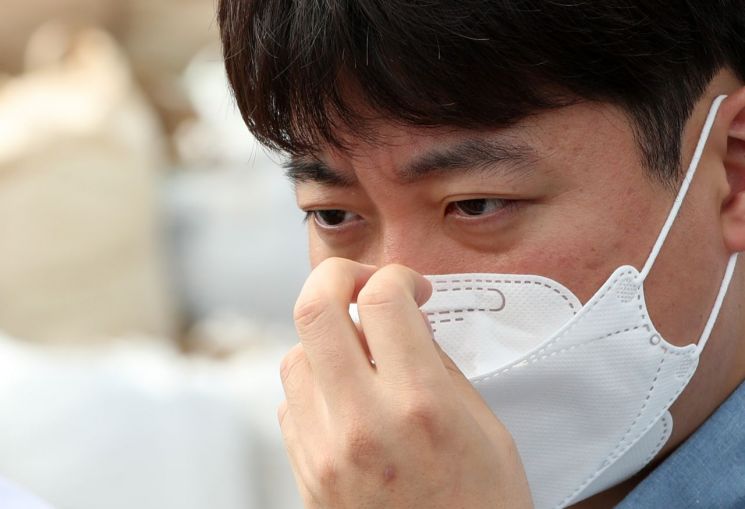
According to political circles on the 16th, Lee Jun-seok, leader of the People Power Party, proposed the "late August bus departure theory," stating that candidate registration for the primary starting at the end of August would begin, making the People Power Party's presidential schedule appear finalized. In fact, Lee appeared on a radio show that day and said, "Since we have been consistently talking about the late August bus departure theory, we believe it will not be delayed as candidates will declare their intention to run and communicate with many people before then." However, according to political circles, this late August bus departure theory is not set in stone.
In the case of the People Power Party, the timing of the party primary affects the possibility of external candidates joining. Especially for former Prosecutor General Yoon Seok-yeol, who urgently needs to carry out his own schedule such as expanding his base, having about an extra month to consider is welcome. On the other hand, there may be internal dissatisfaction about giving preferential treatment to outsiders.
If the People Power Party postpones the primary schedule, the period for holding the primary itself shortens. According to the party's constitution and regulations, the final presidential candidate must be decided by November 9, which is already fixed. If the bus departs at the end of August, the primary lasts about 70 days; if at the end of September, about 40 days. In the 2007 presidential election, the Grand National Party started candidate registration on June 11 and held a 70-day primary until August 20. It was a fierce battle between the pro-Lee Myung-bak (Chin-Lee) and pro-Park Geun-hye (Chin-Park) factions. Afterwards, the party was effectively split into two, suffering wounds. The long primary period is also evaluated as a factor that increased the degree of conflict. On the other hand, in the 2012 presidential election, candidate registration started on July 10 and the candidate was confirmed on August 20. The short 41-day primary reduced internal damage.
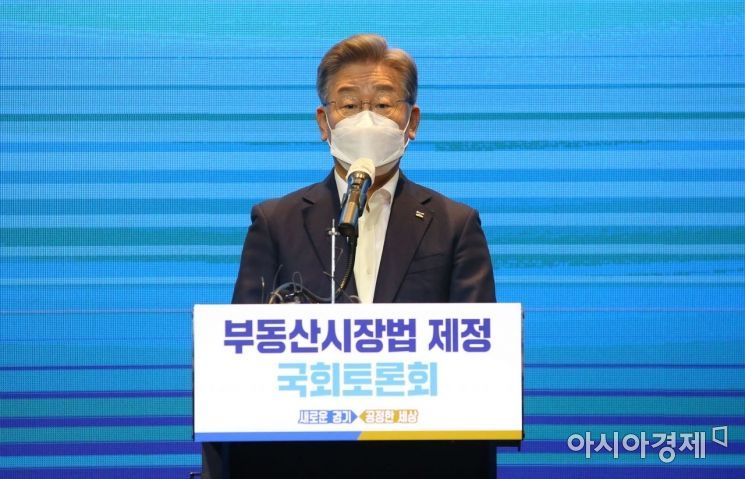
The Democratic Party's proposal to delay the primary has a clearer "pros and cons" structure than the People Power Party. The likely plan is to postpone the primary schedule by about 2 to 4 weeks. Considering the deadline of "just before the National Assembly audit" mentioned by Gyeonggi Province Governor Lee Jae-myung's side, the party's presidential candidate confirmation date would be either just before the Chuseok holiday (September 20?22) or around the first week of October at the earliest. Originally, the Democratic Party planned to hold regional tour primaries nationwide starting from the 7th of next month and select a candidate by September 5 (or September 10 if a runoff is needed). From Lee's perspective, there is an incentive to minimize the time for competing candidates to catch up. Other candidates, excluding Lee, are expected to use the "extended primary period" to narrow the gap in approval ratings, launch verification offensives against other candidates, announce policies and pledges, and seek alliances among candidates.
© The Asia Business Daily(www.asiae.co.kr). All rights reserved.
![Clutching a Stolen Dior Bag, Saying "I Hate Being Poor but Real"... The Grotesque Con of a "Human Knockoff" [Slate]](https://cwcontent.asiae.co.kr/asiaresize/183/2026021902243444107_1771435474.jpg)












