2021 World Heritage Festival 'Jeju Volcanic Island and Lava Tubes' Walking Tour
Lava Erupted 8,000 Years Ago
Formed Over 10 Caves
Registered as UNESCO World Natural Heritage
Includes Caves Closed to the Public
Development of 4 Trekking Course Sections
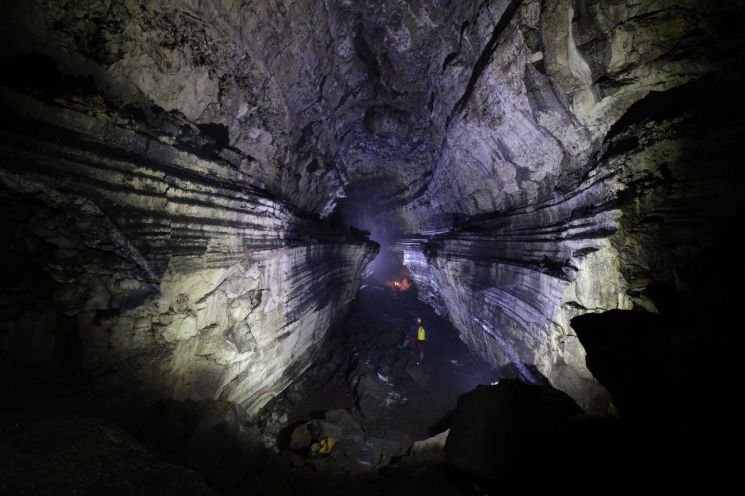
[Asia Economy Reporter Donghyun Choi] About 8,000 years ago, lava erupted from Geomunoreum on Jeju Island. The lava quickly spread toward lower areas and only stopped its activity upon reaching Woljeong-ri Beach, 14 km to the northeast. The massive lava, exceeding 1,000 degrees Celsius, was so destructive that it reduced everything in its path to 'nothingness.' However, destruction also brings creation, as is the law of nature. The areas swept by lava formed over ten lava caves, including Manjanggul. The natural environment around Geomunoreum and the caves became such a treasure trove of nature that in 2007, it was registered as a UNESCO World Natural Heritage site under the name 'Geomunoreum Lava Tube System.'
Fundamental Tour at Geomunoreum, the ‘Mother of Lava’
Opportunities to explore forest trails and caves that have been difficult for the general public to access within the Geomunoreum Lava Tube System are opening up. This will be through the ‘2021 World Heritage Festival ? Jeju Volcanic Island and Lava Tubes’ program held from October 1 to 17. On the 8th, the World Heritage Festival Secretariat held a press event about 80 days before the festival’s opening, where we toured the area.
The walking tour program planned for the festival is called ‘Walking Through Millennia.’ It aims to let participants feel the value of natural heritage through walking, developing a trekking course totaling 26.1 km across four sections. The starting point is Geomunoreum in Section 1. This 5.5 km course is named ‘The Path of Origin’ to signify the origin of everything.
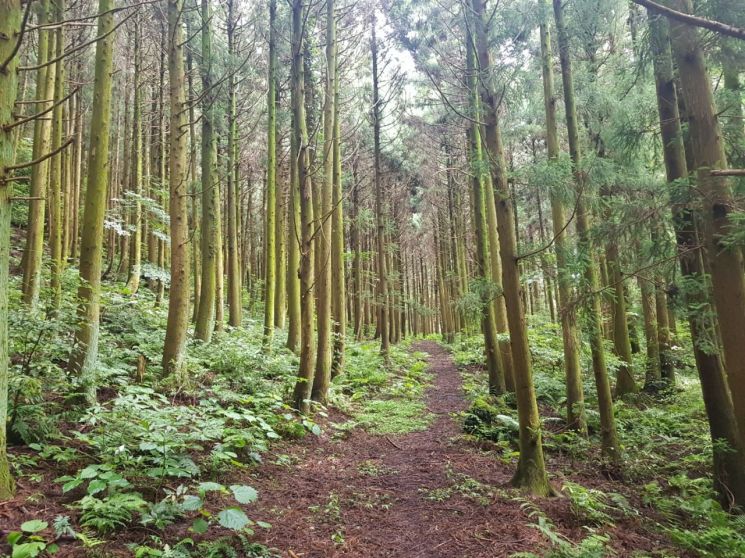
From the entrance of Geomunoreum, dense cedar trees greet visitors as if holding a military parade. The cedars are covered entirely with moss, and the surrounding grasses are lush, making everything appear green. Cedars emit a large amount of phytoncide, which is excellent for insect repellent, and their fast growth makes them an excellent windbreak forest in the windy Jeju environment.
On this course, you can also witness Gotjawal, which forms at altitudes of 300 to 400 meters on Jeju Island. In Jeju dialect, ‘Got’ means forest, and ‘Jawal’ refers to a thicket where trees and rocks are tangled. Gotjawal is a forest formed by intertwined trees and stones. It is impressive to see trees wrapping their roots around rocks on steep cliffs, resembling living octopus legs.
‘Path of Fire’ Journey Led by Lava
Sections 2 to 4 cover the ‘Path of Fire,’ a 20.6 km course. Here, you can find clear traces of lava’s passage, such as lava bridges and caves.
About 800 meters northwest from Geomunoreum lies Bengdugul. Bengdugul is the first cave formed by lava flowing from Geomunoreum. Unlike other caves in the area, Bengdugul has a maze-like structure. Kim Sang-su, director of the World Heritage Festival ? Jeju operations, explained, "Bengdugul’s surroundings are relatively flat, so lava flowed in all directions forming a complex cave structure. In contrast, Manjanggul and Gimnyeonggul are simple, long pipe-shaped caves."
Walking along the forest trail near Bengdugul, you occasionally encounter small stone holes just big enough for a dog to enter. These are called ‘Pung-hyeol’ (wind holes). When you bring your face close, cool air like an air conditioner envelops you. The air passing through these wind holes and rock layers delivers cool breezes in summer and warm air in winter.
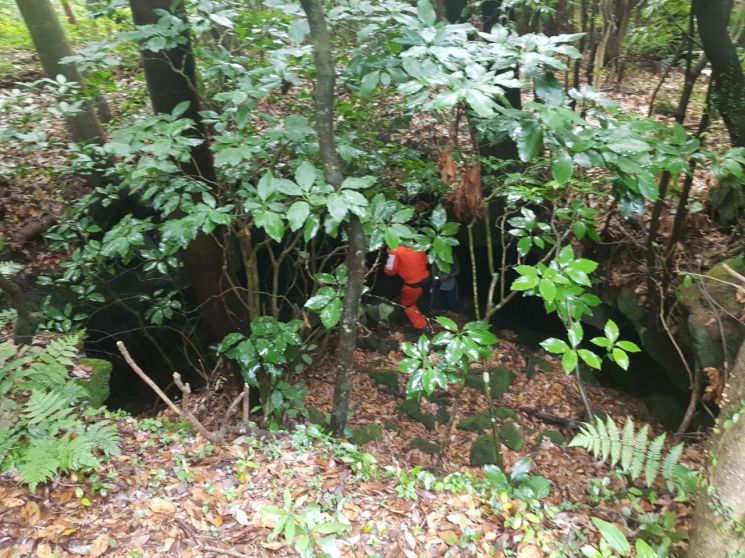
Passing Bengdugul and reaching Utsanjeongul marks the end of Section 2, ‘Path of Lava,’ and the beginning of Section 3, ‘Path of Caves.’ After a few steps into Section 3, a grand stone bridge appears?this is the lava bridge. A lava bridge refers to parts of a lava tube’s roof or floor that have collapsed, leaving a bridge-like structure. Looking out from deep beneath the lava bridge at the light outside is like a scene from a movie.
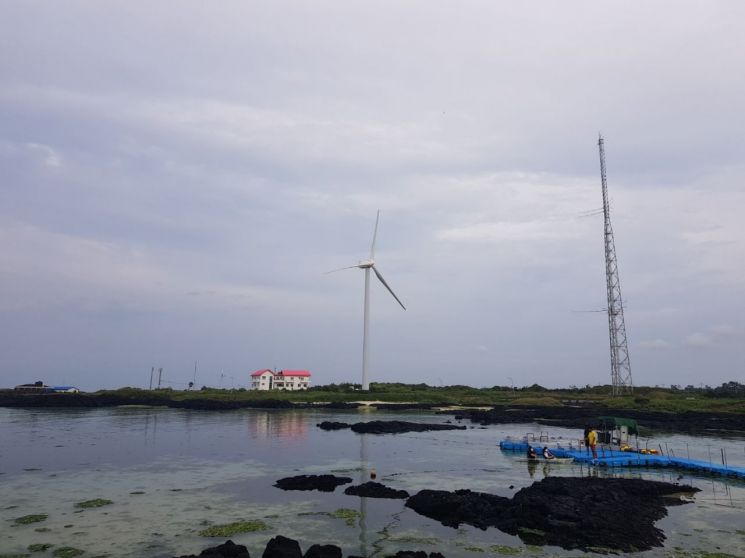
Section 4 is the ‘Path of Stones and New Life,’ stretching from Manjanggul to Woljeong-ri Beach. At Woljeong-ri Beach, you can see massive basalt formations created where lava from Geomunoreum met the sea and cooled rapidly. Kim Tae-wook, general director of the World Heritage Festival ? Jeju, said, "Although the lava ended its journey here, people have settled and continued their lives. This is a space where you can feel the spirit of Jeju people living with stone walls made of basalt and limestone, facing the blue sea and sky."
Opportunity to Explore Previously Closed Caves
This festival also offers a ‘Special Exploration Team’ program, providing a chance to explore caves that have not been open to the public until now. Of the 10 caves formed in the Geomunoreum Lava Tube System, only Manjanggul is open to the public. The Special Exploration Team will explore the closed sections of Manjanggul, Gimnyeonggul, and Bengdugul.
In the closed areas of Manjanggul, you can visually confirm traces of flowing lava on the floor. The stone floor stretches endlessly with shapes resembling twisted ropes or blankets with wrinkles. The cave walls are filled with colorful and delicate patterns reminiscent of traditional Korean landscape paintings. This site will also host Korea’s first immersive art performance using 360-degree spatial sound and mobile video.
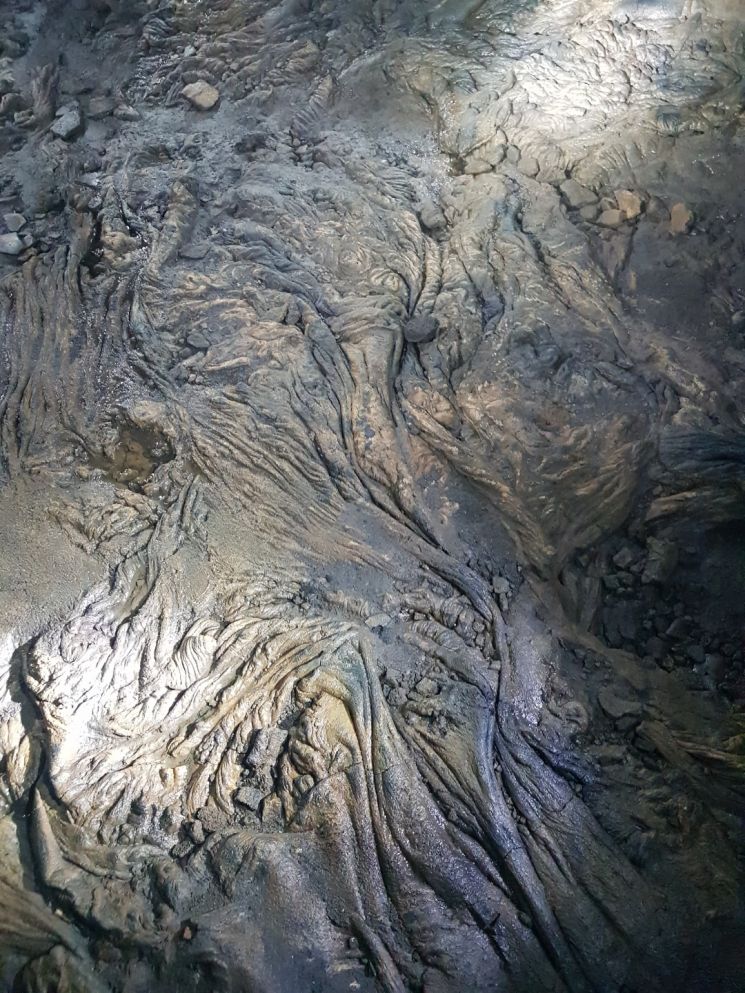 The floor of the restricted area of Manjanggul located in the Geomeunoreum Lava Tube System in Jeju. The flow of lava can be vividly seen.
Gimnyeonggul is also called ‘Gimnyeongsagul’ due to its winding shape and a legend that a large snake once lived there. Unlike other caves, it is covered with white sand. This is due to sandstorms carrying seashell and coral powder from the nearby sea. This gives the lava cave a strange feeling similar to a limestone cave.
To experience the walking tour and special exploration team, participants must be selected through online applications on the World Heritage Festival website. Registration for the full Manjanggul exploration team began on the 13th and closes on the 20th. Recruitment for the walking tour and exploration teams for Manjanggul, Gimnyeonggul, and Bengdugul will start on August 12.
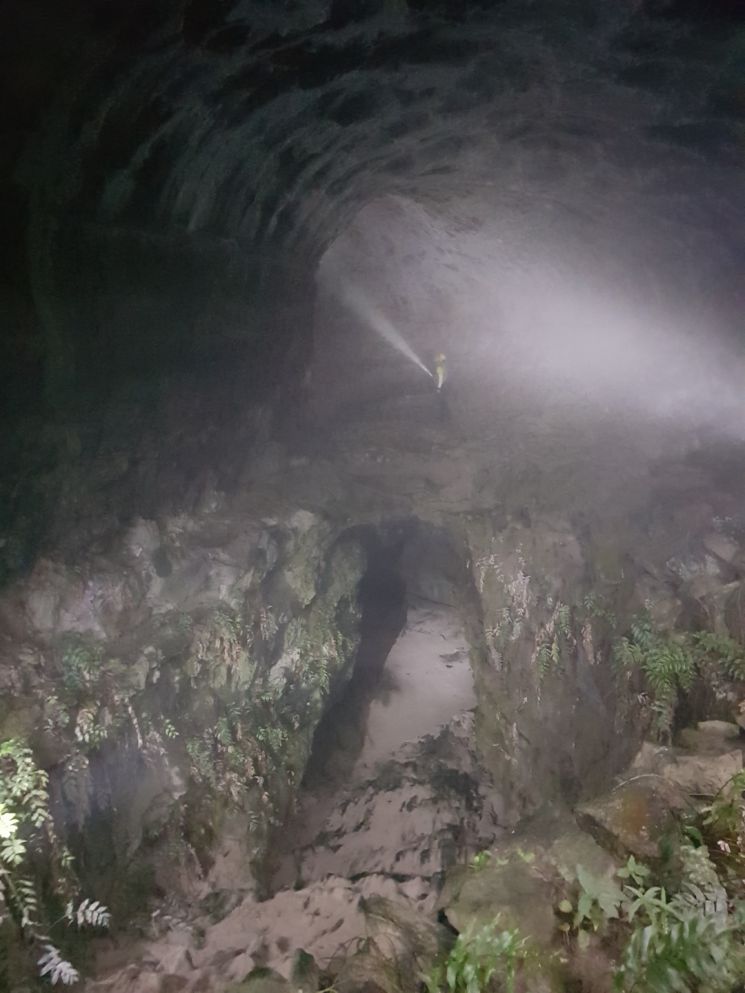 Entrance of Kimnyeong Cave located in the Geomeunoreum Lava Tube System in Jeju. Unlike other caves, sand particles blown from the nearby sea have accumulated here.
© The Asia Business Daily(www.asiae.co.kr). All rights reserved.
![Clutching a Stolen Dior Bag, Saying "I Hate Being Poor but Real"... The Grotesque Con of a "Human Knockoff" [Slate]](https://cwcontent.asiae.co.kr/asiaresize/183/2026021902243444107_1771435474.jpg)

















