Early Detection of Japan's Broken Promises... Public Interest Grows with Progress Reports
Persistent Efforts for Public Debate Ahead of World Heritage Committee... Collaboration Among Ministries to Devise Implementation Plans
International Seminar Held... Difficult to Invalidate World Heritage but Focus on Persuading Japan to Fulfill Promises
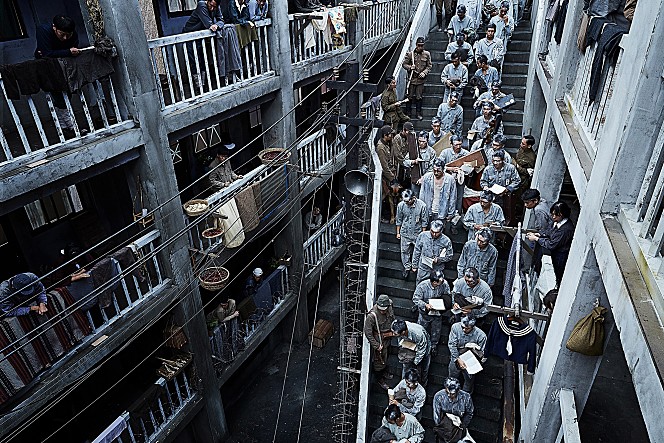
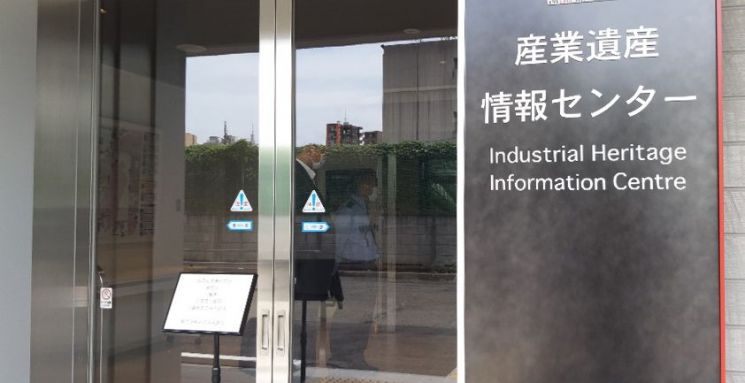
Japan decorated the Industrial Heritage Information Center, which opened in June last year, with testimonies and materials denying the fact of forced labor. In the implementation plan report (SOC) submitted to the World Heritage Center in December last year by the Cabinet Secretariat of Japan, local governments, and individual heritage element owners, content related to forced labor was also excluded.
Our government had identified this failure to fulfill promises early on. To gather public interest, on January 29, the main contents of the "Follow-up Measures Implementation Progress Report on the Registration of Modern Industrial Facilities as World Heritage" were disclosed to the media. This is basic data investigating how much Japan has implemented the recommendations of the World Heritage Committee and the preservation management recommendations after registration. According to this, Japan distorted the "Koreans forcibly mobilized against their will," recognized in the 39th recommendation, as "many people from the Korean Peninsula who supported Japan's industry" in the 2018 SOC. In the 2019 SOC, it was completely omitted. Japan also blurred the essence by suggesting that Japanese workers and workers from the Korean Peninsula and other regions were under "equally harsh conditions."
Regarding the attitude that differs greatly from the time of registration, Lee Jeong-hyun, Director of the International Culture Division at the Ministry of Culture, Sports and Tourism, pointed out, "It is an act of evading the recommendations of the World Heritage Committee and Japan's own promises." Women Hee, Head of the World Heritage Team at the Cultural Heritage Administration, also pointed out, "It is in stark contrast to Germany, which reflects the fact of forced labor in the interpretation and exhibition of the Essen Zollverein Coal Mine Industrial Complex and the V?lklingen Ironworks, both World Heritage sites," and said, "The decision of the World Heritage Committee recommends considering international best practices in the interpretation work of the 'entire history.' Japan simply limits the best practices of interpretation to promotional materials or applications for conveying heritage information and treats it negligently."
The Ministry of Culture, Sports and Tourism has been making continuous efforts to publicize this issue ahead of the 44th World Heritage Committee meeting scheduled for the 16th. They produced a promotional video comparing the recommendations of the World Heritage Committee and Japan's non-fulfillment, and sought ways to ensure promises could be fulfilled through collaboration with the Ministry of Foreign Affairs and others. The Cultural Heritage Administration organized an international seminar under the theme "One Heritage, Different Memories" to raise international experts' interest. They informed experts in the field of world heritage interpretation about the seriousness of the issue and sought new countermeasures.
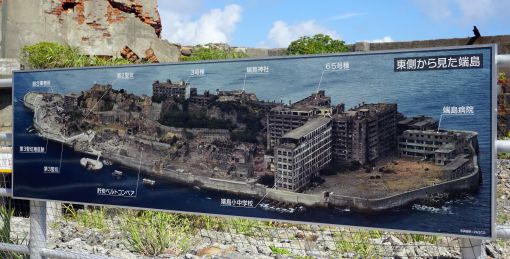 [Image source=Yonhap News] "New signboard on Japan's Battleship Island also does not mention forced labor" (Seoul=Yonhap News) On the 20th, Seo Kyung-duk, a Korean public relations expert and professor at Sungshin Women's University, reported that the recently installed signboard on Nagasaki City's Battleship Island (Hashima Island) by the Japanese government contains no mention of "forced labor." Professor Seo, who visited Battleship Island and the nearby Takashima Island last week, said, "Since Battleship Island was registered as a UNESCO World Heritage site, Japan has installed four signboards on the island, but even the most recently installed signboard does not include any information about the forced labor of Koreans." The photo shows one of the four signboards explaining the facilities on Battleship Island, installed after its UNESCO World Heritage registration. July 20, 2017 [Provided by Professor Seo Kyung-duk=Yonhap News] photo by Seo Kyung-duk (end)
 The government knows that invalidating the World Heritage designation is practically difficult. Therefore, it has focused on fulfilling promises and persuading World Heritage Committee officials. This report from the World Heritage Committee can be seen as the result of those efforts. Director Yeo said, "If it is constantly brought up as an agenda based on public interest and international community support, Japan will not be able to remain passive."
© The Asia Business Daily(www.asiae.co.kr). All rights reserved.


















