Lee Jun-seok Repeatedly Advocates for Abolishing Ministry of Gender Equality and Family and Ministry of Unification
Potential Clash Between Big Government and Small Government Theories
Criticism Within Party Including Kwon Young-se
Lee In-young Responds by Discussing Gender Sensitivity
[Asia Economy Reporter Naju-seok] The proposal by Lee Jun-seok, leader of the People Power Party, to abolish the Ministry of Unification and the Ministry of Gender Equality and Family has intensified conflicts within the political sphere. It is a peculiar situation that political conflicts are deepening despite the fact that the Government Organization Act is not currently under discussion. This issue is gradually escalating into a debate over whether to have a big government or a small government.
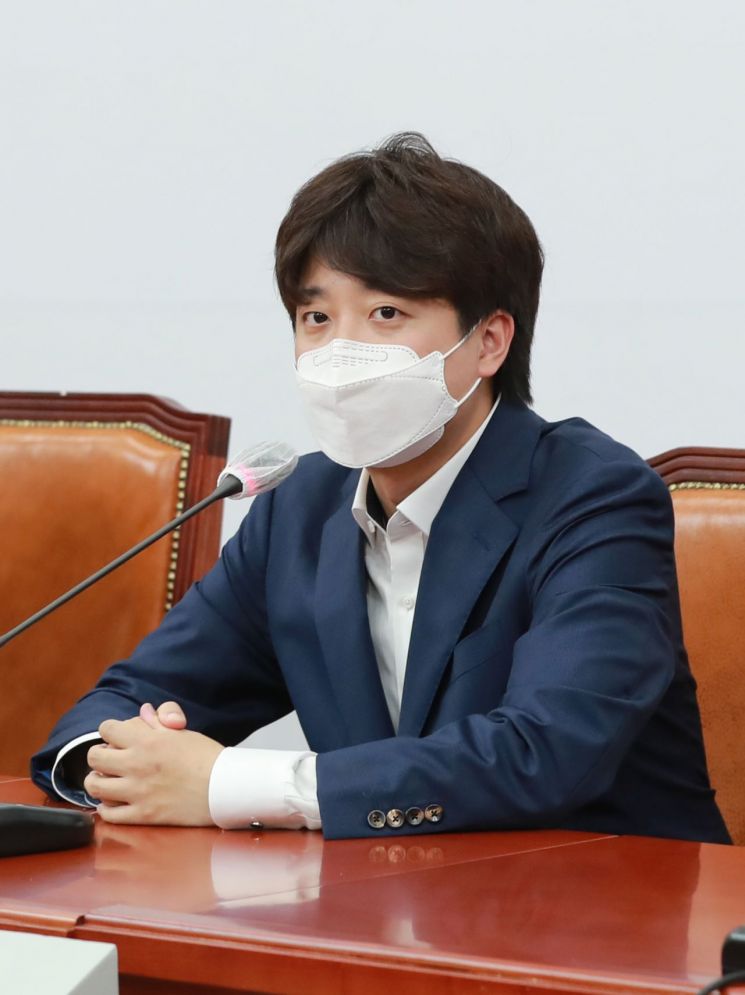
On the 10th, Lee stated on social media, "Taiwan, which explicitly states its continental territory, does not have a Ministry of Unification, and North Korea also does not have one, yet strange counterarguments have been pouring in all day long," adding, "Claims that I lack gender sensitivity, that I am trying to cover up suspicions about President Yoon Seok-yeol, that I should study more, that I have done nothing for unification, and questioning why the example of West Germany was omitted. Which of these is a real counterargument to the claim that ‘there is no need for a Ministry of Unification with ambiguous roles and achievements’?" Lee further argued, "'Small government theory' is not a trivial policy in itself, and if you want to refute it, at least bring up the 'big government theory' or present to the public the stance that 'we want the public sector to expand.'"
Earlier, on the 9th, Lee appeared on CBS Radio’s ‘Kim Hyun-jung’s News Show’ and mentioned this issue. He revealed that his position has always been to abolish the Ministry of Gender Equality and Family and the Ministry of Unification.
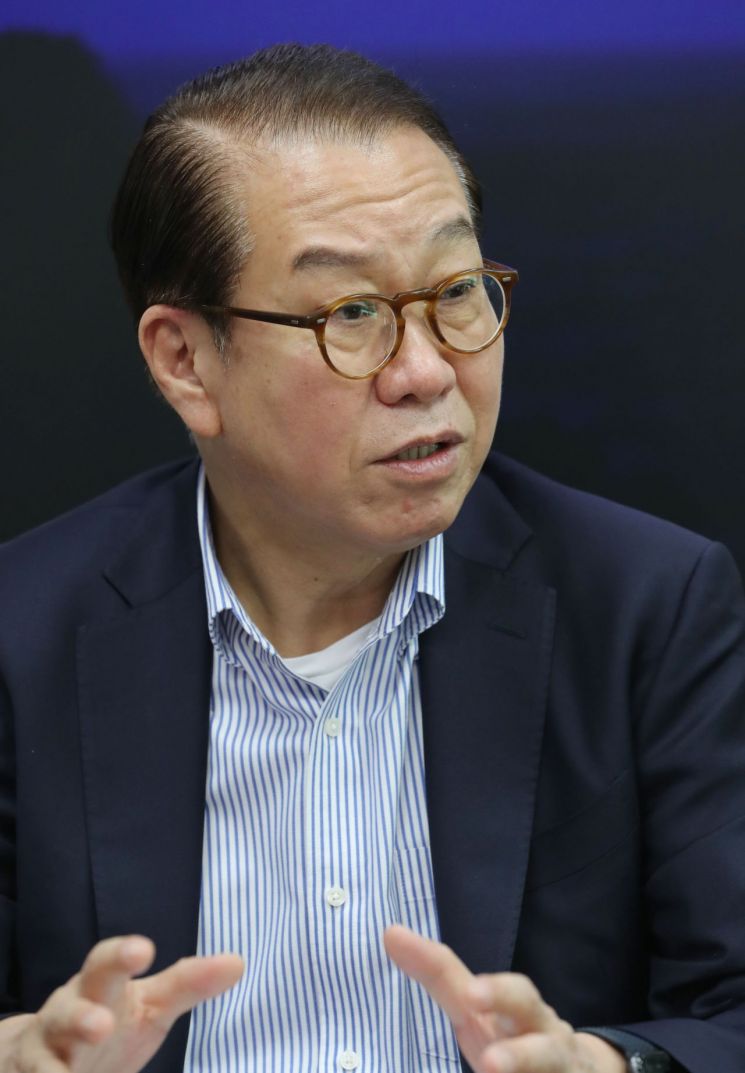
Following these remarks, criticism arose from the Democratic Party of Korea, the Justice Party, and the Ministry of Unification. Particularly noteworthy was the reaction from Kwon Young-se, a member of Lee’s own party. On the day the remarks were made, Kwon said, "Although North and South Korea must eventually unify, if we ourselves recognize inter-Korean relations as completely independent state relations both internally and externally, there will be significant diplomatic difficulties during the reunification process," adding, "Realistically, the Ministry of Foreign Affairs handles the external aspects of inter-Korean relations and unification, while the Ministry of Unification deals purely with inter-Korean exchange and cooperation issues, so there is no conflict between the two ministries’ duties." He also stated, "The Ministry of Unification should be retained, and Leader Lee needs to be cautious with his words and actions." It is certainly unusual for a party member to call for restraint in speech and behavior directed at the party leader.
On the 10th, Kwon further explained, "While we ultimately aim for unification, the current role of our Ministry of Unification is not to achieve immediate unification but to manage inter-Korean exchange and cooperation during the process of overcoming division," and introduced, "In the case of West Germany, the Ministry of Intra-German Relations (initially the Ministry for All-German Affairs) was responsible."
He expressed concern about past criticisms of the Ministry of Unification evolving into calls for its abolition. Kwon said, "In the early days of the MB administration, some officials said that after ‘disassembling’ the Ministry of Unification’s duties, they could be distributed to various ministries, so abolishing the Ministry of Unification was appropriate, which was shocking. Now that the uselessness argument is resurfacing, it is perplexing," adding, "It is true that the Ministry of Unification under this government has done disappointing work, but that does not mean it should be abolished. We should govern properly. Should we follow those who, dissatisfied with the prosecution, push for ‘complete prosecution reform’?"
Moreover, this issue has shown signs of emotional conflict between Lee and Lee In-young, Minister of Unification. Lee Jun-seok criticized the Ministry of Unification, saying, "An organization with no achievements or clear scope of work being maintained for decades out of inertia is government waste and a misuse of taxpayers’ money," and added, "Jokingly, even the Ministry of Unification’s YouTube channel is boring. The money spent editing videos of the minister giving flowers to staff is all taxpayers’ money."
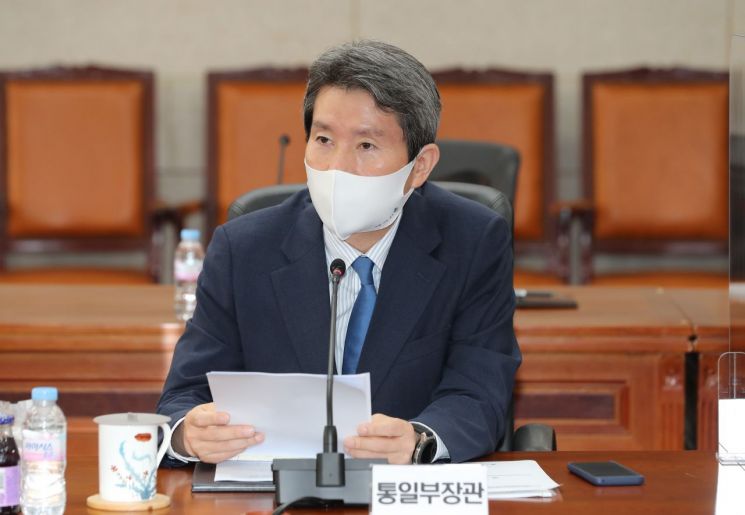
In response, Minister Lee said, "I will work harder as Minister of Unification to achieve improvements in inter-Korean relations, but I hope Leader Lee Jun-seok stops displaying his insufficient historical awareness and social perception by calling for the abolition of the Ministry of Unification," and criticized, "Is it that sharing flowers with female employees of the Ministry on March 8, International Women’s Day, is boring or meaningless? Leader Lee’s gender sensitivity remains strange."
Lee Jun-seok replied again on social media, "While the Ministry was busy giving flowers to its female civil servants and filming YouTube videos on International Women’s Day, it was defected North Korean women and the UN who actually paid attention to the human rights situation of North Korean women," adding, "North Korean women are not fighting over quotas but are suffering from fundamental human rights abuses such as human trafficking. These are the issues that tax-funded public officials should be addressing, and it is shameful that instead they are filming YouTube videos."
© The Asia Business Daily(www.asiae.co.kr). All rights reserved.
![Clutching a Stolen Dior Bag, Saying "I Hate Being Poor but Real"... The Grotesque Con of a "Human Knockoff" [Slate]](https://cwcontent.asiae.co.kr/asiaresize/183/2026021902243444107_1771435474.jpg)


















