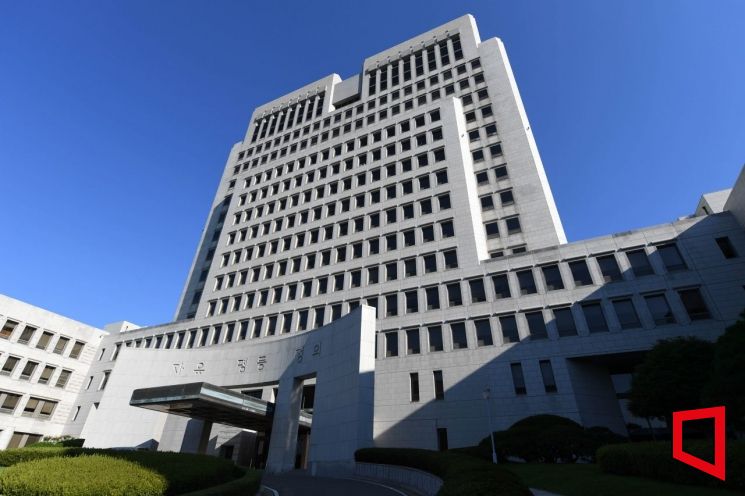
 Supreme Court in Seocho-dong, Seoul. Photo by Mun Ho-nam munonam@
[Asia Economy Reporter Kim Daehyun] The Supreme Court has ruled that even if a judgment on a property division claim in a family lawsuit during a divorce process is finalized, a separate civil lawsuit for unjust enrichment restitution can still be filed.
On the 7th, the Supreme Court's First Division (Presiding Justice Park Jeonghwa) announced that it overturned the lower court's ruling, which dismissed the plaintiff's appeal in the unjust enrichment restitution claim lawsuit filed by Mr. A against Mr. B, and remanded the case to the Seoul High Court.
Previously, in 2013, Mr. A filed a family lawsuit against Mr. B seeking divorce and property division, and Mr. B filed a counterclaim the following year.
Separately, Mr. A filed a lawsuit against Mr. B seeking restitution of unjust enrichment amounting to approximately 224 million KRW. Mr. A and Mr. B each held 80% and 20% shares, respectively, in a commercial property, and the claim was that Mr. B had an obligation to pay the unsettled rental income separately from the property division.
The first instance court hearing the unjust enrichment restitution claim partially accepted Mr. A's argument, ruling that Mr. B had an obligation to distribute rental income to Mr. A according to their shares in the commercial property. However, the first instance court in the property division lawsuit rejected Mr. A's claim, stating there was "no evidence of an agreement to distribute rental income," and the second instance court upheld this ruling.
Subsequently, the second instance court in the unjust enrichment restitution claim dismissed Mr. A's claim, stating it was "the same as the claim dismissed in the previous (family court) lawsuit's final judgment."
However, the Supreme Court ordered the case to be re-examined and judged. The court pointed out that "family cases and civil cases follow different litigation procedures" and "claims belonging to ordinary civil cases cannot be consolidated in family case lawsuits." It further stated, "The lower court erred in its understanding of the distinction between property division claims and civil claims, which affected the judgment."
© The Asia Business Daily(www.asiae.co.kr). All rights reserved.
















